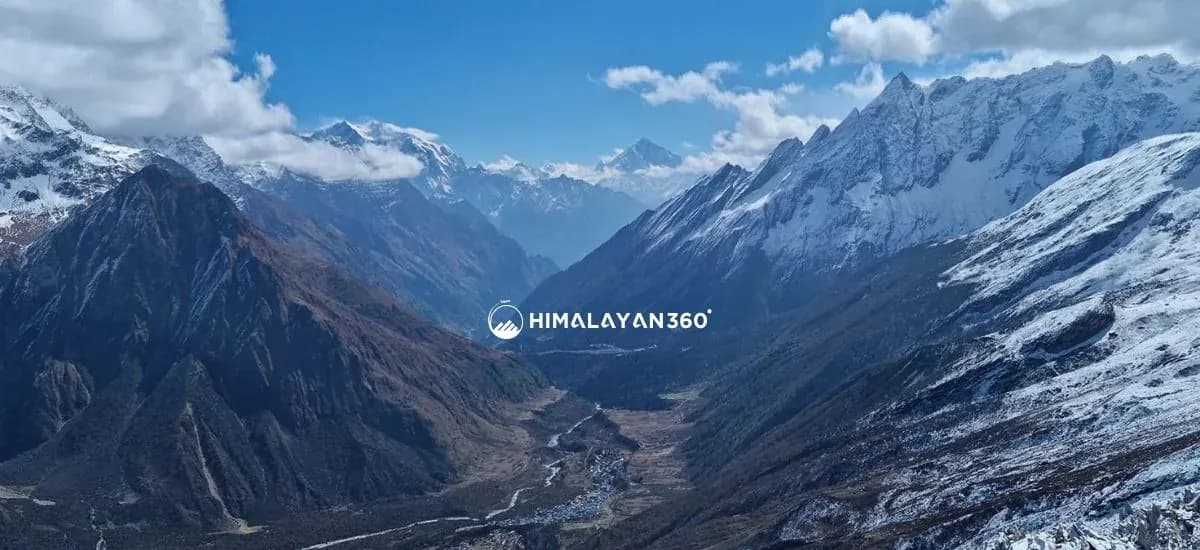
The permits required for the Manaslu Circuit Trek are three, and together they cost about USD 144 per person from September to November and about USD 119 from December to August. Those are the Manaslu Restricted Area Permit (MRAP), the Manaslu Conservation Area Permit (MCAP) and the Annapurna Conservation Area Permit (ACAP). All three must be arranged through a registered trekking agency, because the restricted area permit is never issued to an individual.
| Permit | Sep to Nov | Dec to Aug | Issued by |
|---|---|---|---|
| Manaslu Restricted Area Permit (MRAP) | USD 100 for 7 days, then USD 15 per day | USD 75 for 7 days, then USD 10 per day | Department of Immigration |
| Manaslu Conservation Area Permit (MCAP) | NPR 3,000 (about USD 22) | NPR 3,000 (about USD 22) | NTNC, via Nepal Tourism Board |
| Annapurna Conservation Area Permit (ACAP) | NPR 3,000 (about USD 22) | NPR 3,000 (about USD 22) | NTNC, via Nepal Tourism Board |
| Total per person | About USD 144 | About USD 119 |
The Manaslu Circuit Trek is located in the Gorkha District of central-western Nepal, circling Mount Manaslu, the eighth highest mountain in the world. Permits for the Manaslu Circuit are filed before you leave Kathmandu, so a trek in the Manaslu restricted area starts with paperwork rather than boots. The restricted section runs from Jagat to Dharapani, which is why the MRAP exists and why the price changes with the season.
Manaslu Trek Permit Rules You Need to Know First
- The Manaslu region is a restricted area, and an entry permit is required for every foreign trekker before you set foot on the trek route past Jagat.
- All permits must be issued through a registered trekking agency. Good news: we can handle all the paperwork for you.
- Manaslu Circuit solo trekking without a guide is not allowed. A licensed guide is compulsory for every trekker.
- Since March 2026 the old minimum of two trekkers per MRAP has been removed, so a single traveller can be issued the permit.
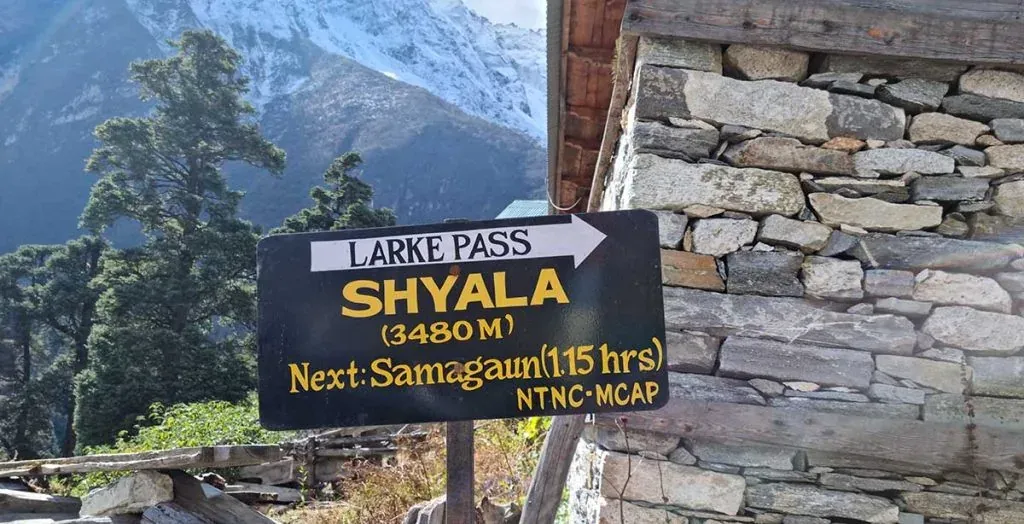
- Always carry both physical and digital copies of your permits during the trek. There are checkpoints at Jagat, Deng, Samagaun and Samdo, and originals are what get checked.
Warning: if you can’t show valid permits when asked, you may be charged a serious fine or held up at a checkpoint, so don’t skip this step.
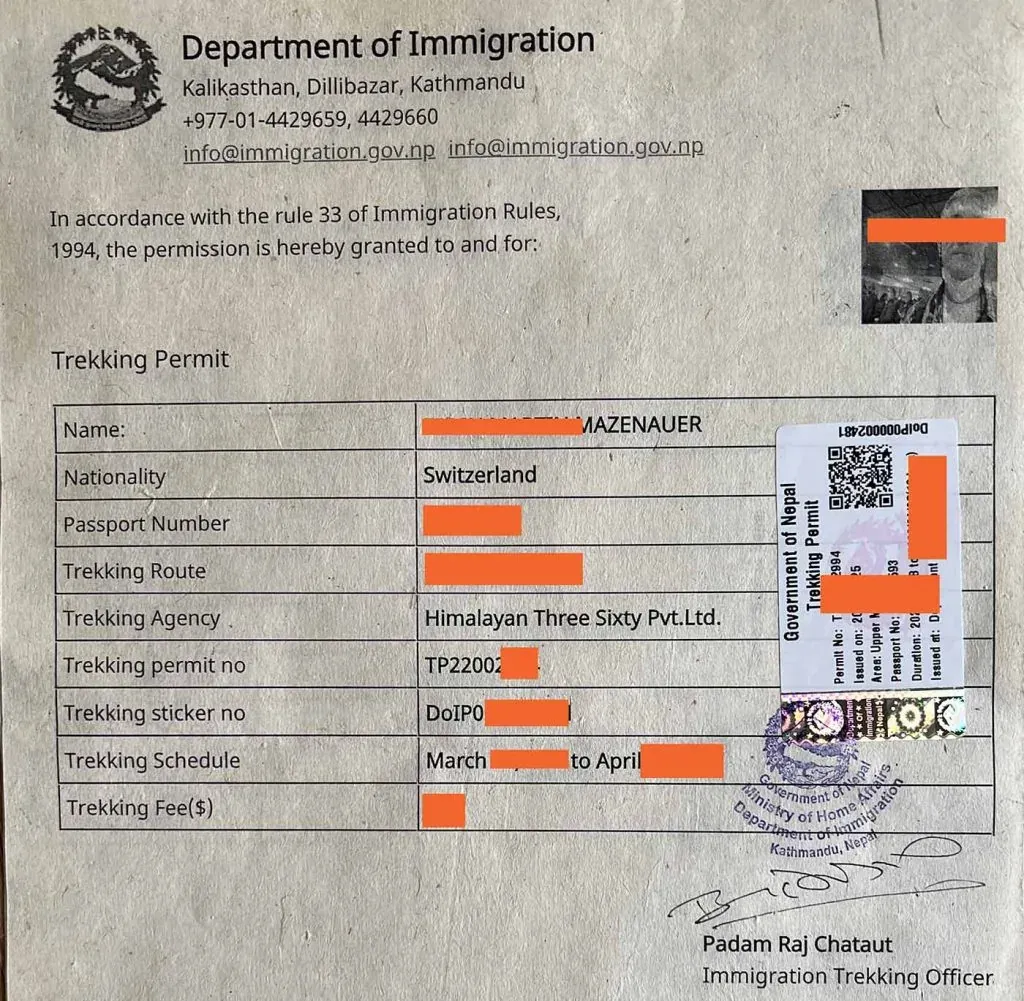
Manaslu Restricted Area Permit (MRAP)
The Manaslu Restricted Area Permit, the Manaslu RAP, is the official document required to enter the restricted part of the Manaslu region, which runs between Jagat and Dharapani. This restricted permit is what makes the whole trek legal. It was introduced in 2004 by the Government of Nepal to control tourism activity near the Tibetan border. The RAP is mandatory for every foreign visitor, and we handle the process so you can focus on the trek itself.
Steps to get MRAP
- Step 1: Choose a registered agency (like us!) to organize your trek
- Step 2: Send your documents and confirm your dates
- Step 3: The agency applies for your MRAP through the Department of Immigration
- Step 4: Collect your permit in Kathmandu, or have your guide bring it to the briefing
- Step 5: Pack, and you are ready to go
MRAP documents and cost breakdown
| Category | Cost | Required document |
|---|---|---|
| Foreign trekkers | $ 100 (Rs 13,700) for the first seven days and $15 (Rs 2,055) per person for additional days, valid between September and November. $ 75 (Rs 10,225) for the first seven days and $10 (Rs 1,370) per person for additional days, valid between December and August | Passport, Nepal Visa, Photos, travel insurance, agency document, guide information |
| SAARC Nationals | Similar to foreign trekkers | Similar to foreign trekkers |
| Nepali trekkers | MRAP is not required | MRAP is not required |
A 14 day Manaslu Circuit itinerary does not need 14 days of MRAP. The permit only has to cover the restricted section between Jagat and Dharapani, which on the standard itinerary is about nine days, so most trekkers pay for seven days plus two extra days.
Manaslu Conservation Area Permit (MCAP)
The Manaslu Conservation Area Permit (MCAP) is needed to enter the Manaslu Conservation Area, which protects rare plants, wildlife and the culture of the valley. This permit was first issued in 1998 by the National Trust for Nature Conservation (NTNC). You need it from the moment you enter the conservation area, and once issued it is valid for the whole trek.
Steps to get MCAP
- Step 1: Choose the registered company to help you provide the permits
- Step 2: Share your required documents with the agency
- Step 3: The agency will submit your document to the Nepal Tourism Board
- Step 4: Get your MCAP and keep it safely with you; there are several checkpoints on the trail
MCAP documents and cost breakdown
| Category | Cost | Required Documents |
|---|---|---|
| Foreign Trekkers | $21.92 (Rs 3000) per person | Passport, Nepal visa, one passport-sized photo, travel insurance, application form |
| SAARC Nationals | $7.50 (Rs 1000) per person | Passport, Nepal visa, one passport-sized photo, travel insurance, application form |
| Nepali trekkers | $0.75 (Rs 100) per person | Copy of Nepali Citizen certificate, Passport-sized photo, and application form |
Annapurna Conservation Area Permit (ACAP)
The ACAP permit is required for anyone trekking in the Annapurna region, and that includes the final part of the Manaslu Circuit, which joins the Annapurna trail near Dharapani. This entry permit is required whether you finish at Dharapani or carry on down the Marsyangdi. It was first issued by the National Trust for Nature Conservation (NTNC) in 1992 to support conservation of the wildlife, landscape and cultural heritage of the area. It is a one-time permit and must be obtained before starting the trek. Don’t worry, we handle it for you.
Steps to get ACAP
- Step 1: Pick a registered trekking agency (like us) to organize your trek
- Step 2: Provide the entire required documentation to the agency for your validation
- Step 3: The agency submits your application to the Nepal Tourism Board
- Step 4: Receive your ACAP and keep it safely with you; it is needed at every checkpoint during the trek
ACAP documents and cost breakdown
| Category | Cost | Required Documents |
|---|---|---|
| Foreign Trekkers | $21.92 (Rs 3000) per person | Passport, Nepal visa, one passport-sized photo, travel insurance, application form, emergency contact information |
| SAARC Nationals | $7.50 (Rs 1000) per person, | Passport, Nepal visa, one passport-sized photo, travel insurance, application form, emergency contact information |
| Nepali Trekkers | $0.75 (Rs 100) per person | Copy of Nepali Citizen certificate, Passport-sized photo, and application form |
Note: the Tsum Valley permit for the restricted area ($35 per person for 1 week) and the Chumnubri Rural Municipality permit ($10 per person), a local permit collected in the valley, are also required if you are adding the Tsum Valley Side Trip.
Manaslu Circuit Trek Cost: Permit Cost Details by Season
The Manaslu Circuit trek cost splits into a seasonal part and a fixed part. Only the MRAP moves with the calendar. The two conservation entry permits do not.
- September to November. MRAP at USD 100 for the first seven days and USD 15 for each extra day, plus MCAP and ACAP at NPR 3,000 each. Total for a standard window: about USD 144.
- December to August. MRAP at USD 75 for the first seven days and USD 10 for each extra day, with the same two conservation permits. Total: about USD 119.
- Adding Tsum Valley. A separate Tsum Valley permit at USD 35 per person for one week and the Chumnubri Rural Municipality permit at USD 10 per person on top.
The cost for a Manaslu permit is per person, not per group, so it does not fall as the group grows. What does change with group size is the guide fee, which is shared.
What Changed for Manaslu Permits in 2026
Two rules changed, and both work in the trekker's favour.
- The two-trekker minimum is gone. A single foreign tourist can now be issued the Manaslu Restricted Area Permit through a registered agency. You no longer have to find a second person or pay a fake second permit to travel alone.
- The application can start from abroad. The Department of Immigration accepts the Visa Application Submission ID you receive when you apply for your Nepal visa online, so your agency can begin the permit process before you fly.
What did not change is the guide requirement. Every trekker in the restricted area must be accompanied by a licensed guide, and one guide may lead a maximum of seven trekkers. What this means day to day if you are travelling alone is covered in the Manaslu Circuit Trek solo guide.
How Long a Manaslu Permit Takes to Issue
A Manaslu permit normally takes about one and a half hours to issue once the agency files it. The permit is issued to the agency in your name, which is why you never apply for the permit yourself. When the Department of Immigration's online system is down the whole application is processed by hand, which can take a couple of hours. Immigration does not issue restricted area permits on public holidays, so agencies file the day before the drive to Machha Khola rather than on the morning of departure.
The permit application needs the following, so have it ready before you land and the paperwork stops being a problem:
- Passport with at least six months of validity, plus your Nepal visa or Visa Application Submission ID
- Two to four passport-sized photographs, digital copies accepted
- Travel insurance that covers high-altitude trekking and helicopter evacuation
- Your confirmed itinerary and arrival date
- Emergency contact details
What the Permit Cost Does Not Cover
Permits are one line in the budget, not the budget. The cost of the Manaslu Circuit as a whole is mostly guide, transport and lodging. The permit fee excludes your guide and porter, transport to Machha Khola and back from Dharapani, teahouse rooms and meals, and everything you buy on the trail. A guided Manaslu Circuit package covers all of it in one price, and our Manaslu Circuit Trek departures start at USD 920.
Two costs surprise people. First, hot showers, device charging and Wi-Fi are charged separately in most teahouses and get more expensive with altitude. Second, there is no ATM after Arughat, so everything from Machha Khola onwards is cash in Nepali rupees, carried from Kathmandu. How far that cash has to stretch depends on your trek itinerary, which is set out in the Manaslu Circuit Trek difficulty, distance and best season guide.
Why is the Manaslu Circuit Trek a restricted area?
Why is the Manaslu Circuit Trek a restricted area? It’s a fair question to ask, because many other treks in Nepal are open and easy to access. The main reason is security and border proximity. The Manaslu region lies close to the Tibet (China) border, and the government needs to track movement there for safety and political reasons. The Manaslu trek permit is how that tracking is done, and it is also what keeps the number of trekkers in the Manaslu region as low as it is.
Besides security, the government aims to support cultural preservation and environmental protection in this region. Being home to unique Tibetan culture and endangered ecosystems, Manaslu is a restricted area. By regulating the permit system, Nepal can protect these ancient traditions and natural beauty without creating trouble for trekkers. So yes, rules are rules, but don’t worry, we know them all and our guides are professional. We’ll get your permits, guides, and paperwork ready faster than your boots hit the trail, so you can book your trek and enjoy the trek instead of chasing offices in Kathmandu.
The Best Manaslu Region Treks
The Manaslu Region offers a variety of trekking, each having its own unique features and specialties. Here are some of the popular trekking areas within the Manaslu region which require the Manaslu trek permit. Planning your trek around one of them is the first decision; the permits follow from it.
Manaslu Circuit Trek: The Manaslu Circuit Trek is one of the best treks in Nepal. It takes you around the majestic Manaslu, the eighth-highest peak in the world, which stands at an elevation of 8,163 m. The trek offers breathtaking views of mountains, lush forests, and diverse cultural experiences as you pass through several remote villages, with a side walk to Manaslu Base Camp from Samagaun for anyone who wants the extra day.
Tsum Valley Trek: The Tsum Valley is a sacred Himalayan Valley in the Northern Gorkha, and it was a restricted area until 2008. It lies to the east of the Manaslu Region. This trek offers a chance to explore unique Tibetan culture, ancient monasteries, and stunning landscapes. It is often an extended side trek of the Manaslu Circuit Trek.
Rupina La Pass Trek: This trek is known for its challenging Rupina La Pass, which lies north of the Manaslu region. It’s a less-traveled route that offers pristine wilderness and high-altitude adventure.
Manaslu Circuit Tsum Valley Trek: Instead of Doing Manaslu Circuit and Tsum Valley at two different times. It is possible to combine the two different trekking routes into a single trekking route called Manaslu Circuit Tsum Valley Trek.
Additional trekking options near the Manaslu Region
Annapurna Circuit Trek: The Annapurna Circuit Trek is one of Nepal’s classic treks and can be combined with the Manaslu Circuit Trek. This extended trek takes you through lush forests, the charming villages, and offers stunning views of the Annapurna and Dhaulagiri mountain ranges.
Ganesh Himal Trek: The Ganesh Himal region is to the southwest of the Manaslu region and offers a less-traveled trekking experience. You can explore the Ganesh Himal area, which is known for its diverse culture and stunning mountain views.
Ruby Valley Trek: The Ruby Valley Trek takes you through the Ganesh Himal region and offers a chance to explore remote villages, terraced fields, and beautiful landscapes.
Langtang Valley Trek: The Langtang Valley is located to the west of the Manaslu region and is known for its scenic beauty and rich culture. It’s a shorter trek that can be combined with other treks in the Langtang region.
These additional trekking options allow you to explore diverse landscapes, cultures, and experiences in Nepal, making your trekking adventure even more memorable. Keep in mind that permit requirements, regulations, and trekking conditions may vary in these regions, so it’s essential to research and plan your trek accordingly. For further details about the additional trekking regions, you can refer to Himalayan 360.
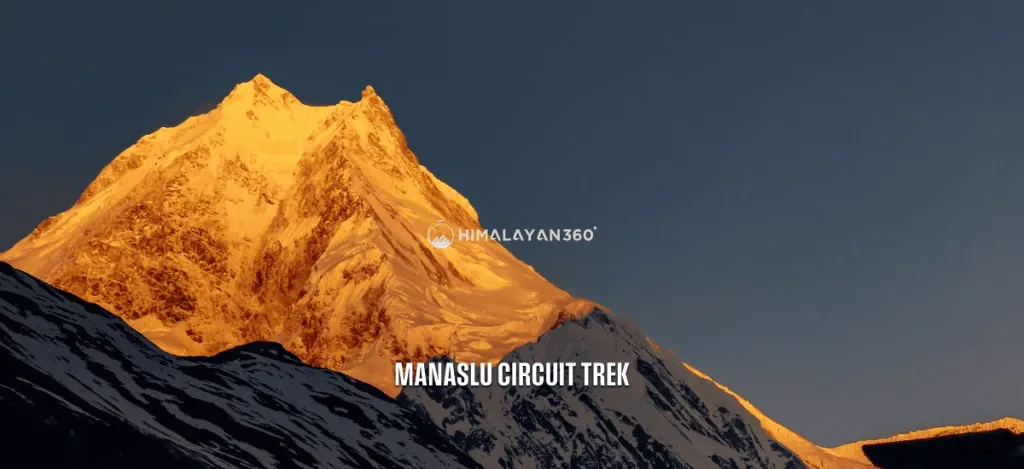
14 Days
Manaslu Circuit Trek
$920
5.0(7 reviews)
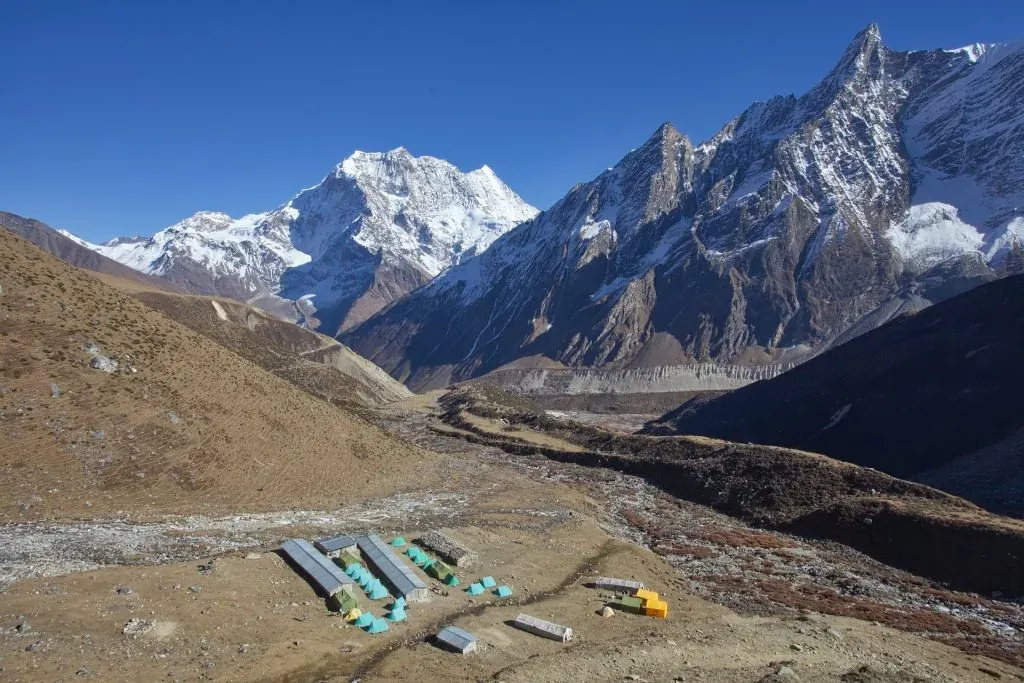
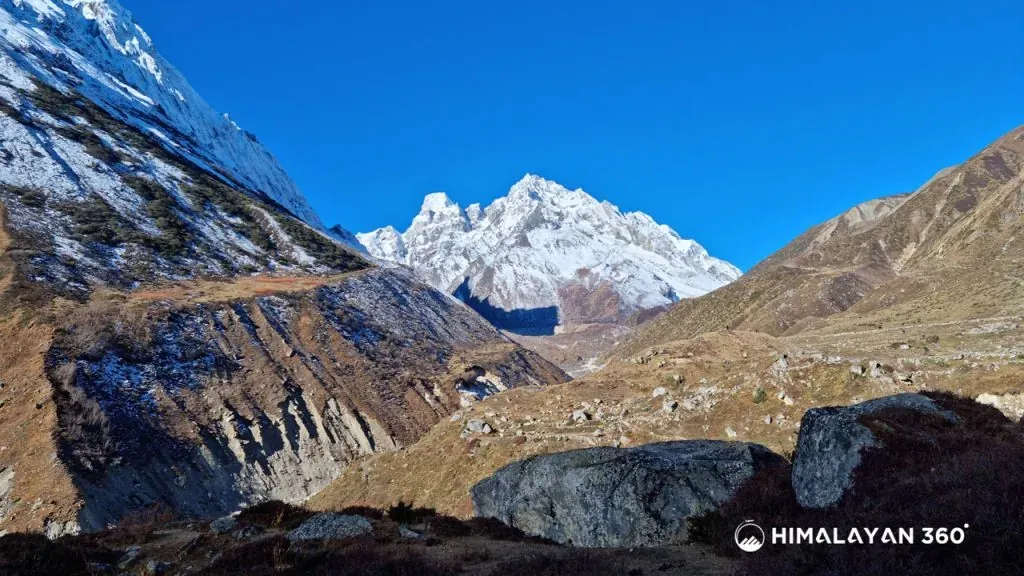
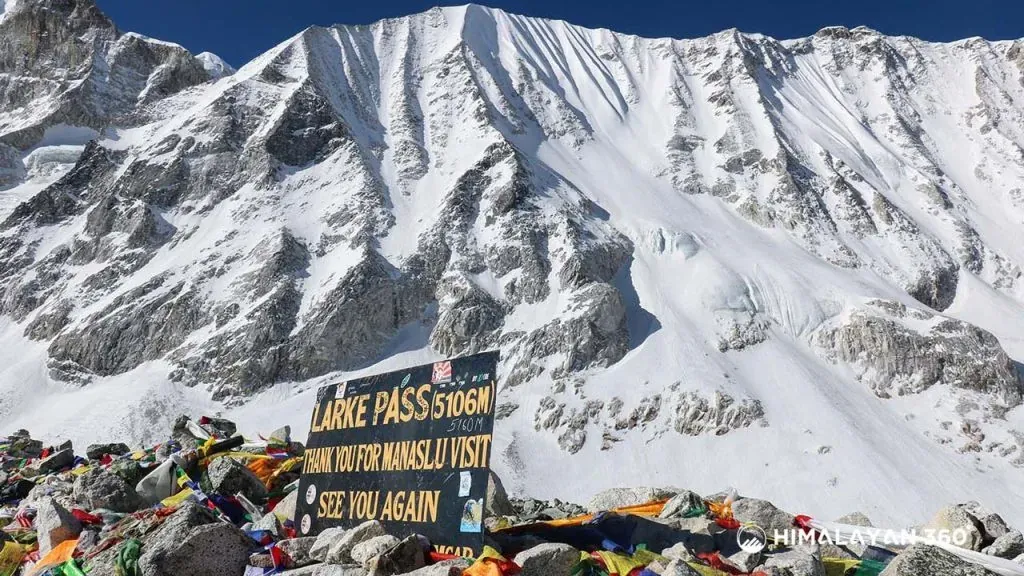
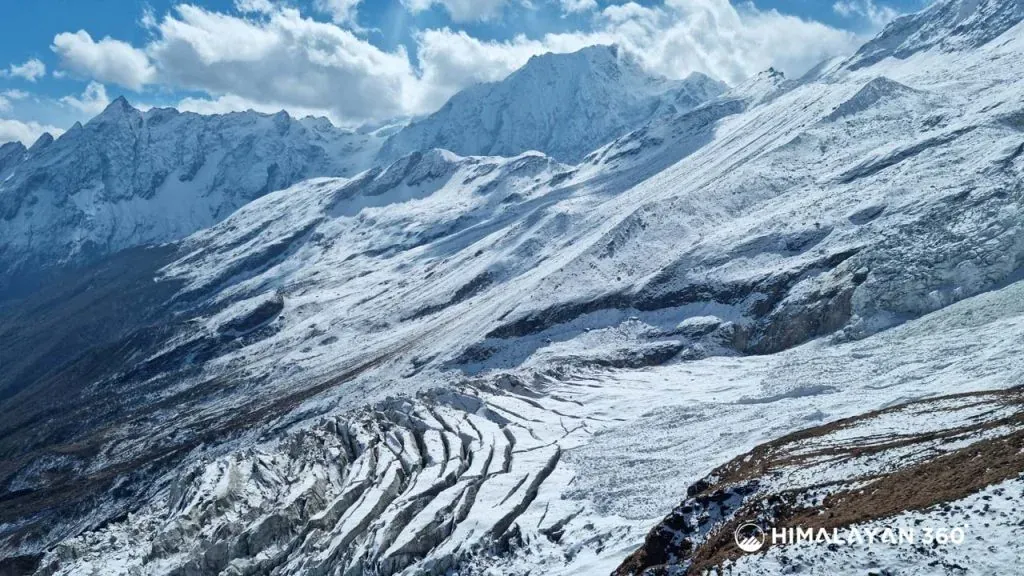
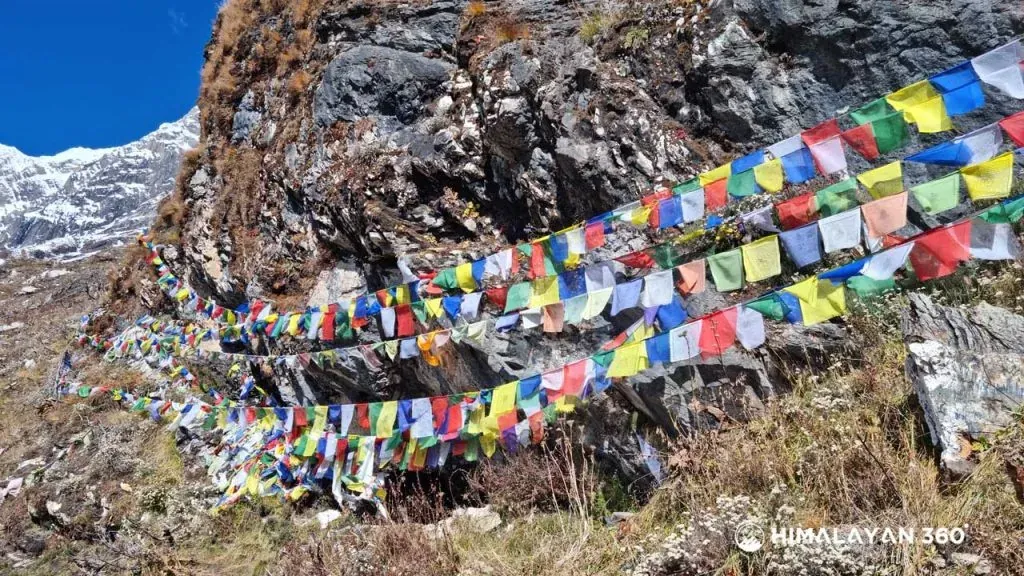
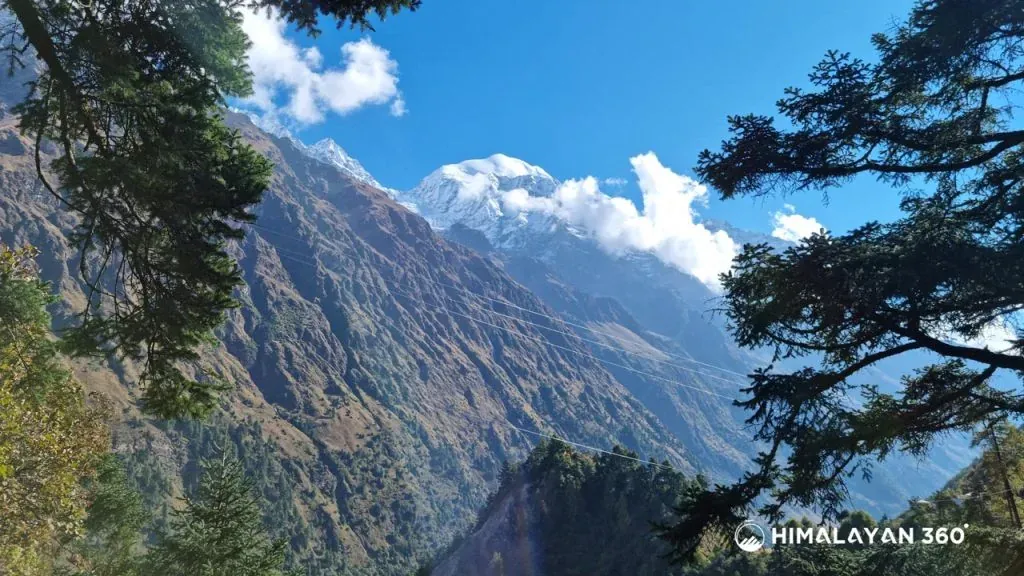
The Manaslu Circuit Trek is a stunning 13-18 day teahouse trek in Nepal, circling the world’s 8th highest mountain (Manaslu 8,163m), and covers about 144KM (89 Miles). The trek journey starts at Machha Khola and slowly climbs through farmlands and small villages. As you move higher, you reach mountain valleys like Samagaon and Samdo. The biggest highlight is crossing the Larkya La Pass (5,160M), where you can see amazing views of Manaslu, Himalchuli, and Ngadi Chuli. The trek also offers a local culture experience. Villages such as Samagaon, Namrung, Lho, and Deng show strong Tibetan traditions. You will see monasteries, prayer flags, and mani walls along the way. Depending on the season, you may also witness festivals like Lhosar (Tibetan New Year) or Saga Dawa, which celebrates Buddha’s life. In these villages, people farm millet, herd yaks, and live in ways passed down for centuries. This gives trekkers a close look at a culture that is still very traditional. The Manaslu Circuit trek trail also takes you through different natural landscapes. In the lower region at Jagat and Soti Khola, you will walk through green forests alive with rhododendron, magnolia, and bamboo. As you go higher past Philim, Namrung, and Samdo, the forest changes into oak, maple, and conifers, with waterfalls along the way. Near Samagaon and Larkya La, the land becomes rocky and snowy, with only small plants like moss and lichens. The changing landscape offer the true trekking experience throughout the Manaslu Circuit trek. Likewise, one special thing about the trek to Manaslu Circuit region is that it is a restricted area. Trekkers need special permits, which help protect the environment and keep the trail less crowded. You will need to compulsorily hire a trekking guide. You can find simple teahouses and lodges in main villages, but the trek still feels wild and quiet compared to other popular routes in Nepal. The best time for Manaslu Circuit trek is during the Spring (March to May) and Autumn (September to October) seasons.
20 Days
Manaslu Tsum Valley Trek
$1,330
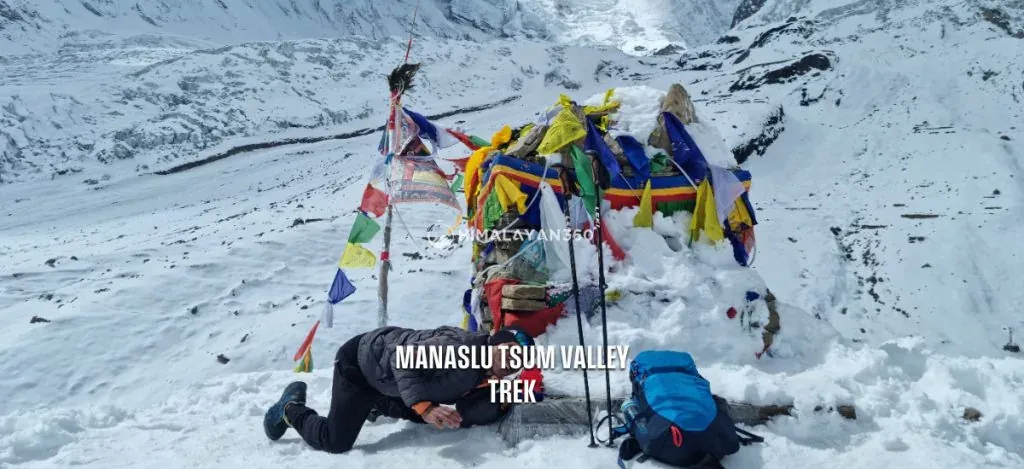
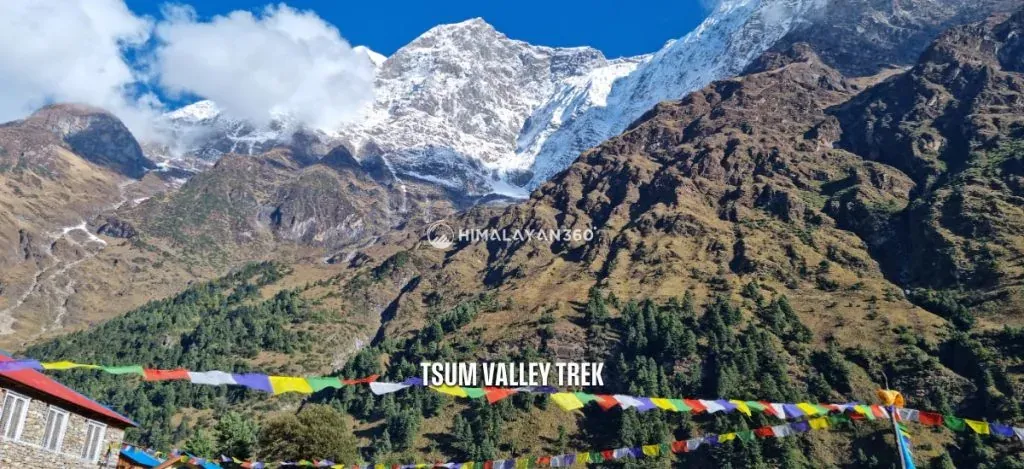
The Manaslu Tsum Valley Trek is an adventure around Mount Manaslu, the world’s eighth-highest peak at 8,163 meters (26,781 feet). This trek takes you through the scenic Manaslu Conservation Area and into the remote Tsum Valley, close to the Tibetan border. For 20 days, trekkers travel through serene pine forests, rhododendron jungles, and challenging trails leading up to the Larkya La Pass with majestic mountain views. The trek features high-altitude lakes, unique wildlife, and ancient Buddhist monasteries, with altitudes above 3,000m and 5,000m (16,404 feet) respectively. Along the way, you’ll discover a rare blend of Nepali and Tibetan culture, language, and traditions that make this region truly special. You will climb through Gurung villages with rice and millet terraces and cross many Buddhist shrines, especially in the Tsum Valley, which also has a similar culture to Tibetans. Tsum Valley, located near the Tibetan border, offers opportunities to encounter Buddhist monks and explore Milarepa’s Cave. You can also view Nepal’s national bird, the Lophophorus, against majestic landscapes of Mount Manaslu and Himalayan ridges like Hiunchuli and Annapurna II. The Manaslu Tsum Valley trek is ideal for adventure-seekers, but beginners with strong bodies and amazing stamina can also experience this. Just make sure that you are physically fit, if you are planning to take up the trek.
15 Days
15 days Tsum Valley Trek
$965
If you are looking for a unique and quiet trekking experience in Nepal away from commercialized trails, Tsum Valley Trek is your ideal option. The Tsum Valley is tucked away in the secluded and restricted part of Gorkha. Its trekking trails are lesser known to the world as it was only opened to outsiders in 2008. It is still not easily accessible and remains untouched by modernization. However, it is also precisely why the region has one of the most well-preserved Tibetan cultural heritages. The trails are also quiet and serene, with thrilling challenges. You will get to trek through raw nature and diverse landscapes, and you will travel close to the Tibetan border. Tsum Valley Trek is an adventurous journey as well as a cultural trip. It is a sacred valley blessed by Guru Rinpoche Padmasambhava himself. During the trek, you will pass several traditional settlements, ancient monasteries, gompas, chortens, mani walls, and colorful prayer flags. The hidden valley is home to locals who follow the ancient Bon Po and Tibetan Buddhism. You will trek within the Manaslu Conservation Area and ascend to Ganesh Himal Base Camp (4,200 meters) during the trek. Similarly, you can witness gorgeous panoramas of Mount Manaslu (8,163 meters), Ganesh Himal (7,140 meters), Himalchuli (7,893 meters), and more. Tsum Valley is truly a hidden gem, and the trek will be a wonderful opportunity to explore raw and rural Nepal.
 Trek
Trek By air
 Pilgrimage
 Festivals
 Wildlife
 Luxury
 Yoga
Yoga Food
Food Heritage