Kailash Yatra Fixed Departure Date 2026 Click Here
5 Days Mardi Himal Trek
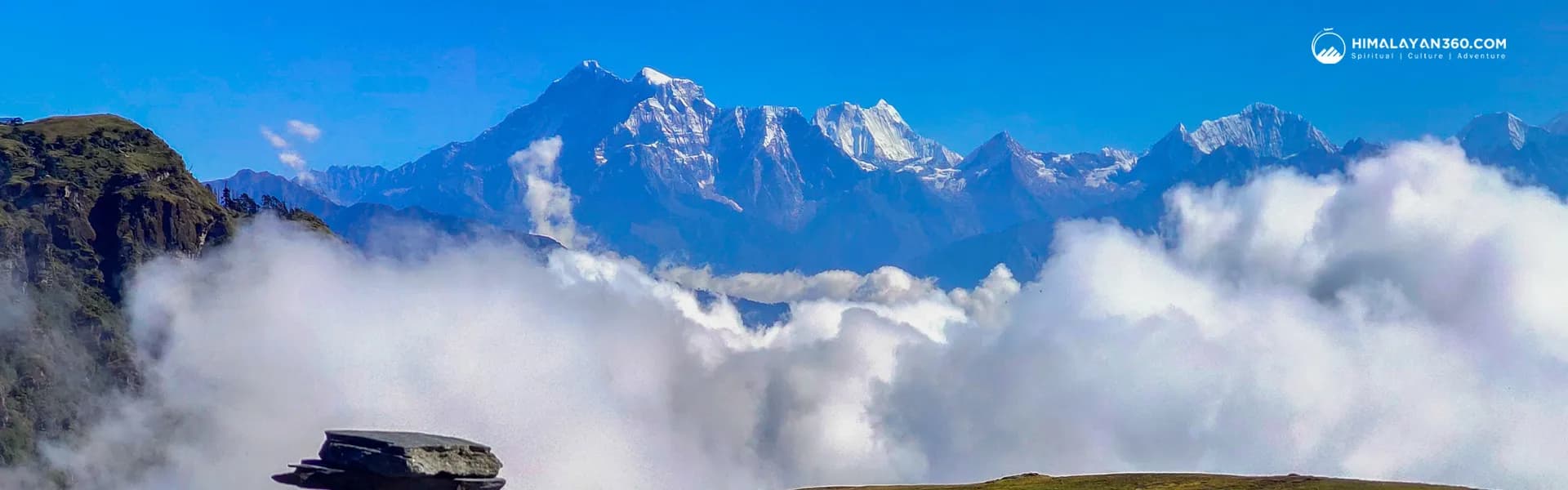
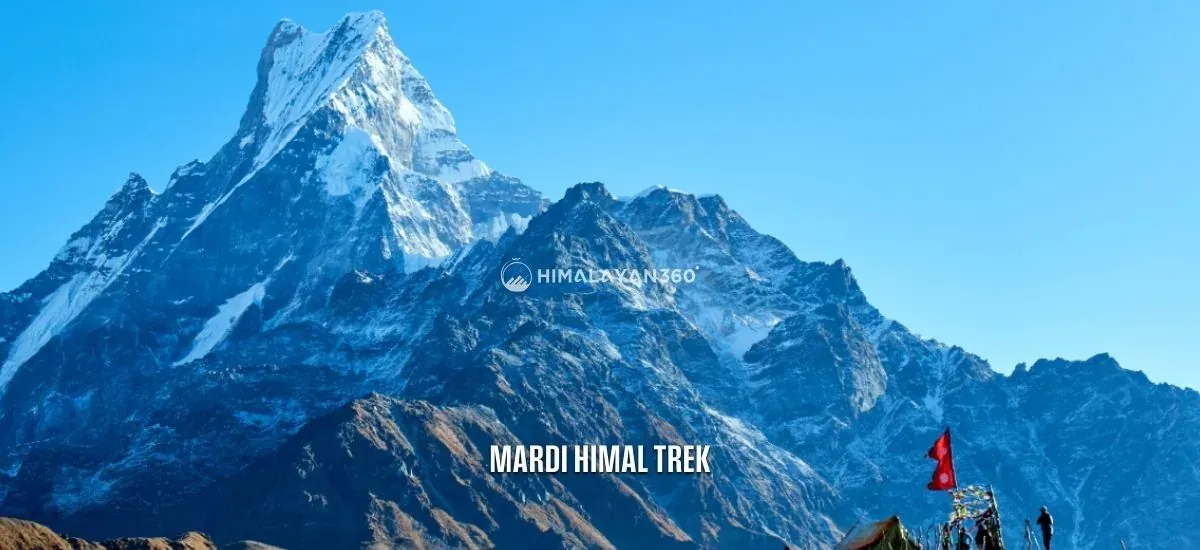
The Mardi Himal Trek ends on a ridge where the Fishtail stands close enough to fill the sky and almost no one is there to share it. This 5-day teahouse trek climbs from Pokhara to a 4,200 m alpine viewpoint in Nepal’s Annapurna region. The trail starts at Kande, 27 km from Pokhara, then climbs for two days through rhododendron forest as the crowds fall away. From the viewpoint, Machhapuchhre (Fishtail), Annapurna South, and Hiunchuli rise in a single sweep, the scale of an Annapurna Base Camp panorama, without its trail traffic or the Poon Hill sunrise queues.
Whether you’re after a peaceful high-mountain escape or a short cultural adventure, the Mardi Himal Trek delivers both in under a week. Below, you’ll find the full day-by-day itinerary, real costs, and everything you need to book with confidence.
Max. Altitude
4200m
Best Season
March-May and September-November
Difficulty
Destination
Annapurna Region, Nepal
Transportation
Private Jeep
Start / End
Pokhara / Pokhara
Accommodation
Language
English, Chinese, Hindi
Trip Type
Trekking in The Himalaya
Overview
The Mardi Himal Trek climbs a quiet ridge east of the busy Annapurna Base Camp trail to a high alpine viewpoint beneath Machhapuchhre, the sacred Fishtail peak. Opened as a trekking route in 2012, it remains one of the popular short treks in Nepal, as it rewards trekkers who want the mountains close and the trail to themselves.
Over five days the landscape transforms completely. You start in subtropical rhododendron and oak forest, climb onto an exposed alpine ridge, stand at a 4,200 m viewpoint ringed by Himalayan giants, and descend through terraced Gurung farmland to a village few outsiders reach. A single week delivers forest, ridge, alpine, and valley scenery that longer treks spread across two.
From the high ground you see Machhapuchhre (6,993 m), Annapurna South (7,219 m), Hiunchuli (6,441 m), and Mardi Himal (5,587 m) standing close above the trail. The trek begins and ends in Pokhara, Nepal’s lakeside trekking hub, so there is no internal flight and no wasted travel day.
This particular 5-day itinerary is built around safe acclimatization rather than the fastest possible schedule , the single design choice that sets it apart from the other packages like faster versions of the same trek.
Highlights
- Stand beneath Machhapuchhre (6,993 m), Annapurna South, and Hiunchuli from an exposed 4,200 m ridge for close-up Fishtail views.
- Reach the Mardi Himal View Point, higher than Annapurna Base Camp, in just five days, half the time of most treks.
- Walk one of the popular but quietest routes in the Annapurna region, far from the Poon Hill and ABC traffic.
- Lower your altitude-sickness risk with a short High Camp day and a climb-high-sleep-low viewpoint.
- Catch sunrise from Badal Danda, a second panoramic viewpoint over Annapurna, Dhaulagiri, Nilgiri, and Fishtail.
- Walk beneath a red, pink, and white rhododendron canopy on the lower trail from March to May.
- Pass through authentic Gurung villages like Siding, with terraced farmland and traditional stone houses, on the descent.
- Start and end in Pokhara with no internal flights or extra travel days.
Itinerary
Day 01: Drive to Kande, trek to Pitam Deurali via Australian Camp
| Itinerary Fact | Details |
|---|---|
| Trek Duration: | 1 hour Drive / ~3–4 hours walk |
| Highest Altitude: | 2100m |
Your trek begins with a private jeep transfer from Pokhara to Kande (1,770 m). From Kande the trail climbs steadily to the Australian Camp (2,060 m), a ridge that opens onto the Annapurna range and the Pokhara valley below. From there you continue through Pothana (1,890 m) to Pitam Deurali(2,100 m) leaving the busy Annapurna Sanctuary trails behind and entering the quieter Mardi forest. We spend the night in a teahouse at Pitam Deurali.
Day 02: Pitam Deurali to Forest Camp to Rest Camp to Low Camp
| Itinerary Fact | Details |
|---|---|
| Trek Duration: | ~5–6 hours |
| Highest Altitude: | ~3,050 m |
Our second day is the forest day. The trail follows the main Mardi ridge through dense rhododendron, oak, and magnolia, passing Forest Camp (~2,520 m) and Rest Camp before reaching Low Camp at 3,050 m. In spring the forest blooms red, pink, and white, covered with rhododendron. Low Camp sits on a flat terrace with the first unobstructed view of Mardi Himal and a partial view of Machhapuchhre. We spend the night here.
Day 03: Trek Low Camp to High Camp
| Itinerary Fact | Details |
|---|---|
| Trek Duration: | ~3–4 hours |
| Highest Altitude: | ~3,580 m |
The third day of the 5 day Mardi Himal Trek is intentionally short. You exit the treeline and climb an open ridge to High Camp at 3,580 m, gaining roughly 530 m of altitude. This is the acclimatization stage of the trek, arriving by midday lets your body adapt before the viewpoint push. High Camp delivers the most expansive mountain panorama of the trail, with Annapurna South and Hiunchuli rising directly to the west. We sleep at High Camp.
Day 04: Sunrise hike to Mardi Himal View Point, descend to Badal Danda
| Itinerary Fact | Details |
|---|---|
| Trek Duration: | 6-7 hours |
| Highest Altitude: | 4200 m |
Day 4 is the highlight. You start before dawn with a headlamp and trekking poles and climb the exposed upper ridge as the sun lights the peaks, reaching the Mardi Himal View Point at 4,200 m, your highest point. Mardi Himal, Machhapuchhre, Hiunchuli, and Annapurna South stand close enough to feel within reach.
After taking in the mardi himal view point climb, you descend back past High Camp and continue down to sleep lower at Badal Danda (3,200 m), a panoramic ridge that catches the evening light.
Note:Strong, well-acclimatized groups can extend to Mardi Himal Base Camp (4,500 m), about 1-1.5 hours further, ask your guide on the trail.
Overnight Stay at Badal Danda
Day 05: Descend Badal Danda to Siding, drive to Pokhara
| Itinerary Fact | Details |
|---|---|
| Trek Duration: | 3-4 hours walk / 2 hours drive |
| Highest Altitude: | 830m |
The final day descends through terraced fields and the traditional village of Siding (1,750 m), a quiet farming community few trekkers see. From Siding a private jeep returns you to Pokhara, where the trek ends.
After 2 – 3 hrs of drive, you are back at Lakeside by afternoon with the whole evening free.
Explore with Local Experts! Our experienced guides, porters, and staff are locals who know every trail, culture, and hidden gem. Travel with us for an authentic adventure!
Overall Trip Review
How Hard is the 5 Day Mardi Himal Trek?
The Mardi Himal Trek is graded moderate. It involves 3–7 hours of walking per day on steep, uneven trails, with no technical climbing, no ropes, and no mountaineering skill required.
What makes our 5-day version beginner-friendly is the itinerary itself: a short acclimatization day to High Camp, a climb-high-sleep-low climb, and a descent split across two days. That pacing turns a moderate trek into one a reasonably fit beginner with no prior experience can genuinely enjoy, not just survive with a guide along the way.
Who the 5-day trek suits
The 5-day Mardi Himal Trek suits trekkers aged 16 to 65 with moderate cardiovascular fitness and the ability to walk several hours on hills. First-time Himalayan trekkers do it regularly. Children under 16 and adults over 65 complete the same route with adjusted daily targets, typically adding 30–60 minutes per stage.
The trek is not suited to anyone with a diagnosed cardiac condition, active respiratory illness, or a history of severe altitude sickness above 4,000 m without medical clearance.
If Mardi sounds like a stretch, the gentler Ghorepani Poon Hill Trek, shorter, lower, and easier underfoot is a better first step into the Annapurna foothills.
The hardest part
The hardest section is the Day 4 view-point push. It’s a steep 2.5 to 3 hour uphill climb on a rocky, exposed ridge in the early-morning cold, where functional ankle stability and leg strength matter far more than speed. The reward is the closest view of Machhapuchhre available anywhere in the region.
Altitude and how this itinerary manages it
Altitude is the real difficulty of any Mardi trek, because the trail crosses 4,000 m where oxygen thins and the body needs time to adapt. This 5-day itinerary manages that risk by design: a short acclimatization day to High Camp, a sleep altitude that never exceeds 3,580 m, and a descent to 3,200 m on the night after the view point.
To minimize the chances of altitude sickness on any high trek, you should drink 3–4 litres of water daily, walk at a steady pace, eat carbohydrate-heavy meals, and tell your guide about headaches early. Your guide carries a first-aid kit, monitors your pace, and manages descent if symptoms appear.
What permits do you need for the Mardi Himal Trek?
The Mardi Himal Trek requires two permits, the ACAP and the TIMS card, plus a licensed guide, all of which are included in your package and arranged for you.
The Annapurna Conservation Area Project (ACAP) permit covers entry to the conservation area and costs around NPR 3,000. The Trekkers’ Information Management System (TIMS) card registers your trek for safety tracking.
Since 2023, Nepal also requires every foreign trekker to walk with a government-licensed guide or through a registered agency; independent solo trekking is no longer permitted on this route. We handle all three so you arrive and simply start walking.
Why do the Mardi Himal Trek in 5 days?
The 5-day Mardi Himal Trek gives you the highest scenery-per-day ratio of any short trek in the Annapurna region. You reach a 4,200 m viewpoint, cross an exposed alpine ridge, and walk through rhododendron and oak forest, all inside a single week, with Pokhara as your start and finish point.
Three things make the 5-day format work. The trail camps sit 3–5 hours apart, so each day has a clear start and end. Teahouses operate at every camp, which removes the need for tents, cooks, or food supplies. And the ascent profile is gradual, gaining 500–700 m on most days rather than a single brutal climb.
The trek suits you if you have a week in Nepal, moderate fitness, and want a genuine Himalayan viewpoint experience without committing to the 10-day Annapurna Circuit Trek or the popular and crowded Annapurna Base Camp Trek. First-time trekkers complete this itinerary regularly. It is the trek to choose when time is short but you refuse to trade away the mountains.
When is the best time to do the Mardi Himal Trek?
The best times to trek Mardi Himal are spring (March–May) and autumn (September–November), when skies are clear, trails are stable, and mountain views are sharpest. The trek runs year-round, but each season offers a different experience.
| Season | Months | What to expect |
| Spring | Mar–May | Rhododendron forests in full bloom, warm days, clear views, the most colourful season |
| Autumn | Sep–Nov | Crisp air, the most stable weather, the sharpest mountain views, the most popular season |
| Winter | Dec–Feb | Cold nights below freezing, possible snow above 3,000 m, empty trails, for prepared trekkers who want solitude |
| Monsoon | Jun–Aug | Lush green hills, rice cultivation in the valleys, but muddy trails, leeches, and cloud, the quietest and cheapest season |
For first-time trekkers chasing guaranteed mountain views, October and November deliver the most reliable conditions of the year.
What makes this 5-day route different from the others?
This itinerary is paced for safe acclimatization, not for the cheapest possible logistics, and that single design choice is what separates it from most 5-day packages sold online.
The common 5-day plan rushes the high ground. It puts trekkers in Low Camp and then High Camp on back-to-back nights, then sends them on a 9–10 hour day climbing to 4,500 m and descending all the way to Siding. That schedule violates the most basic rule of high-altitude trekking: climb high, sleep low.
Our route does the opposite. Day 3 is a deliberately short walk from Low Camp to High Camp, giving your body a half-day to adapt. On Day 4 you climb to the Mardi Himal View Point at sunrise, then drop back down to sleep lower at Badal Danda (3,200 m), the climb-high-sleep-low method recommended by the Wilderness Medical Society.
The long descent is split across two days instead of crammed into one. A single steep downhill day is brutal on your knees, so we won’t make you do that. The result is a trek you enjoy on fresh legs instead of one you survive on exhausted ones.
Our Itinerary pays off, in three concrete ways::
- The half-day acclimatization stage at High Camp and the lower sleeping altitude after the hike to viewpoint reduce the chance of acute mountain sickness.
- Badal Danda is itself a celebrated lookout over Annapurna, Fishtail, Dhaulagiri, and Nilgiri, so the lower sleep is also a scenic upgrade.
- Splitting the descent means the last day (5th day) is a comfortable walk to Siding, not a knee-destroying marathon.
What are the teahouses, food, and facilities like?
Accommodation on the Mardi Himal Trek is basic mountain teahouses with twin-bedded rooms and shared bathrooms. Facilities are simple and get simpler with altitude, but every camp has a warm dining room, hot meals, and a bed.
Here is the honest picture:
- Rooms: Twin beds, thin walls, shared bathrooms. Bring or rent a sleeping bag for warmth at the higher camps. Private rooms are usually available except at peak times.
- Toilets and showers: Mostly shared squat toilets. Hot showers are available at lower camps for a small fee and are limited or unavailable at High Camp.
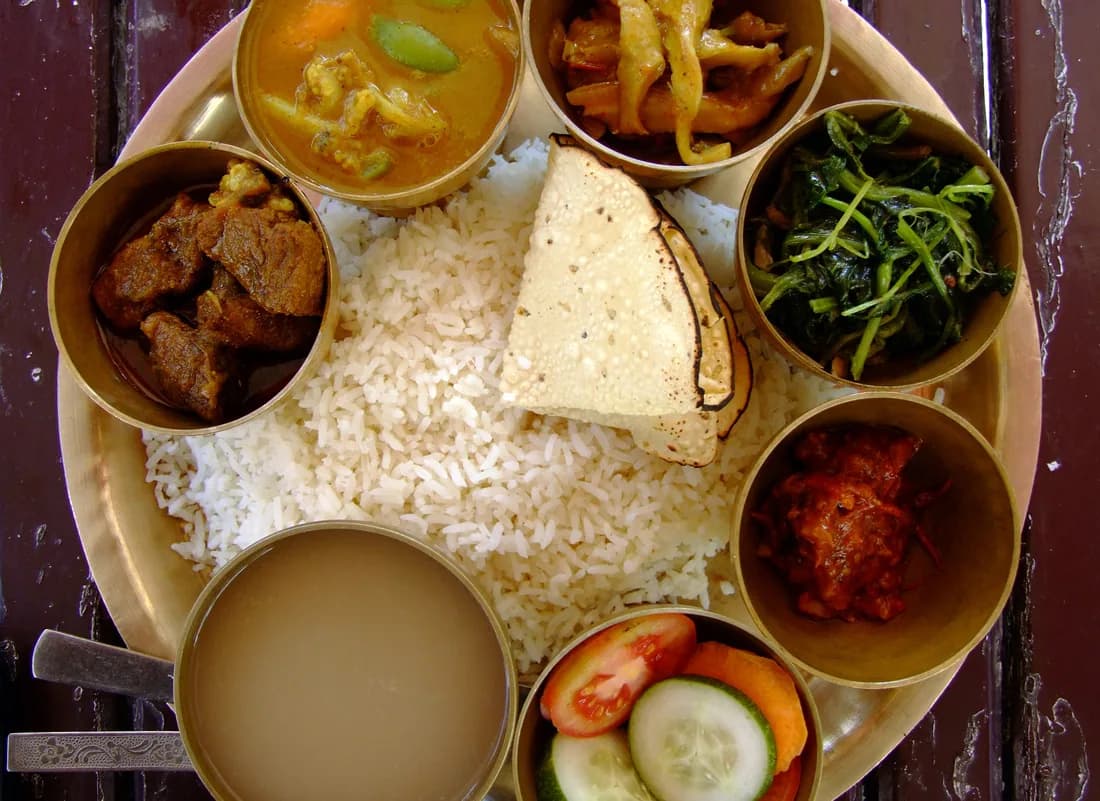
- Food: Dal bhat (lentils and rice) is the staple, alongside noodles, potatoes, soups, eggs, and some Western options. Your package covers breakfast, lunch, and dinner on the trail.
- Charging and WiFi: Both exist at lower camps, usually for a small charge, and get patchy higher up. Carry a power bank and expect to be offline near the top.
- Water: Teahouses boil and supply drinking water; bring purification tablets or a filter and a reusable bottle to cut plastic and cost.
- Cash: No ATMs on the trail. Withdraw Nepali rupees in Pokhara before you leave for tea, snacks, charging, and tips.
What should you pack for the Mardi Himal Trek?
Pack for four seasons in five days, because the trail climbs from warm subtropical forest to cold alpine ridge. Layering is the key, you peel off layers on the climb and add them at High Camp.
Essential items include:
- Footwear: Waterproof hiking boots with ankle support, broken in before the trek, plus trekking sandals for the evenings
- Layers: Moisture-wicking base layers, a fleece or insulated mid-layer, and a windproof, waterproof outer shell
- Warmth: A down jacket, warm hat, gloves, and a sleeping bag rated to roughly −10°C for the higher camps
- Sun protection: Sunglasses, high-SPF sunscreen, and a sun hat, UV is intense at altitude
- Trekking poles: Strongly worth it on the steep Day 4 ascent and descent
- Headlamp: Required for the pre-dawn viewpoint hike.
- Small first-aid and toiletries: Blister care, personal medication, hand sanitiser, and any Diamox prescribed by your doctor
- Power bank and reusable water bottle
Mardi Himal vs Annapurna Base Camp vs Poon Hill
The Mardi Himal Trek is the best choice for close mountain views in the shortest time, sitting between the gentle Poon Hill trek and the longer Annapurna Base Camp trek in both difficulty and reward.
| Mardi Himal Trek | Annapurna Base Camp | Poon Hill Trek | |
| Duration | 5 days | 7–11 days | 3–4 days |
| Max altitude | 4,200 m | 4,130 m | 3,210 m |
| Difficulty | Moderate | Moderate–challenging | Easy |
| Crowds | Low | High | High |
| Best for | Close views, fast, quiet | The full sanctuary experience | First-timers, gentle pace |
| Signature view | Fishtail up close from the ridge | The 360° Annapurna amphitheatre | Sunrise over Dhaulagiri |
Notably, Mardi Himal climbs higher than Annapurna Base Camp (4,200 m versus 4,130 m) in roughly half the days, which is why it rewards fit trekkers who are short on time. Poon Hill is the gentler option for absolute beginners; the Annapurna Base Camp trek is the choice when you have 8–11 days and want the full glacial sanctuary.
FAQ's
How fit do I need to be for the Mardi Himal Trek?
What is the best month for the Mardi Himal Trek?
Is the Mardi Himal Trek safe for beginners?
Do you need a guide for the Mardi Himal Trek?
Are there toilets and hot showers on the trek?
How much does the 5-day Mardi Himal Trek cost?
How high does the 5-day Mardi Himal Trek go?
Will I get altitude sickness on the Mardi Himal Trek?
Similar Trips
7 Days
7 Days Mardi Himal Trek
9 Days
Mardi Himal Yoga Trek
Featured Blogs
Adventures Await
we’ll make it extraordinary and uniquely yours.
Create a travel experience that reflects your style and preferences.
With expert guidance, every moment of your trip is uniquely tailored to you.