The Buddha named four places of pilgrimage: where he was born, where he was enlightened, where he gave his first sermon and where he passed into parinirvana. Only the first is in Nepal. Bodh Gaya, Sarnath and Kushinagar are all in India, so a Nepal pilgrimage is built around Lumbini and the country around it rather than around all four.
Lumbini, the birthplace
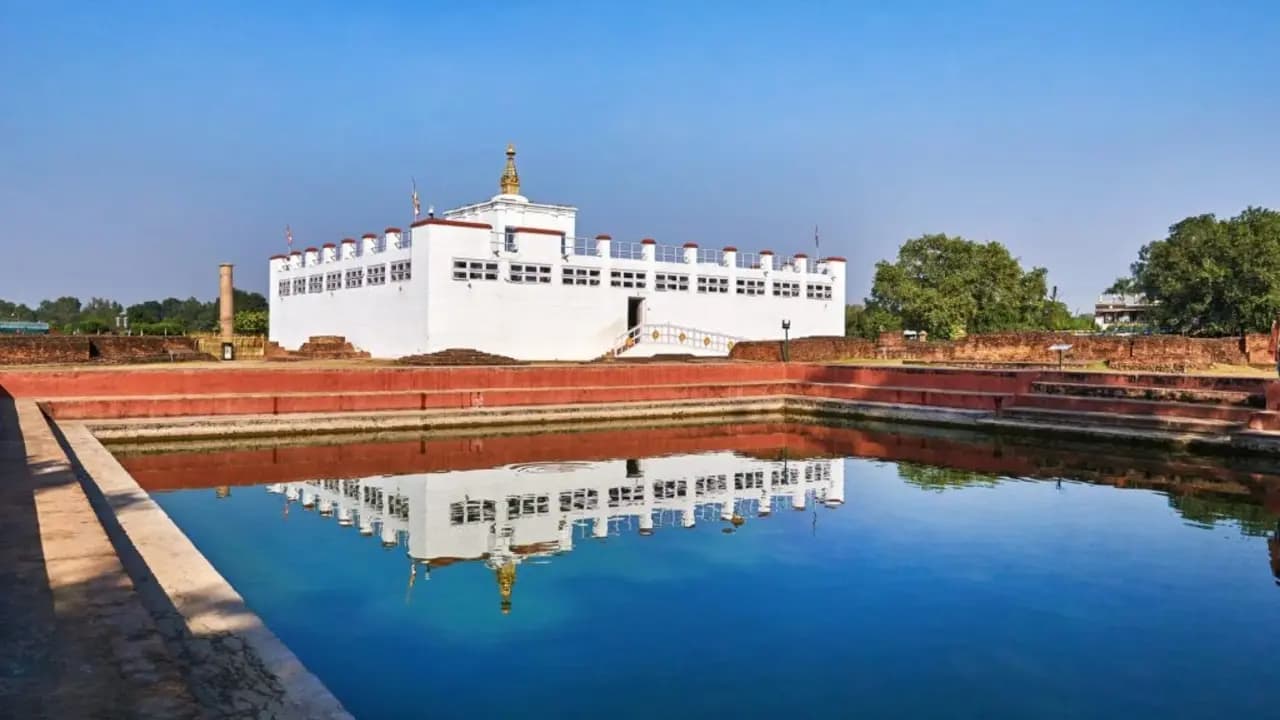
Lumbini is a UNESCO World Heritage Site, inscribed in 1997, in Rupandehi district on the Terai plains. The Sacred Garden at its southern end holds the Maya Devi Temple, the excavated monastic remains, and the pillar erected by the Mauryan emperor Asoka in 249 BC, whose inscription is the evidence the listing rests on. North of it runs the International Monastic Zone, laid out on Kenzo Tange's master plan with Theravada monasteries east of the central canal and Mahayana monasteries west of it, so crossing the water changes the architecture.
The Lumbini Development Trust charges a conservation fee per day: NPR 700 for other nationals, NPR 400 for SAARC nationals and Myanmar, NPR 80 for Indian nationals and NPR 20 for Nepalis. Older figures still circulate widely, so treat any published number as a guide. Lumbini is about 272KM from Kathmandu, a full day on the road, and about 20KM from Bhairahawa airport.
Tilaurakot and Ramagrama
Tilaurakot is the archaeological remains of Kapilavastu, the Shakya capital where Siddhartha grew up, on UNESCO's tentative list since 1996. Ramagrama, in Nawalparasi, is described by UNESCO as the only undisturbed original stupa containing relics of the Buddha. Every other one of them was opened and its contents redistributed. This one was not. Neither sits on this nine day route, and each needs a day of its own from Lumbini.
Buddha Purnima, known in Nepal as Buddha Jayanti, falls on Baisakh Purnima, the full moon of the month of Baisakh, so its Western date moves every year. Check Nepal's public holiday list for the year you travel before you book flights.



 5 Days
 Trek
 By air
 Pilgrimage
 Festivals
 Wildlife
 Luxury
 Yoga
 Food
 Heritage
