After the recent Gen-Z protest, the country is calm again, with peace and safety restored. Visit: This Vlog by a Fellow Tourist to see the friendly and welcoming side of Nepal, even during hard times.
Manaslu Tsum Valley Trek
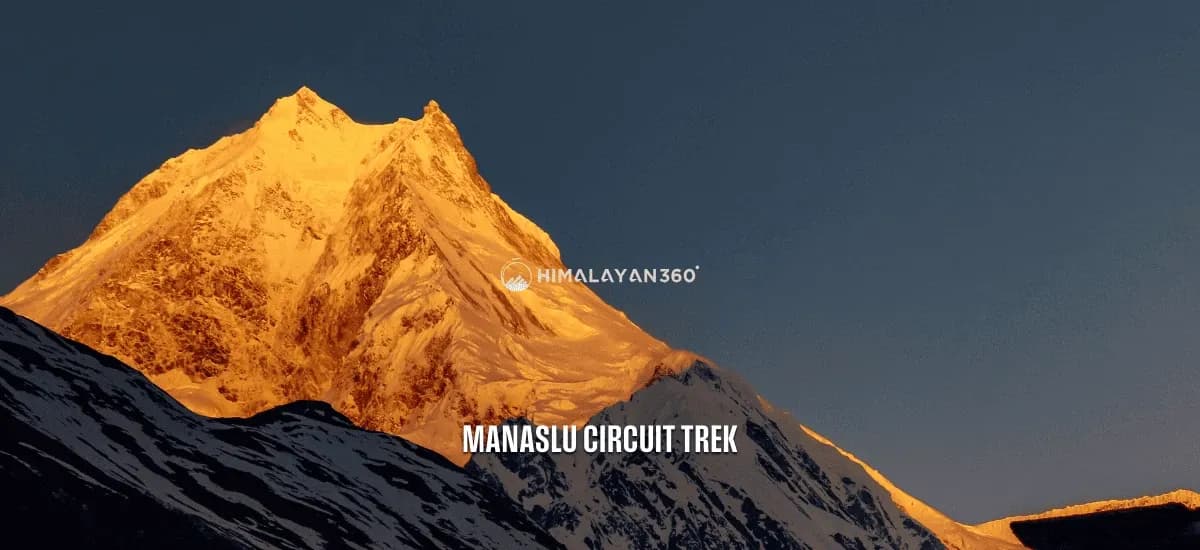
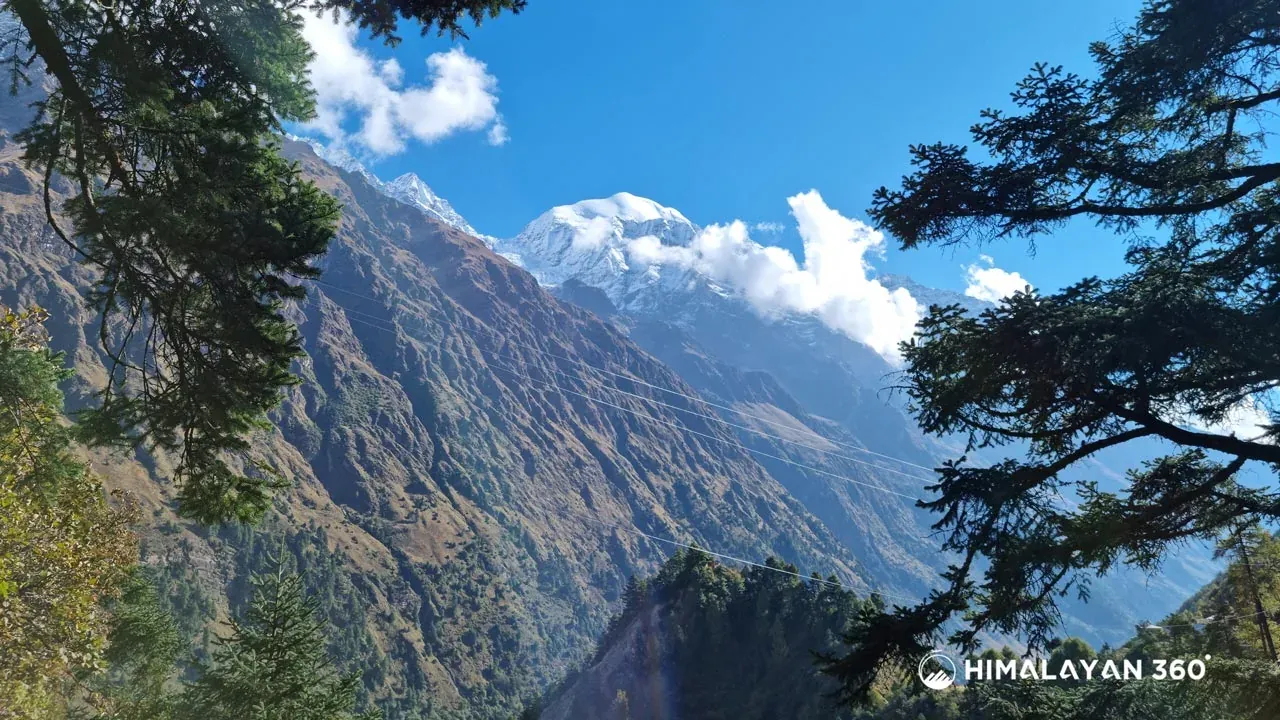
The Manaslu Tsum Valley Trek is an adventure around Mount Manaslu, the world’s eighth-highest peak at 8,163 meters (26,781 feet). This trek takes you through the scenic Manaslu Conservation Area and into the remote Tsum Valley, close to the Tibetan border. For 20 days, trekkers travel through serene pine forests, rhododendron jungles, and challenging trails leading up to the Larkya La Pass with majestic mountain views. The trek features high-altitude lakes, unique wildlife, and ancient Buddhist monasteries, with altitudes above 3,000m and 5,000m (16,404 feet) respectively.
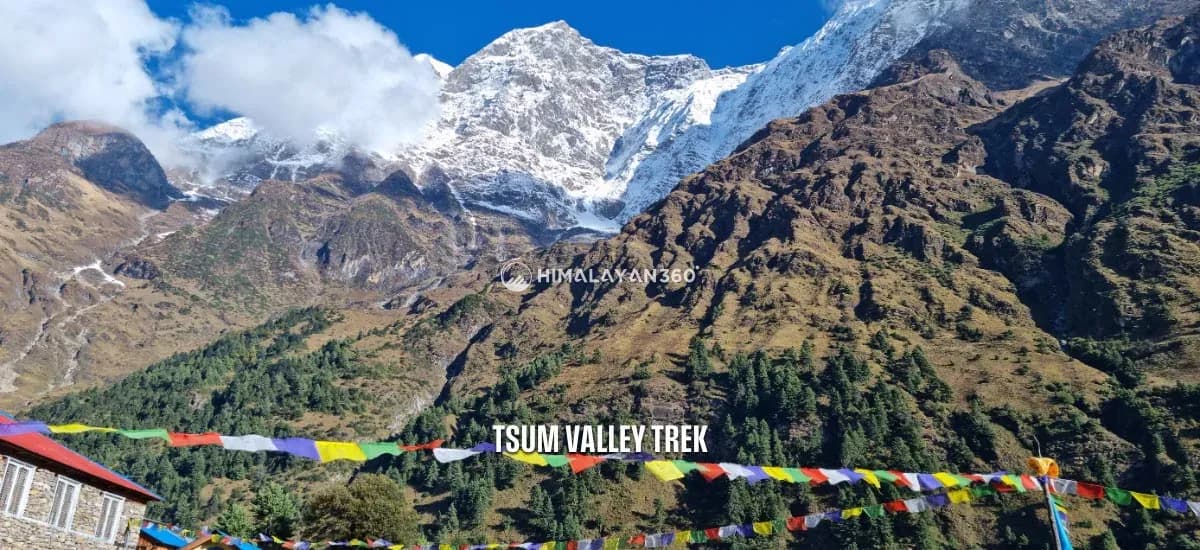
Along the way, you’ll discover a rare blend of Nepali and Tibetan culture, language, and traditions that make this region truly special. You will climb through Gurung villages with rice and millet terraces and cross many Buddhist shrines, especially in the Tsum Valley, which also has a similar culture to Tibetans. Tsum Valley, located near the Tibetan border, offers opportunities to encounter Buddhist monks and explore Milarepa’s Cave. You can also view Nepal’s national bird, the Lophophorus, against majestic landscapes of Mount Manaslu and Himalayan ridges like Hiunchuli and Annapurna II. The Manaslu Tsum Valley trek is ideal for adventure-seekers, but beginners with strong bodies and amazing stamina can also experience this. Just make sure that you are physically fit, if you are planning to take up the trek.

Max. Altitude
5,106m/16,752ft
Best Season
Mar, Apr, May, Sep, Oct, Nov
Travel Distance
197.7KM/ 122.8Miles
Difficulty
Destination
Nepal, Manaslu Region
Transportation
Bus, Car, Jeep
Start / End
Kathmandu/Kathmandu
Accommodation
Meals
Breakfast
Lunch
Dinner
Language
English | Chinese
Activities
6 hrs
Manaslu Tsum Valley Trek Highlights
- Follow an old path that was once used for trading with Tibet.
- Explore Milarepa Piren Phu Cave, a very holy cave in Tsum Valley.
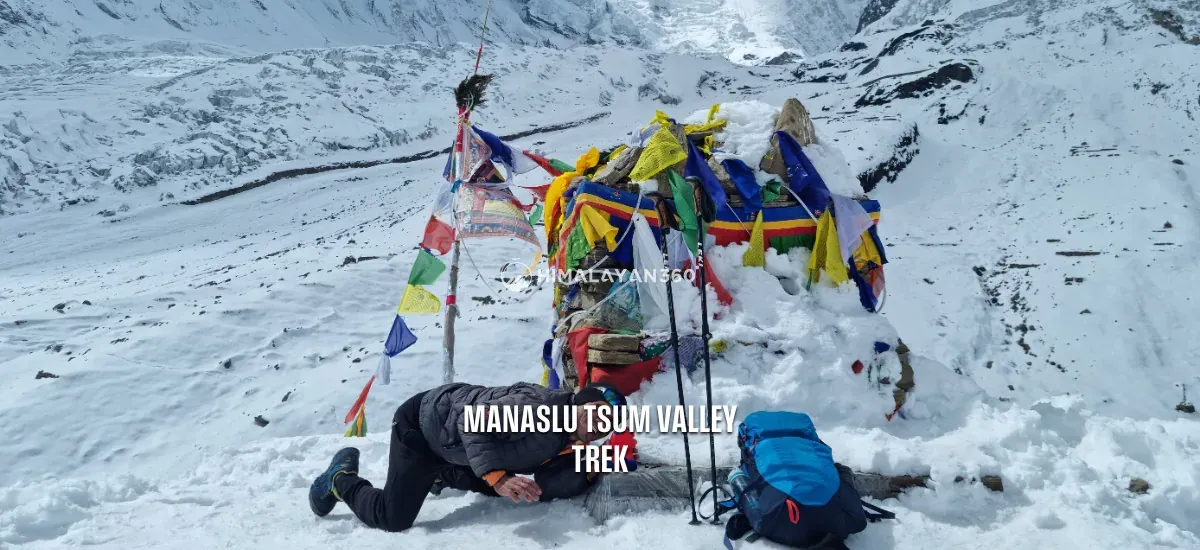
- Cross the high Larkya La Pass, one of the longest passes in the Himalayas.
- Experience the interesting mix of Tibetan Nupri and Gurung cultures.
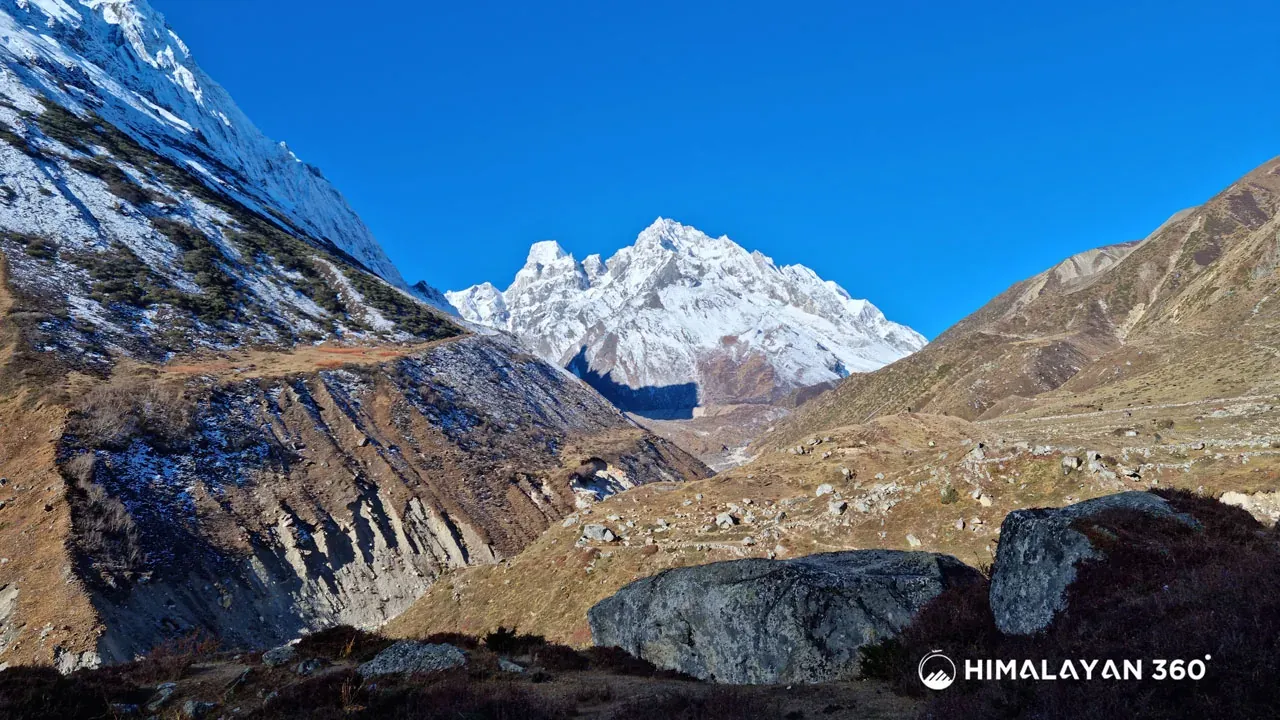
- See amazing views of glaciers, lakes, rocks, and mountains like Manaslu, Himchuli, and Ganesh near the Tibet border.
- Walk on trails that are not too crowded.
- Walk around the base of Mount Manaslu, the eighth-highest mountain in the world.
- Take optional day trips to Birendra Lake, Punhyen Glacier, or Manaslu Base Camp from Samagaun.
- See Dephyudonma and Rachen monasteries, the oldest ones in the Tsum Valley.
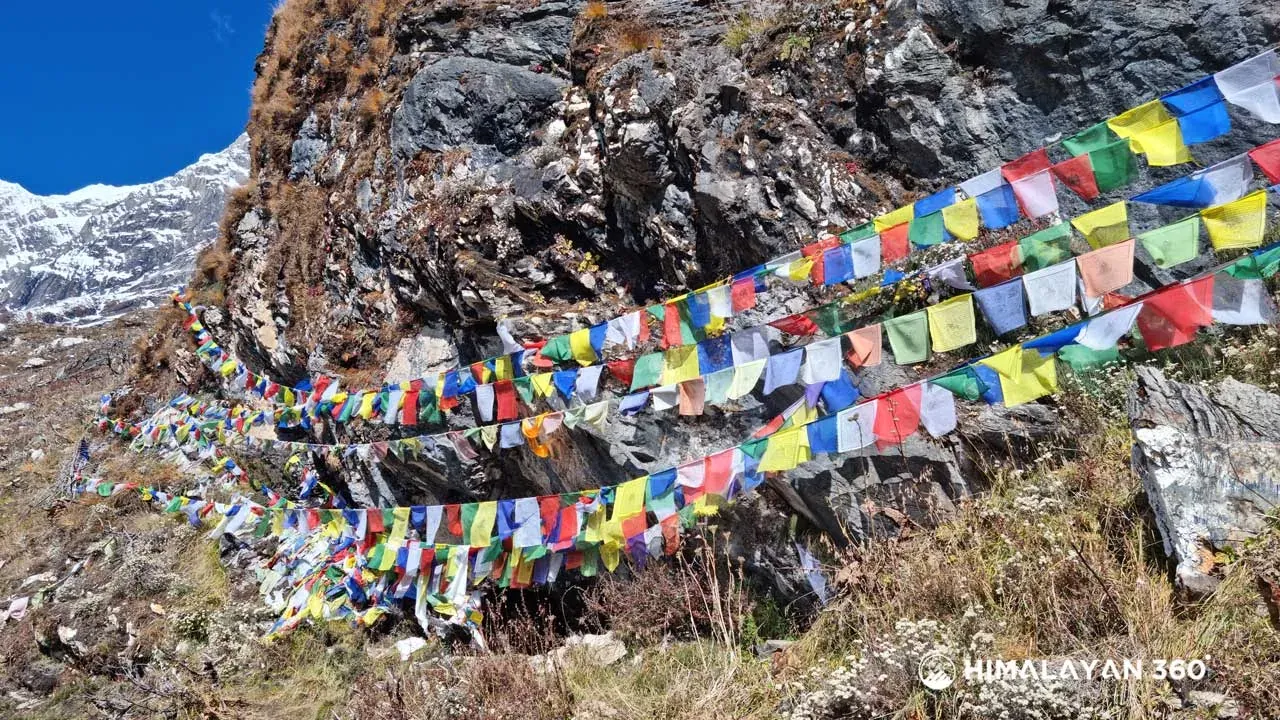
- Discover old Buddhist stupas, monasteries, and the traditional Tibetan way of life.
- Enjoy a beautiful drive from Kathmandu to the starting point at Soti Khola.
- Visit the Mu and Lungdang Gompa, essential monasteries in the Tsum Valley.
Outline Itinerary of Manaslu Tsum Valley Trek
20 Days Manalsu Tsum Valley Trek Itinerary
Day 01: Arrival at Tribhuvan International Airport in Kathmandu and transfer to hotel (1,400m/4,593ft)
| Itinerary Fact | Details |
|---|---|
| Highest Altitude: | 1,400m/4,593ft |
Place: Thamel
On the first day of the Manaslu and Tsum Valley Trek, you will arrive in Kathmandu. Our representative will meet you at the airport and take you to the hotel. In the evening, they will explain the plan for your stay and introduce you to the crew. You will spend the night at the hotel in Thamel.
| Itinerary Fact | Details |
|---|---|
| Accomodations: | 3 Star Hotel |
Day 02: Trek Briefing and Preparation of Manaslu Restricted Area Permit
Place: Thamel
Day two of the Manaslu Tsum Valley Trek is dedicated to crucial pre-trek arrangements in Kathmandu. Your trekking agency and guide will give you a comprehensive briefing, during which the itinerary, safety guidelines, local customs, and essential information about the trek will be thoroughly explained. This will allow you to ask any questions and feel well-prepared.
Our trekking agency will also complete the paperwork for your Manaslu Restricted Area Permit (MRAP) and the Tsum Valley Restricted Area Permit. To get these permits, you need to provide your original passport, visa details, passport-sized photos, and proof of travel insurance. These permits are required to enter these protected areas and can only be obtained through a registered trekking company.
| Itinerary Fact | Details |
|---|---|
| Meals: | Breakfast |
| Accomodations: | 3 Star Hotel |
Day 03: Drive from Kathmandu to Machha Khola (930m/3,051ft)
| Itinerary Fact | Details |
|---|---|
| Time: | 06-15 |
| Travel Duration: | 9 hours |
| Travel Distance: | 150km/93 miles |
| Highest Altitude: | 1,400m/4,593ft (Kathmandu) |
Place: Machha Khola
The third day of the Manaslu circuit and Tsum Valley trek begins with breakfast in Kathmandu. Today, we will leave the capital and reach Maccha Khola. The journey to Maccha Khola is long and can be uncomfortable due to bumpy roads. The jeep offers more comfort and flexibility, while the bus is a cheaper option, although it is less restful.
Depending on your chosen vehicle, reaching the first overnight stop takes about 7 to 9 hours. The last few hours will be over a rough road. After reaching Maccha Khola, you will enter your hotel for dinner and overnight stay.
| Itinerary Fact | Details |
|---|---|
| Meals: | Breakfast, Lunch, and Dinner |
| Accomodations: | Tea House or Lodge |
Day 04: Trek from Machha Khola to Jagat (1,410m/4,626ft)
| Itinerary Fact | Details |
|---|---|
| Time: | 08-15 |
| Trek Distance: | 22km/13.6 miles |
| Ascent: | 540m/1,772ft |
| Descend: | 60m/197ft |
| Trek Duration: | 7 hours |
| Highest Altitude: | 1,410m/4,626ft (Jagat) |
Place: Jagat
Today’s Manaslu Tsum Valley journey begins by following the Budhi Gandaki River upstream. After crossing the Tharo Khola, you walk alongside steep cliffs, waterfalls, and rocky gorges. You will also walk through occasional landslide-prone areas. You will then pass through the small settlement of Kholabesi before reaching Tatopani, a natural hot spring where you can dip your feet or relax for a moment.
Continuing onward, you will cross a suspension bridge over the Budhi Gandaki, pass through the village of Dobhan, and climb up a stone staircase to Thado Bharyang. From here, the final stretch takes us uphill to Jagat. Jagat is a beautiful stone-paved village and the official gateway to the Manaslu Conservation Area. We’ll register our permits at the checkpoint here. Overnight stay at a teahouse in Jagat.
| Itinerary Fact | Details |
|---|---|
| Meals: | Breakfast, Lunch, and Dinner |
| Accomodations: | Tea House or Lodge |
Day 05: Trek from Jagat to Lokpa (2,240m/7,349ft)
| Itinerary Fact | Details |
|---|---|
| Time: | 08-15 |
| Trek Distance: | 17km/10.6 miles |
| Ascent: | 900m/2,953ft |
| Descend: | 70m/230ft |
| Trek Duration: | 7 hours |
| Highest Altitude: | 2,240m/7,349ft (Lokpa) |
Place: Lokpa
Today marks our entry into the restricted Tsum Valley region. After a short climb up to Salleri, you’ll walk along scenic riverbanks and cross the Budhi Gandaki on a long suspension bridge. The trail gradually opens up as we head toward Philim.
At Ekle Bhatti, the trekking route splits. One continues along the Manaslu Circuit, and the other diverts to Tsum Valley. We take the right-hand trail that ascends through dense forest and narrow gorges toward Lokpa, the first village in Tsum Valley. Lokpa offers some of the first wide-angle views of Himalchuli and Boudha Himal. This hidden valley is said to have been blessed by Padmasambhava, the great tantric master who introduced Buddhism to Tibet. Overnight stay at a lodge in Lokpa.
| Itinerary Fact | Details |
|---|---|
| Meals: | Breakfast, Lunch, and Dinner |
| Accomodations: | Tea House or Lodge |
Day 06: Trek from Lokpa to Chumling (2,386m/7,828ft)
| Itinerary Fact | Details |
|---|---|
| Time: | 08-13 |
| Trek Distance: | 6.3km/3.9 miles |
| Ascent: | 186m/610ft |
| Descend: | 40m/131ft |
| Trek Duration: | 5 hours |
| Highest Altitude: | 2,386m/7,828ft (Chumling) |
Place: Chumling
The trek ahead starts getting tougher from the sixth day of your Manaslu Tsum Valley trek. As you move forward, you will see beautiful sights like a deep gorge, the Lungwa River valley, and forests of rhododendron, pine, and juniper. Ganesh Himal stands out as the tallest mountain. Also, there are no villages along the route, so you’ll be surrounded by untouched nature and its mesmerizing beauty throughout the trek.
After a final uphill push through thick pine and rhododendron forest, you will arrive at Chumling. Chumling is the first major village in the lower Tsum Valley area and is the gateway to the Upper Tsum Valley. Upon arrival, we can also visit two nearby Buddhist monasteries: Panago Gompa and Gurwa Gompa. Chumling has only a few simple houses, and since you will get here by lunchtime, it’s a great idea to explore these monasteries before settling down for the evening. Overnight stay at a local lodge in Chumling.
| Itinerary Fact | Details |
|---|---|
| Meals: | Breakfast, Lunch, and Dinner |
| Accomodations: | Tea House or Lodge |
Day 07: Trek from Chumling to Rachen Gompa (3,240m/10,630ft)
| Itinerary Fact | Details |
|---|---|
| Time: | 08-14 |
| Trek Distance: | 10.5km/6.5 miles |
| Ascent: | 854m/2,802ft |
| Descend: | 0m/0ft |
| Trek Duration: | 6 hours |
| Highest Altitude: | 3,240m/10,630ft (Rachen Gompa) |
Place: Rachen Gompa
Starting from Chumling (2,386m/7,828ft), the trek to Rachen Gompa (3,240m/10,630ft) takes about 6-7 hours and involves a gradual climb. Along the way, you’ll enjoy beautiful views of the Himalayas, including the Ganesh Himal range. The trail passes through small villages, allowing you to see the culture and way of life of the Tsumba people, who are closely connected to Tibetan Buddhism.
When you reach Rachen Gompa, a significant Buddhist nunnery established in 1936, you can explore its detailed murals, ancient Buddhist texts, and the calm spiritual environment created by the locals.
| Itinerary Fact | Details |
|---|---|
| Meals: | Breakfast, Lunch, and Dinner |
| Accomodations: | Tea House or Lodge |
Day 08: Trek from Rachen Gompa to Nile (3,360m/11,024ft) and hike to Mu Gompa (3,700m/12,139ft), then back to Nile
| Itinerary Fact | Details |
|---|---|
| Time: | 08-15 |
| Trek Distance: | 12.4km/7.7 miles |
| Ascent: | 460m/1,509ft |
| Descend: | 340m/1,115ft |
| Trek Duration: | 7 hours |
| Highest Altitude: | 3,700m/12,139ft (Mu Gompa) |
Place: Nile
On your eighth day of your Manaslu Tsum Valley trek, the trek takes place from the peaceful Rachen Gompa and descends to Nile village. Nile is the last village in the Upper Tsum Valley. It sits on the west side of the Shiar Khola River. You will stop here for a bit to rest and enjoy the beautiful views.
After that, you will continue your hike towards Mu Gompa. Mu Gompa is one of the most sacred points of the Tsum Valley Trek. It offers a glimpse into the rich Buddhist heritage of the area and breathtaking views of the mountains. After exploring Mu Gompa and the surrounding region, you will return to the Nile for the night. This day will be filled with cultural experiences and a sense of awe for the spiritual hub of the upper Tsum Valley.
| Itinerary Fact | Details |
|---|---|
| Meals: | Breakfast, Lunch, and Dinner |
| Accomodations: | Tea House or Lodge |
Day 09: Trek from Nile to Chumling (2,386m/7,828ft)
| Itinerary Fact | Details |
|---|---|
| Time: | 08-14 |
| Trek Distance: | 15km/9.3 miles |
| Ascent: | 60m/197ft |
| Descend: | 1,034m/3,392ft |
| Trek Duration: | 6 hours |
| Highest Altitude: | 3,360m/11,024ft (Nile) |
Place: Chumling
You will hike down from the Nile, the last village in the upper Tsum Valley, to Chumling in the lower Tsum Valley today. This trek usually takes about 6 to 7 hours and covers around 12 kilometers. Walking down, you will see the plants becoming greener and more varied.
You will leave behind the dry landscapes of the higher altitudes. The trail goes through forests and along the Siyar Khola river, giving you enjoyable views as you enter the lower Tsum region and reach the friendly village of Chumling, where you will stay overnight.
| Itinerary Fact | Details |
|---|---|
| Meals: | Breakfast, Lunch, and Dinner |
| Accomodations: | Tea House or Lodge |
Day 10: Trek from Chumling to Deng (1,860m/6,102ft)
| Itinerary Fact | Details |
|---|---|
| Time: | 08-15 |
| Trek Distance: | 12km/7.5 miles |
| Ascent: | 40m/131ft |
| Descend: | 626m/2,054ft |
| Trek Duration: | 7 hours |
| Highest Altitude: | 2,386m/7,828ft (Chumling) |
Place: Deng
After leaving Chumling, you will have a long downhill walk to Lokpa village. The day 10 Manaslu Tsum Trek begins on a boulder hill where you can catch a glimpse of Sringi Himal in the distance. You will walk alongside the Shair Khola River, and the path will treat you to glorious views of Ganesh Himal, Manaslu, and other snow peaks surrounding the region.
Along the way, you will also pass over Ghatta Khola and trek through maize, millet, potato, and vegetable fields. Following the trek in a dry canyon, you will pass over a spot of bamboo forest to reach the Deng River and continue trekking along the bank of the Budhi Gandaki River to finally reach Deng village.
| Itinerary Fact | Details |
|---|---|
| Meals: | Breakfast, Lunch, and Dinner |
| Accomodations: | Tea House or Lodge |
Day 11: Trek from Deng to Namrung (2,660m/8,727ft)
| Itinerary Fact | Details |
|---|---|
| Time: | 08-15 |
| Trek Distance: | 19km/11.8 miles |
| Ascent: | 860m/2,822ft |
| Descend: | 0m/0ft |
| Trek Duration: | 7 hours |
| Highest Altitude: | 2,660m/8,727ft (Namrung) |
Place: Namrung
The eleventh day of the Manaslu Tsum Valley Trek is again exciting as you continue to go downhill. Today, you are on the Manaslu Trekking trail again. You begin the day by climbing up and then descending to the Budhi Gandaki River. You’ll walk through several small villages like Gaap, Rana Gaon, and Bhiphedi.
One of the main highlights on this day will be the stunning view of Shyaula Peak. After several hours of walking, you will reach Namrung, which has the best tea shops and hotels. The village is beautiful and offers a magnificent view of hills and valleys.
| Itinerary Fact | Details |
|---|---|
| Meals: | Breakfast, Lunch, and Dinner |
| Accomodations: | Tea House or Lodge |
Day 12: Trek from Namrung to Lho (3,180m/10,433ft)
| Itinerary Fact | Details |
|---|---|
| Time: | 08-14 |
| Trek Distance: | 11.2km/6.9 miles |
| Ascent: | 520m/1,706ft |
| Trek Duration: | 6 hours |
| Highest Altitude: | 3,180m/10,433ft (Lho) |
Place: Lhogaon
Today we will trek from Namrung to Lho. The trail climbs through a forest and passes barley fields and small villages like Lihi. From Lihi, you’ll get amazing views of Himal Chuli and Ganesh Himal. The trail then goes downhill to the Simnang Valley and crosses the Hinang River, where you can see the peak of Ngadi Chuli. After passing the village of Sho, the path climbs again through prayer wheels and forest trails. Finally, you will reach Lho.
Lho is a large and peaceful village on a ridge with stunning views of Manaslu mountain and the Naike Himal. In the evening, you can hike to a nearby viewpoint called Kani to watch the sunset over the mountains. The village also has a beautiful monastery called Ribung Monastery. If you wake up early, you can also enjoy the sunrise from Lho.
| Itinerary Fact | Details |
|---|---|
| Meals: | Breakfast, Lunch, and Dinner |
| Accomodations: | Tea House or Lodge |
Day 13: Trek from Lho to Samagaon (3,530m/11,581ft)
| Itinerary Fact | Details |
|---|---|
| Time: | 08-12 |
| Trek Distance: | 7km/4.3 miles |
| Ascent: | 350m/1,148ft |
| Trek Duration: | 4 hours |
| Highest Altitude: | 3,530m/11,581ft Samagaon |
Place: Samagaon
Today’s trek from Lho to Samagaon is short and scenic. At first, you will pass through the peaceful village of Shyala. The views of Mount Manaslu are stunning throughout, which appear even more majestic as you get closer to Samagaon. You’ll reach the Samagaon village by lunchtime, giving you plenty of time to rest or explore.
In the afternoon, you can climb to the Ribung Gompa and its surroundings. You can also hike to Pungyen Gompa, which lies below the eastern face of Manaslu and offers a closer view of the glacier and surrounding peaks. You can also visit the nearby glacial moraine or explore a small cave near the monastery. If you’re tired, relaxing in Samagaon and soaking in the mountain atmosphere is just as rewarding.
| Itinerary Fact | Details |
|---|---|
| Meals: | Breakfast, Lunch, and Dinner |
| Accomodations: | Tea House or Lodge |
Day 14: Rest day in Samagaon: Hiking to Birendra Lake or Manaslu base camp
| Itinerary Fact | Details |
|---|---|
| Time: | 08-12 |
| Trek Distance: | 5km/4.5 miles |
| Ascent: | 250m/820ft |
| Descend: | 250m/820ft |
| Trek Duration: | 3 hours |
| Highest Altitude: | 3,530m/11,581ft, Samagaon |
Place: Samagaon
The 14th day of the Manaslu Tsum Valley Trek is an acclimatization day at Samagaon. Although it’s a rest day, you have a few great options for light exploration. You can go on a short hike to Birendra Tal, taking just a couple of hours, or a more strenuous hike to Birendra Lake, which takes 5 to 6 hours. Birendra Lake offers stunning views and great photo opportunities.
For a challenging option, you can hike to Manaslu Base Camp (4,880m / 15,748 feet) in about 7 hours to witness the amazing views of Manaslu Glacier and the surrounding peaks.
| Itinerary Fact | Details |
|---|---|
| Meals: | Breakfast, Lunch, and Dinner |
| Accomodations: | Tea House or Lodge |
Day 15: Trek from Samagaon to Samdo (3,690m/12,106ft)
| Itinerary Fact | Details |
|---|---|
| Time: | 08-12 |
| Trek Distance: | 8.5km/5.2 miles |
| Ascent: | 230m/755ft |
| Descend: | 70m/230ft |
| Trek Duration: | 4 hours |
| Highest Altitude: | 3,690m/12,106ft (Samdo) |
Place: Samdo
Today, you will move from Samagaon after spending a day adjusting. From Sama Gaun, it’s a short hike to Samdo. Further, the trail doesn’t have a steep uphill section. Samdo is an interesting village mainly inhabited by a Bhotia community that follows Buddhism. Once in Samdo, you can visit Samdo Peak or the nearby area from Samdo town. If you visit the peak, you will walk through the valley with grazing yaks and cross the Budhi Gandaki River to reach White Kani village.
| Itinerary Fact | Details |
|---|---|
| Meals: | Breakfast, Lunch, and Dinner |
| Accomodations: | Tea House or Lodge |
Day 16: Trek from Samdo to Larkya Phedi (4,470m/14,665ft)
| Itinerary Fact | Details |
|---|---|
| Time: | 08-12 |
| Trek Distance: | 6km/3.7 miles |
| Ascent: | 870m/2,854ft |
| Descend: | 90m/295ft |
| Trek Duration: | 4 hours |
| Highest Altitude: | 4,470m/14,665ft Larkya Phedi |
Place: Larkya Phedi
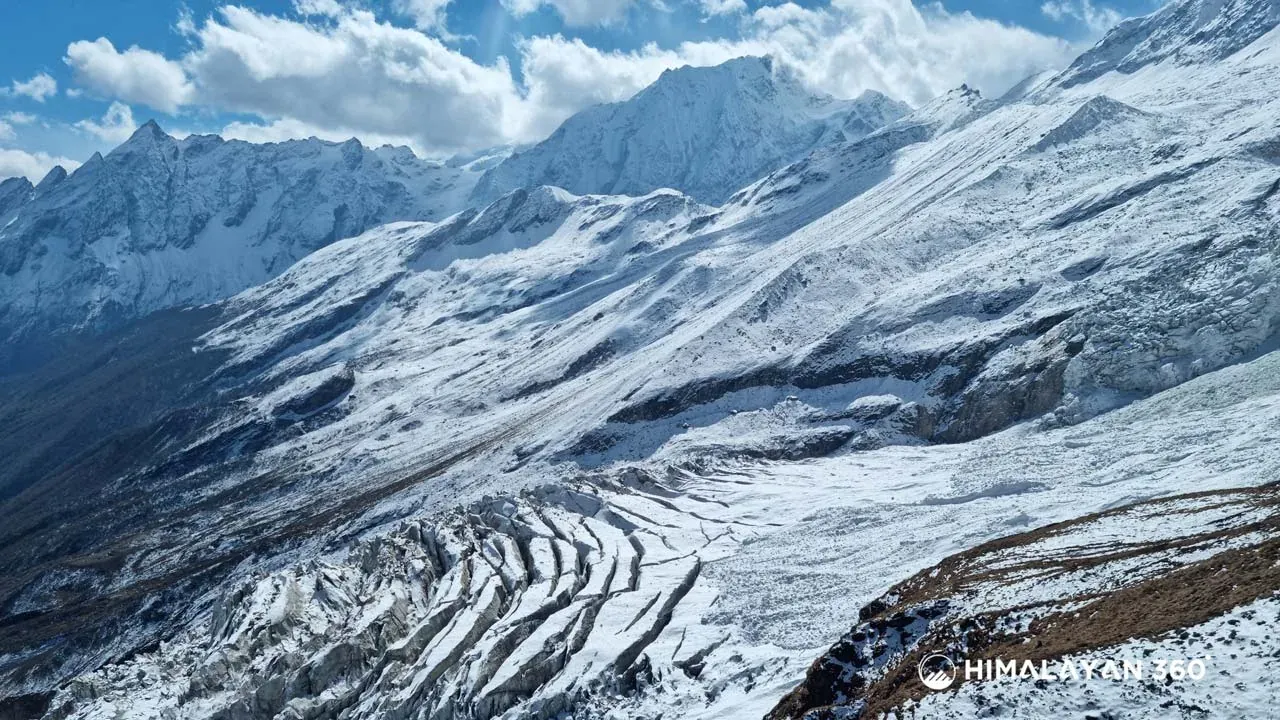
After a good breakfast at Samdo, you will begin your trek towards Larkya Phedi, commonly referred to as Dharamsala. This section of the trek acclimatises you to the challenging Larkya La pass. The climb becomes steeper as we head toward the base of the Larkya La Pass. Along the way, we pass two streams and get our first close views of the Larkya Glacier. The path curves around the Salka Khola Valley and gradually ascends to Larkya La Phedi, also known as Dharamsala. This is a basic resting point with a stone shelter, not a full lodge.
At Dharamsala (4,470m), we rest for the night and prepare ourselves for the challenging Larkya La Pass crossing the next day. You’ll enjoy breathtaking views of the glacier and the mighty Manaslu along the way.
| Itinerary Fact | Details |
|---|---|
| Meals: | Breakfast, Lunch, and Dinner |
| Accomodations: | Tea House or Lodge |
Day 17: Trek from Larkya Phedi to Bimthang (3,720m/12,205ft) via Larkya La Pass (5,106m/16,752ft)
| Itinerary Fact | Details |
|---|---|
| Time: | 05-14 |
| Trek Distance: | 24.8km/15.4 miles |
| Ascent: | 636m/2,087ft |
| Descend: | 1,386m/4,547ft |
| Trek Duration: | 9 hours |
| Highest Altitude: | 5,106m/16,752ft (Larkya La Pass) |
Place: Bimthang
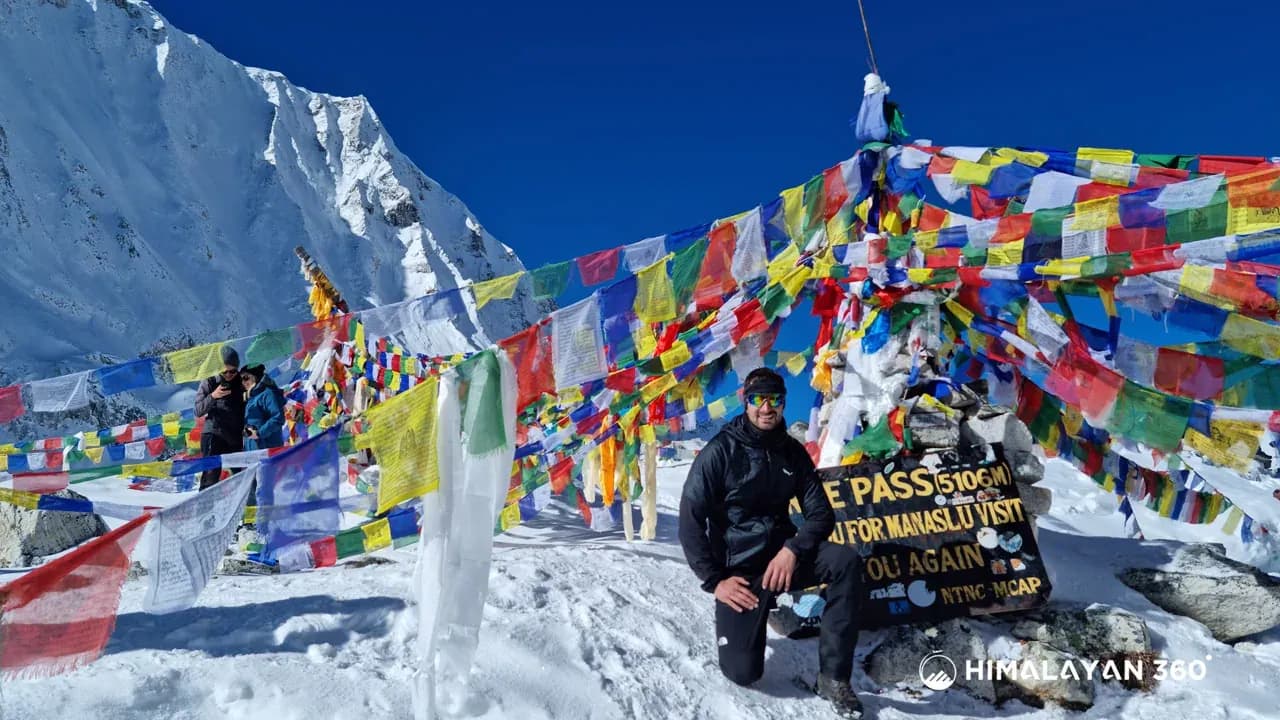
This is one of the longest and most challenging days of the trek. We start early in the morning to take advantage of good weather conditions and avoid afternoon winds at the high pass. The trail climbs gradually over rocky terrain as we make our way to Larkya La Pass, the highest point of the Tsum Valley trek at 5,106 meters.
From the top of the pass, you’ll enjoy breathtaking panoramic views of mountains like Himlung Himal, Cheo Himal, Kang Guru, and Annapurna II. After soaking in the views, we begin a steep and sometimes slippery descent toward Bimthang. We trek through glacial moraines and eventually reach greener pastures as we descend. After a long day, we finally arrive at Bimthang, where we rest and spend the night in a cozy teahouse or lodge.
| Itinerary Fact | Details |
|---|---|
| Meals: | Breakfast, Lunch, and Dinner |
| Accomodations: | Tea House or Lodge |
Day 18: Trek from Bhimtang to Dharapani (1,820m / 5,971ft)
| Itinerary Fact | Details |
|---|---|
| Time: | 08-16 |
| Trek Distance: | 21km/13 miles |
| Descend: | 1900m/6,234ft |
| Trek Duration: | 8 hours |
| Highest Altitude: | 3,720m/12,205ft (Bimthang) |
Place: Dharapani
The eighteenth day of the Manaslu Tsum Valley Trek involves trekking from Bhimtang to Dharapani, starting the day with a rich breakfast at an elevation of 3,720m. You will descend by about 1,900m as you trek about 21km in about 8 hours. The trek begins with views of wide meadows and then follows along the Budhi Khola river. You will hike through the river and trek through beautiful rhododendron forests. In a few hours, you’ll arrive at Tije, also renowned for its apple orchards and local wine. It’s another hour’s trek from Tije to Dharapani, where you stay overnight in a tea house or a lodge.
| Itinerary Fact | Details |
|---|---|
| Meals: | Breakfast, Lunch, and Dinner |
| Accomodations: | Tea House or Lodge |
Day 19: From Dharapani, drive to Besisahar (760m / 2,493ft), then back to Kathmandu/Pokhara.
| Itinerary Fact | Details |
|---|---|
| Time: | 08-17 |
| Travel Duration: | 9 hours |
| Travel Distance: | 220km/137 miles |
| Highest Altitude: | 1,820m / 5,971ft (Dharapani) |
Place: Thamel
On this day of the Manaslu circuit Tsum Valley trek, we will drive all the way. We start from Dharapani (1,820m) to Besisahar (760m) on a jeep covering about 220 km. From Besisahar, we will switch to a bus for the return trip to Kathmandu or Pokhara, which takes approximately 9 hours. We’ll stop for lunch along the way at a local roadside restaurant. Upon arrival in Kathmandu, you will check into a comfortable 3-star hotel in the lively Thamel area for an overnight stay. In the evening, enjoy a farewell dinner at a traditional Nepali restaurant, complete with a cultural dance performance to celebrate the completion of your trek.
| Itinerary Fact | Details |
|---|---|
| Meals: | Breakfast, Lunch, and Dinner |
| Accomodations: | 3-star hotel |
Day 20: Transfer to the International Airport for your Final Departure
The final day of the Manaslu Tsum Valley trek starts with breakfast. After breakfast, depending on your flight schedule, our team will arrange your transfer to Tribhuvan International Airport for your journey home. We hope you had an unforgettable experience exploring the Manaslu Circuit and Tsum Valley, and we look forward to welcoming you back to Nepal again.
| Itinerary Fact | Details |
|---|---|
| Meals: | Breakfast |
Explore with Local Experts! Our experienced guides, porters, and staff are locals who know every trail, culture, and hidden gem. Travel with us for an authentic adventure!
Manaslu Tsum Valley Trek Trek Altitude ( in Table)
| Day | Location | Highest Altitude (m) | Highest Altitude (ft) |
| 1 | Kathmandu | 1,400 | 4,593 |
| 2 | Kathmandu | 1,400 | 4,593 |
| 3 | Machha Khola | 1,400 | 4,593 |
| 4 | Jagat | 1,410 | 4,626 |
| 5 | Lokpa | 2,240 | 7,349 |
| 6 | Chumling | 2,386 | 7,828 |
| 7 | Rachen Gompa | 3,240 | 10,630 |
| 8 | Mu Gompa | 3,700 | 12,139 |
| 9 | Nile | 3,360 | 11,024 |
| 10 | Deng | 2,386 | 7,828 |
| 11 | Namrung | 2,660 | 8,727 |
| 12 | Lho | 3,180 | 10,433 |
| 13 | Samagaon | 3,530 | 11,581 |
| 14 | Samagaon | 3,530 | 11,581 |
| 15 | Samdo | 3,690 | 12,106 |
| 16 | Larkya Phedi | 4,470 | 14,665 |
| 17 | Larkya La Pass | 5,106 | 16,752 |
| 18 | Bimthang | 3,720 | 12,205 |
| 19 | Dharapani | 1,820 | 5,971 |
| 20 | Kathmandu | 1,400 | 4,593 |
Best Time to Trek Manaslu Tsum Valley Trek
The best times to trek the Manaslu Tsum Valley are from early October to November (Autumn) and from March to May (Spring). These months are ideal for trekking in Nepal. During this period, you will see blooming rhododendrons, clear skies, the best mountain views, a pleasant atmosphere, and mild temperatures. The average temperature ranges from 10 to 20 degrees, but nights can still be cold, sometimes reaching freezing point.
Likewise, December to mid-February (Winter) brings harsh conditions for trekking in the upper Himalayan region. Heavy snowfall and extreme cold can make travel difficult. Many villagers move to lower areas during this time. While you can still trek, you must be well prepared with food, camping tents, and essential gear. At night, the temperature drops below the freezing point, sometimes even to -25 degrees.
Further, June to September (Rainy + Summer) brings heavy rain and extreme heat, especially in the lower areas. Continuous rain can make trekking challenging and may obstruct views of the Himalayas. Further, extreme heat makes it difficult to walk. While the Tsum Valley lies in a partial rain-shadow, conditions can still be wet and humid in the early parts of the trail. Most trekkers avoid this time due to the difficult trail conditions.
A typical day on the Manaslu Tsum Valley Trek
A typical day on the Tsum Valley trek begins early in the morning, between 5 a.m. to 6 a.m. You will wake up, enjoy a nice local breakfast as you take in the pleasant views of the mountains and the valleys. After that, you will begin trekking.
Early Morning
7 AM – 8 AM:
After breakfast, get ready for the trek. Pack the essentials you need and wear layers to accommodate the altitude. Keep a separate bag for items you use often, like snacks, chocolate, water bottles, and sunglasses.
8 AM to 12 or 1 PM:
Start the trek around 8 or 9 AM, depending on when you wake up. This first part lasts about 4-5 hours. You can cover more distance since you will feel fresh after your morning sleep. After trekking for 4-5 hours, you will stop for lunch based on your plan.
Afternoon
12 PM to 1 PM:
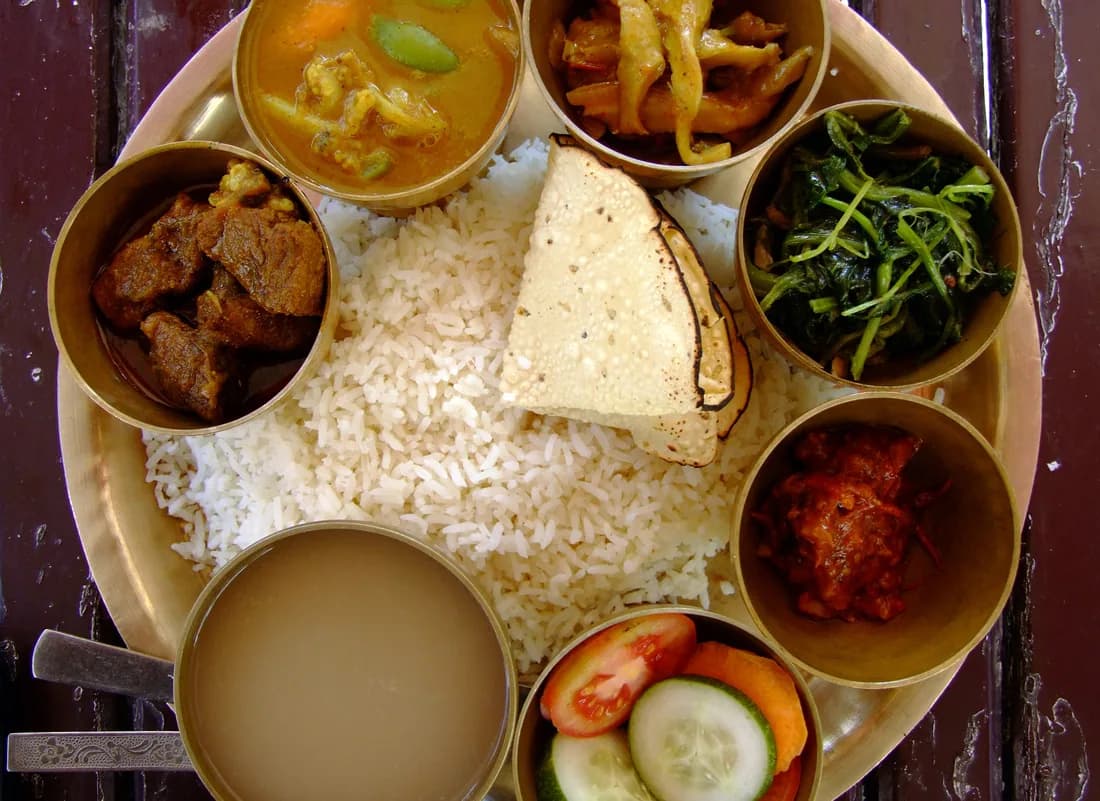
Take a one-hour lunch break to rest. Your guide will take you to a teahouse where you can enjoy local dishes like Dal Bhat. Some teahouses also have Western food options like pizza, burgers, and spaghetti.
1 PM to 4 PM:
After lunch, start your afternoon trek. This usually takes about 4 to 5 hours. Since you might feel tired, take your time and travel more slowly. You will visit local villages, see beautiful scenery, and explore ancient temples or monasteries. As evening approaches, the light changes, creating long shadows on the mountains.
Evening
4 PM to 7 PM:
During the 4 PM to 5 PM window on a typical Manaslu Tsum Valley trek day, you will have reached the day’s destination. After that, you will begin to settle into the teahouses, freshen up after the day’s walk, and often socialize with fellow trekkers and the local hosts. This is also the time to order dinner from the teahouse menu, perhaps enjoying a warm beverage while recounting the day’s experiences and taking in the surrounding mountain views before the evening sets in.
Night
7 PM to 8 PM:
A calm atmosphere takes over as evening falls in the Manaslu Tsum Valley. Between 7 PM and 8 PM, the smell of dinner fills the air. You’ll find a mix of local Nepali dishes and possibly some familiar Western food at the teahouse. Mealtime becomes a chance for trekkers to come together, share stories about their day, and connect while enjoying the beautiful Himalayan scenery.
8 PM to 10 PM:
Following a hearty dinner, 8 PM and 10 PM are a precious window for rest and recovery. Knowing that another day of rewarding yet challenging trekking lies ahead, an early bedtime is necessary. You’ll bid goodnight to your dedicated crew, appreciating their hard work, and then settle into your sleeping bag, allowing your body and mind to recharge fully.
Foods Available During Manaslu Tsum Valley Trek
The Tsum Valley Trek occurs at high altitudes near the world’s 8th-highest peak. Because of this, your body needs enough carbohydrates, protein, and other nutrients. You will find nutritious food in the trekking areas, but your choices will be limited. Our Manaslu Tsum Valley trek package includes 19 breakfasts, 19 lunches, and 18 dinners. All meals in the trekking regions are provided on a full-board basis, which means you get breakfast, lunch, and dinner.
For Breakfast – Tibetan Tsampa Porridge, Pancakes, Eggs, Fruits, Oatmeal, French Toast with Jam, Butter, Cheese, Muesli Breads, Corn Flakes, Vegetables, and Hot Drinks.
For Lunch and Dinner:
- Macaroni
- Pasta with cheese and tomato sauce
- Prawn crackers and papad
- Puffcorn
- Non-veg Momo (Mainly Chicken or Buff)
- Spaghetti with either cheese, tomato, or both
- Sandwich (optional egg) served with chips
- Boiled Noodles, Mixed Fried Noodles
- Fried potatoes with fresh vegetables, an egg, or cheese.
- Rice with chicken curry or vegetable curry
- Roast, mash, or hash brown potatoes.
- Chowmein, Tenthuk, and Thukpa
- Veggie Spaghetti with tomato ketchup
- Veg, egg, or cheese fried rice
- Fried noodles with cheese add-on
- Veg-fried pasta, cheese-fried pasta
- Vegetable and potato momo, either grilled or steamed
- Finger Chips (eggs optional)
- Sherpa Stews
- Dal Bhat (vegetable, non-veg)
- Sandwich with either grilled tomato or grilled cheese, or both
- Spaghetti with tuna, cheese, and tomato sauce
- Cheese Momo
- Spring rolls, Pakauda, sizzlers, etc.
- Tomato Sandwich with grilled tuna, Club Sandwich
- Boiled potatoes
- Fried noodles (vegetable or egg)
Apart from these foods, trekkers are advised to carry energy drinks and snack bars, which they can take in their side bag and have during the trek.
Accommodation
Accommodation on the Manaslu Tsum Valley Trek varies depending on the location. In the city areas (Kathmandu), there are options to choose from three—to five-star hotels or budget lodges, whereas in the higher, remote altitudes, you will have options of a teahouse or camping in a barren field.
Tea houses, or guest houses, are the main lodging options on the Tsum Valley and Manaslu Circuit. They provide cozy spaces for trekkers to eat, relax, and connect. Key stops like Jagat, Lho, Shyala, Samagaun, and Samdo offer excellent facilities, while others provide basic accommodations with essentials like beds, blankets, and dining areas. Staying in these lodges immerses you in local culture and the warm hospitality of the Nepalese people.
Likewise, camping on the Manaslu Tsum Valley Trek is a great way to experience the wild and remote beauty of the region. In some areas where teahouses are limited or unavailable, trekkers set up tents in open fields and spend the night under the stars. This option is now less common and more expensive than staying in teahouses. Camping requires extra gear such as tents, cooking equipment, and a support team to carry everything.
Difficulty Involving Manaslu Tsum Valley Trek
The Manaslu Tsum Valley Trek is a difficult trek in Nepal. Physical fitness and strong determination are required. Despite the challenge, many trekkers go to the Manaslu area during each season. Several factors influence the level of difficulty of the trek, which we will talk about later. Nonetheless, with proper planning and preparation, even someone who has done the trek once can undertake the Manaslu trek. The trek is popular among experienced trekkers who have done other popular treks in Nepal. Thus, let’s discuss some of the elements of difficulty in the trek.
High Altitude
The Manaslu Circuit Trek is a high-altitude trek that goes from 600 meters to 5,106 meters at Manaslu Larke La Pass. This trek can increase the risk of altitude sickness, also called Acute Mountain Sickness (AMS). Anyone, no matter their age or fitness level, can get altitude sickness when they go above 3,000 meters. Early signs of AMS include headaches, dizziness, nausea, vomiting, a faster heartbeat, and trouble sleeping. You can manage mild symptoms by adjusting to the altitude, drinking plenty of water, and resting enough. However, if symptoms worsen, the person should move to a lower altitude or may need to be flown to Kathmandu if the condition is serious.
Rugged Terrain
The Manaslu Tsum Valley Trek is quite challenging because of its rough terrain and topography. You’ll be hiking in the foothills of the massive Himalayas. The trek is both physically and mentally demanding due to its steep paths, large rocks, and cliffs. The trail is extremely challenging, with numerous ups and downs. The trek passes through uncharted areas, making it even harder. You’ll be faced with natural obstacles, river crossings, and difficult terrain that will push you to the limit. You’ll need to be in top endurance and fitness to undertake this high-altitude trek. Therefore, it’s extremely important to prepare well for this trek.
Remote Area
The remote location of the Manaslu Tsum Valley Trek significantly contributes to its difficulty due to limited infrastructure and accessibility. Unlike more popular trekking regions with well-established facilities, this area has basic teahouses for accommodation and food, and transportation to the trek’s starting point often involves long, bumpy rides on unpaved roads. The remoteness means there are few ways to communicate and limited access to medical facilities. This requires trekkers to be self-sufficient and well-prepared for unexpected situations.
Permits Required for Tsum Valley Trek
There are several permits that trekkers need to obtain for the Manaslu Tsum Valley Trek. They are listed below:
1. Manaslu Restricted Area Permit (RAP): This Manaslu special permit is mandatory for trekking in the Manaslu region. The cost varies depending on the season and duration of your trek. From September to November, it’s USD 100 for the first week and USD 15 per day afterward. From December to August, it’s USD 75 for the first week and USD 10 per day afterward.
2. Tsum Valley Restricted Permit: If you plan to explore Tsum Valley, you’ll need this additional permit. The cost is USD 40 for the first week and USD 7 per day thereafter. Since the Tsum Valley is also in a restricted area, it requires a restricted area permit.
3. Annapurna Conservation Area Permit (ACAP): This permit is required if you plan to trek to or from the Annapurna region, which is a standard route for the Manaslu Tsum Valley trek. The Trek passes through the Annapurna Sanctuary. It costs USD 30 per person.
4. Manaslu Conservation Area Permit (MCAP): This permit is also required and costs USD 30 per person for tourists from other countries and approximately $10 per person for tourists from the SAARC nations.
Major Attractions of Manaslu Tsum Valley Trek
The Manaslu Tsum Valley Trek is among the most underrated treks because of its stunning mountain views, strolling in the remote settlements, and the chance to immerse oneself in unique culture and traditions. Here are some reasons you should experience the Tsum Valley Trek.
Manaslu Base Camp
One of the main reasons to undertake the Manaslu Tsum Valley Trek is the chance to explore the Manaslu Base Camp. From the base camp, you can see the eighth-tallest mountain in the world, Mount Manaslu. You will see the majestic mountains and the stunning Tsum Valley filled with snowy mountains and glacial moraines.
Birendra Lake
Birendra Lake is the major attraction of the Tsum Valley Trek. This freshwater lake is in the Manaslu Glacier in Gorkha District, northern-central Nepal. It is named after the late King Birendra Shah. The lake is close to the Punhyen Glacier and the Gompa in Samagaun. Trekkers traveling from Sama Gaun to Manaslu Base Camp can visit this lake in Gandaki Province. Birendra Lake became popular as more people chose to trek the Manaslu Circuit.
Larkya La Pass
Larkya La Pass is another major attraction of the Tsum Valley Trek. Its altitude is approximately 5100m, making it one of the highest passes. It is a starting point for treks to Manaslu Base Camp and Bhimtang Valley. The pass is named after Larkya Peak, 6249 meters in the Annapurna region. The trail leads to the right sub-peak of Manaslu. One of the significant reasons that trekkers like to reach this pass is to click photos of majestic mountain views and the entire Tsum Valley.
Majestic Mountain Views
Trekkers will also get to see the amazing mountain views throughout the trek. Some of the views you will see during this expedition are Sringi Himal, Ganesh Himal, Boudha Himal, Annapurna, Dhaulagiri, Fishtail, Himalchuli, and Nilgiri. The trekkers who love mountain climbing and adventure in the Himalayas are the most enthusiastic about this trek.
Remote villages & off the beaten Trail
Many trekking spots in Nepal are highly commercialized and often crowded. However, Tsum Valley is different as it is the least crowded trek. The trekkers will pass through various remote villages, including Chumling, Mu Gompa, Lokpa, Rachen Gompa, and Nile. The trail of this trek is mainly off the beaten path and often ends in the wilderness. The atmosphere is so pleasant during the ideal seasons that trekkers often prefer to camp outside.
Communication, Internet, and Battery Charging
The Manaslu Tsum River Valley Trek lies in remote areas. The off-beaten trails, remote villages, and lack of infrastructure make it challenging to access simple services like communication, electricity, and internet connections. However, you can still stay connected and keep your devices charged with a little planning.
Communication and Internet
Mobile networks are available in some sections of the trail. It’s best to buy a local SIM card before starting the trek. NTC and Ncell are the two main providers. NTC generally offers better mobile coverage in the mountains, while Ncell is more useful for mobile data in lower areas.
Furthermore, some tea houses in villages like Namrung, Samagaun, and Dharapani offer Wi-Fi, but it can be slow and unreliable. Wi-Fi access is usually not free and may cost between $2 to $10 per device per day, depending on the location.
Battery Charging
At lower altitudes and bigger villages, you can easily charge your devices in tea houses. But as you go higher, charging points become limited and electricity may be unreliable due to solar power or power cuts. In remote areas, you’ll likely need to pay a small fee to charge your phone or camera.
Tip: Carrying a power bank or solar charger is highly recommended to keep your devices running throughout the trek.
Transportation Facilities
Since the trek to Manaslu Tsum Valley is long, the trekkers must use certain modes of transportation to travel from one place to another. Here are a few modes of transportation that the trekkers can use.
Bus
The local bus is the most common mode of transport from Kathmandu to Machha Khola or Soti Khola. Local buses leave daily from Gongabu Bus Park in Kathmandu, usually between 6:00–7:00 AM. The bus fare costs NPR 1500-2000 per person.
Route Profile:
Kathmandu → Malekhu → Mugling → Gorkha Bazaar → Arughat → Soti Khola → Machha Khola
You will also take a bus from Besisahar to Kathmandu/Pokhara.
Jeep
Jeeps are a great option for traveling on the rough roads leading to Machha Khola, especially for treks like the Tsum Valley and Manaslu Circuit. Compared to buses, jeeps are faster, more flexible, and can handle the bumpy, off-road sections better. A private jeep from Kathmandu to Machha Khola costs around $180 to $250, depending on the season. A jeep can fit 6 to 7 people, so it’s ideal for groups. Likewise, a shared jeep costs about $20 to $30 per person. You’ll also take a jeep from Dharapani to Besisahar.
Flight
Trekkers can board a flight from Kathmandu to Pokhara. The flight is the most expensive mode of transportation, costing from $100 to $200 per person. It is also the most comfortable or the quickest way of travelling, as you can reach Pokhara within 25 to 30 minutes.
Reasons to Choose Himalaya 360 for Manaslu Circuit Trek?
At Himalaya 360, we believe that trekking in Nepal should be safe, exciting, and personal. That’s why we offer well-planned treks with friendly guides, custom options, and clear pricing. We’re a registered trekking company in Nepal, and we work closely with trusted organizations like TAAN, NMA, and ATTA.
Here’s why so many trekkers choose us for the Manaslu Circuit Trek:
- Customizable itineraries: Everyone has different needs, and we get that. With Himalaya 360, you can adjust your trek based on your fitness level, schedule, and interests. Want to add Tsum Valley? Need more acclimatization days? No problem. We’ll plan a route that suits you best, so your trek is both comfortable and unforgettable.
- Expert guides: Our local guides have years of experience in the Manaslu region. They’re not just trained in safety, they know the trails, the teahouses, and the mountain culture. Most importantly, they’re warm, helpful, and always ready to support you throughout your journey.
- Last-minute booking: We can arrange last-minute treks (up to 1–2 days before) depending on permit availability. Just reach out to us. We’re always ready to help you hit the trail.
- Clear Prices & 24/7 Support: We keep things simple and transparent. Everything you need: permits, transport, food, and accommodation are clearly listed in our package. And if you ever need help or have questions, our team is available 24/7, before and during your trek.
FAQs of Manaslu Tsum Valley Trek
1. How difficult is the Manaslu Tsum Valley Trek?
Is a Solo Trek to Manaslu Tsum Valley the Best Choice?
What Documents do the trekkers require for the Manaslu Tsum Valley Trek?
What is the temperature of Larkya La Pass in winter?
Is the Tsum Valley Trek worth it?
Is the Water during the Tsum Valley Trek safe enough to drink?
Is there an age restriction for the Manaslu Tsum Valley Trek?
How to eat healthy food during the Tsum Valley Trek?
Which Trek is more complex: the Manaslu Tsum Valley or the Annapurna Circuit Trek?
How to prevent altitude sickness during the Manaslu Tsum Valley Trek?
Review
USD 2,035 per person
Adventures Await
we’ll make it extraordinary and uniquely yours.
Create a travel experience that reflects your style and preferences.
With expert guidance, every moment of your trip is uniquely tailored to you.