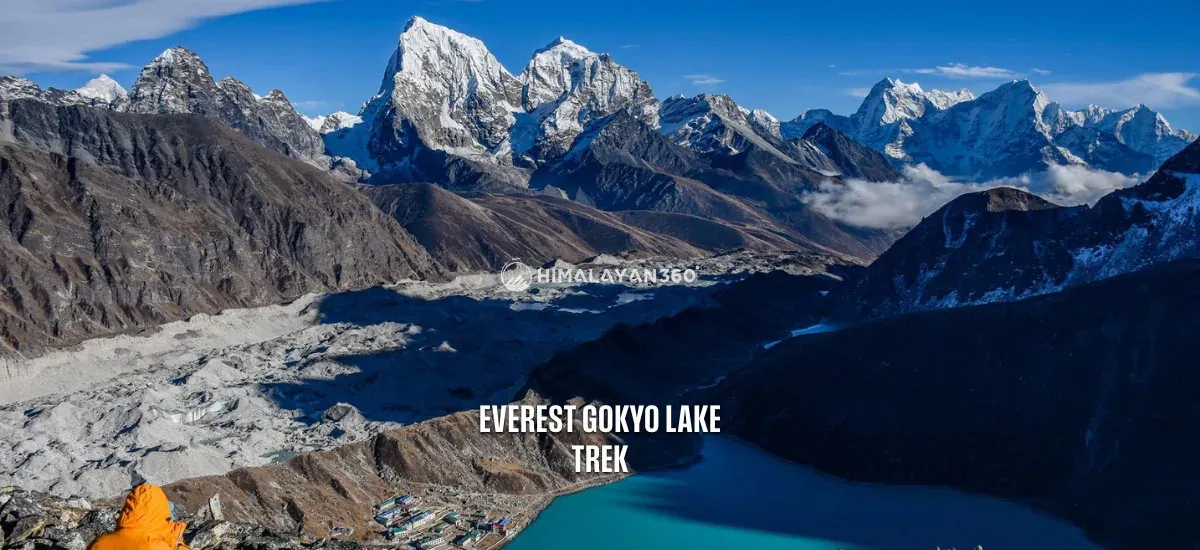
There are 6 Gokyo lakes in the Gokyo valley, located between 4,700 and 5,000 meters above sea level. These lakes are also part of the world’s highest freshwater lake system. They are famous for their turquoise-colored water. These six Gokyo Lakes are as follows:
The first lake you will encounter during the Gokyo Lakes is Longponga. It sits at an altitude of 4,710 meters above sea level. Although smaller than other lakes in the Gokyo system, it has the iconic mesmerizing turquoise-colored water. You can see sacred stones around the lake, which locals believe were left by Lamas. During winter, it often freezes, enhancing its serene and icy allure.
The second lake you will come across is the Taujung Tsho. It is located near Longponga Tsho and sits at an elevation of 4,728 meters above sea level. The lake has deep blue water that creates a grand scenery. It covers a surface of 41.9 meters or 16.95 hectares. This lake offers a stunning view for travelers as they head deeper into the valley. It opens up a wider and more scenic look at the Gokyo region.
The third lake you will see during the Gokyo Lake trek is the Gokyo Tsho. It is also famously known as Dudh Pokhari, meaning “Milk Lake.” The lake sits at an altitude of 4,734 meters and covers a surface area of 106 acres or 42.9 ha. Gokyo Tsho is the most popular of the six lakes and is located near the Gokyo Valley. The lake holds deep spiritual significance for both Hindus and Buddhists, who consider its waters to be sacred. Pilgrims gather here during religious festivals.
The fourth lake in the Gokyo Lake System is Thonak Cho. It is the largest lake in the system, covering a surface area of 160.8 acres or 65.07 ha. Similarly, Thonak Cho is also the deepest lake, with a depth of 62.4 meters. This beautiful turquoise lake sits at an elevation of 4,834 meters. This lake is a little away from the main trekking trail, so it feels quieter and less crowded than the first three lakes. Its peaceful setting makes it feel more natural and untouched.
Ngozumpa Cho is the fifth and smallest lake in the Gokyo system. It is located 4,950 meters above sea level and has a surface area of 35.6 acres or 14.39 ha. Ngozumpa Cho is also an excellent viewpoint and offers spectacular views of Mount Everest, Lhotse, Lhotse Shar, Nuptse, Pumori, Ama Dablam, Cho Oyu, Makalu, and Baruntse. The lake receives its water from the Ngozumpa Glacier, which is close to the Gokyo Valley.
The sixth and final lake in the Gokyo Lake system is the Gyazumba Cho. It is at an altitude above 5000 meters and is closely associated with the Ngozumpa Glacier. Gyazumba Cho Lake covers an area of 72 acres or 19 ha. Very few people visit this lake because it’s far and hard to reach. But those who do are rewarded with a quiet, untouched place surrounded by snow and ice.



 16 Days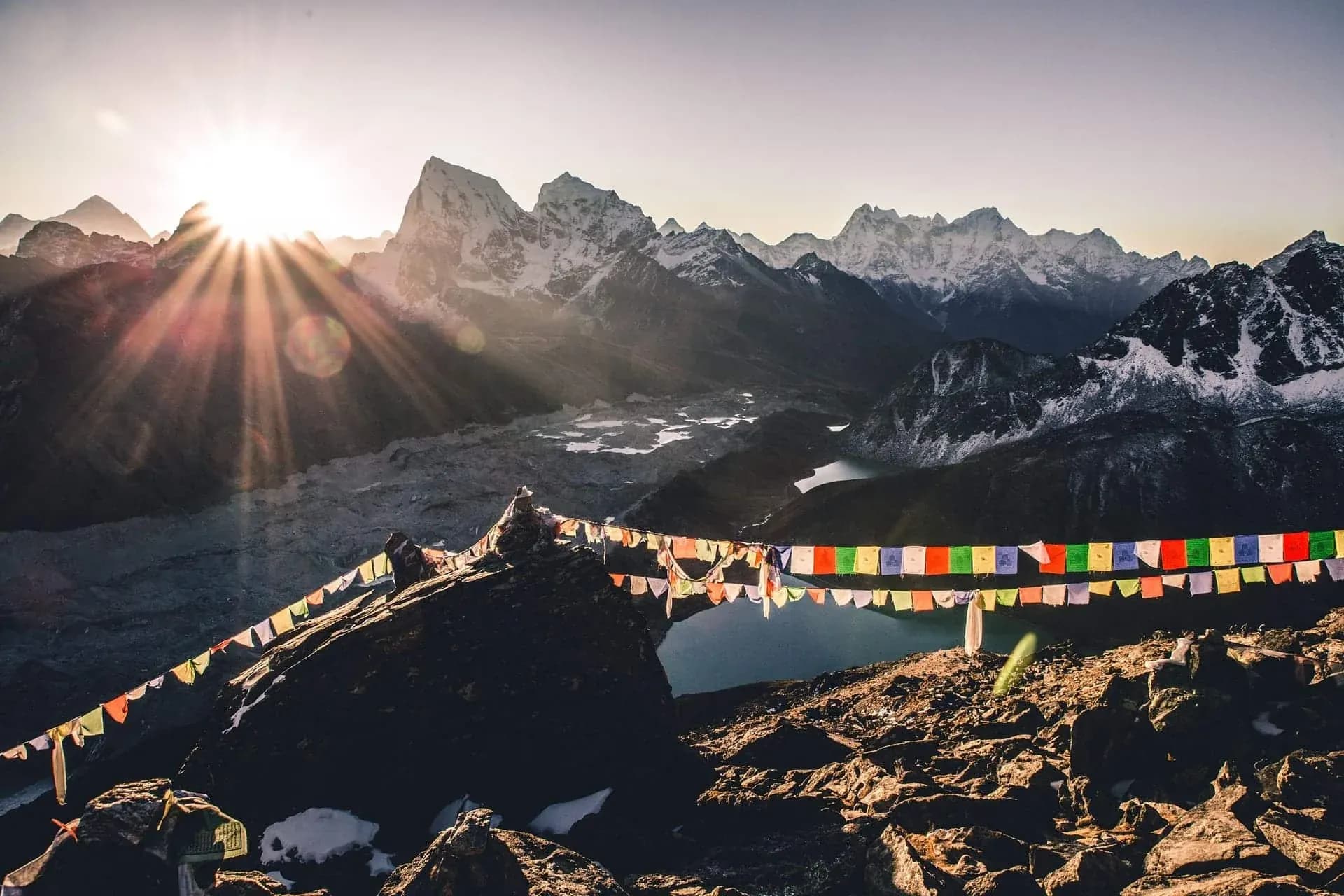
 Trek
Trek By air
 Pilgrimage
 Festivals
 Wildlife
 Luxury
 Yoga
Yoga Food
Food Heritage