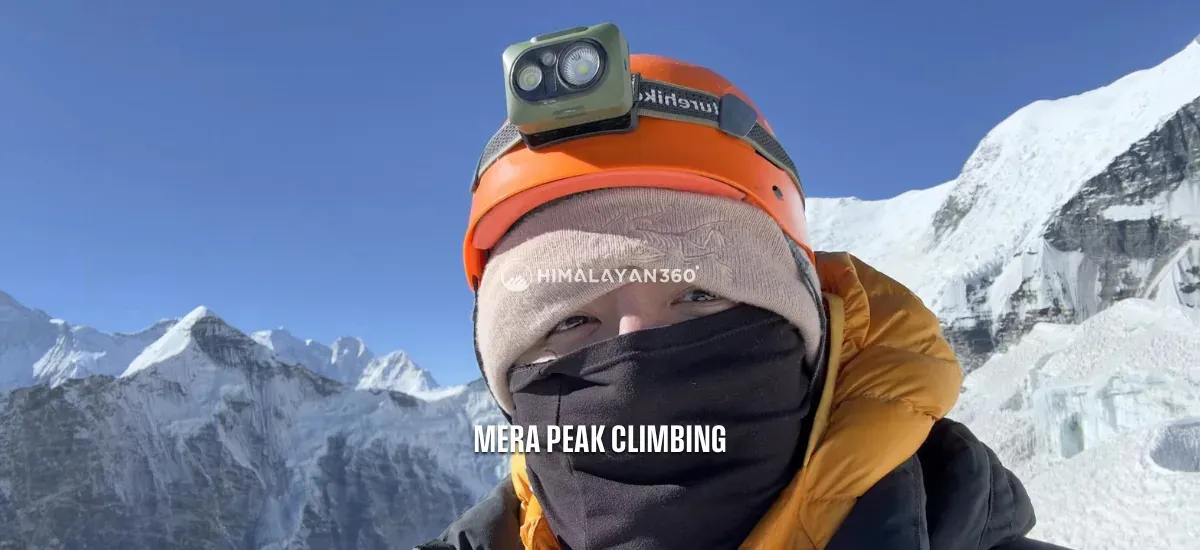
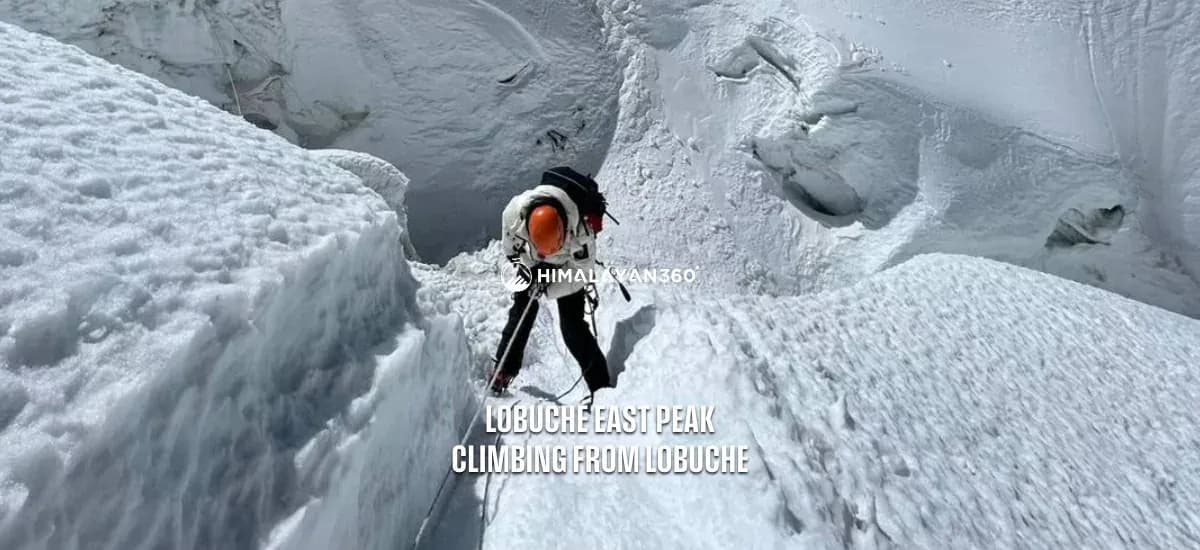
Climber with face covered in Mera Peak Climbing1 / 4
Mera Peak Climbing
Max. Altitude
6,476M/21,247FT
Difficulty
Strenuous
Best Season
Feb, Mar, Apr, May, Jun, Sep, Oct, Nov, Dec
Transportation
Flight, car, jeep
Start / End
Kathmandu/Kathmandu
Accommodation
Tea house
Meals
B.L.DBreakfast Lunch Dinner
Trek Distance
76KM/47Miles
Route
KTM-Lukla-Thulikharka-Khare-Mera peak-KTM
Mera Peak Climbing is a popular Himalayan adventure that takes you to the highest trekking peak in Nepal, standing at 6,476 meters above sea level. It lies in the remote Hinku Valley, just south of Everest. This adventure is perfect for fit trekkers who want to try climbing a Himalayan peak for the first time. The route is not technical, but it does involve glacier walks and high-altitude trekking.
The Mera Peak expedition journey begins with the flight from Manthali Airport to Lukla. After that, you will start your trek. The Mera Peak climb route takes you through several Sherpa villages, dense forests, rivers, and suspension bridges before reaching Mera Base Camp. From there, you will head to High Camp and finally summit Mera Peak.
Per Person From
$2,050
17 Days
No. of Persons
Price per Person
1 – 1
$3,070
2 – 3
$2,450
4 – 6
$2,290
7 – 12
$2,220
13 – 20
$2,190
21 – 30
$2,050
Group discount will be auto applied in checkout & booking page.
Experts for help
Ask our travel experts about customising this trip.
When I was standing on top of Mera Peak, I felt so small compared to the mountains around me but of course in a good way. It’s humbling and kind of life changing. Even walking down afterward, I kept looking around, thinking about how lucky I was to be there. The experience stays with you long after the trek. I was all ready to get back home and share my unforgettable experience with my family and friends.
Verified purchase
JG
Javier GarciaAugust 2025 · Guided by Ram Bhandari
★★★★★
I’m not gonna lie, there were moments I thought, 'Maybe I’m too old for this,' but somehow I made it. The summit? Absolutely worth every shaky step and frozen toe. Also, shoutout to the teahouse dal bhat. I’ve never appreciated food more than after climbing all day. Seriously, it tastes like heaven at 5,000 meters. I felt proud, exhausted, and ridiculously happy at the same time.
Verified purchase
MR
Marco RossiAugust 2025 · Guided by Nabaraj
★★★★★
If you love pushing yourself and exploring, this trek is perfect. The mix of hiking, a bit of climbing, and glacier crossings kept me on my toes the whole time. There’s no better feeling than looking back and realizing how far you’ve come, both physically and mentally. It’s challenging, but in the best way possible. Thanks to the team of Himalayan 360.
Verified purchase
AM
Antoine MoreauAugust 2025 · Guided by Ram Bhandari
★★★★★
Mostly from what I’ve heard, everyone keeps talking about the summit and the day that they reach the destination but for me, the best part was the journey. Laughing with our guides, meeting locals, and enjoying the quiet of the mountains, it’s the little memories that stick. Of course, standing on Mera Peak was incredible, but the trek itself, the effort, and the laughs along the way made it unforgettable. Just loved it!
Verified purchase
LT
Liam ThompsonAugust 2025 · Guided by Ram Bhandari
★★★★★
The moment I decided to climb Mera peak, I was ready to hop on the plane and fly to Nepal. Day 1 in Kathmandu was buzzing with energy, and by Day 3 I was flying to Lukla and man, what an adrenaline rush! Trekking from Chutanga to Thuli Kharka, then Kote and Thangnak, each day felt like walking on the lap of Himalayas, with stunning valleys and tiny villages along the way. Summit day on Day 11 was unforgettable. I could not believe that it was me standing at 6,476 meters and looking out over the Himalayas. It made all the tough climbs, long days, and sore muscles totally worth it. Even the trek back down through Khare, Kote, and Thuli Kharka felt like a celebration of the journey. I was very happy with the team I got and can’t wait to do more adventures in Nepal!
Verified purchase
AB
Alex ButlerAugust 2025 · Guided by Kumar Thapa
★★★★★
Honestly, the moment I reached the summit of Mera Peak, I forgot every sore muscle and early morning wake-up. The view of the Himalayas stretching endlessly around you is just… unreal. Even trekking back down, I kept smiling like an idiot. Every tough step and frozen finger was worth it just for that one magical view. Those 17 days of my life in Nepal was a memory that I’ll cherish forever.
Verified purchase
ST
Sofia TorresAugust 2025 · Guided by Nabaraj
★★★★★
Day 2 prep and the drive to Manthali reminded me how important packing and planning are. Trekking through Chutanga, Thuli Kharka, Kote, Thangnak, and Khare teaches you to layer clothes, drink water, and take altitude seriously. This trek made me realize all the important aspects that you need in order to successfully complete the journey. Summit day is tough, so Days 7 and 9 acclimatization are lifesavers. Sticking to this itinerary makes the trek smoother, and you can enjoy every stunning view instead of rushing or feeling exhausted. That’s what the mountains and my guide taught me!
Verified purchase
EM
Ethan MillerAugust 2025 · Guided by Kumar Thapa
★★★★★
When I was standing on top of Mera Peak, I felt so small compared to the mountains around me but of course in a good way. It’s humbling and kind of life changing. Even walking down afterward, I kept looking around, thinking about how lucky I was to be there. The experience stays with you long after the trek. I was all ready to get back home and share my unforgettable experience with my family and friends.
Verified purchase
JG
Javier GarciaAugust 2025 · Guided by Ram Bhandari
★★★★★
I’m not gonna lie, there were moments I thought, 'Maybe I’m too old for this,' but somehow I made it. The summit? Absolutely worth every shaky step and frozen toe. Also, shoutout to the teahouse dal bhat. I’ve never appreciated food more than after climbing all day. Seriously, it tastes like heaven at 5,000 meters. I felt proud, exhausted, and ridiculously happy at the same time.
Verified purchase
MR
Marco RossiAugust 2025 · Guided by Nabaraj
★★★★★
If you love pushing yourself and exploring, this trek is perfect. The mix of hiking, a bit of climbing, and glacier crossings kept me on my toes the whole time. There’s no better feeling than looking back and realizing how far you’ve come, both physically and mentally. It’s challenging, but in the best way possible. Thanks to the team of Himalayan 360.
Verified purchase
AM
Antoine MoreauAugust 2025 · Guided by Ram Bhandari
★★★★★
Mostly from what I’ve heard, everyone keeps talking about the summit and the day that they reach the destination but for me, the best part was the journey. Laughing with our guides, meeting locals, and enjoying the quiet of the mountains, it’s the little memories that stick. Of course, standing on Mera Peak was incredible, but the trek itself, the effort, and the laughs along the way made it unforgettable. Just loved it!
Verified purchase
LT
Liam ThompsonAugust 2025 · Guided by Ram Bhandari
★★★★★
The moment I decided to climb Mera peak, I was ready to hop on the plane and fly to Nepal. Day 1 in Kathmandu was buzzing with energy, and by Day 3 I was flying to Lukla and man, what an adrenaline rush! Trekking from Chutanga to Thuli Kharka, then Kote and Thangnak, each day felt like walking on the lap of Himalayas, with stunning valleys and tiny villages along the way. Summit day on Day 11 was unforgettable. I could not believe that it was me standing at 6,476 meters and looking out over the Himalayas. It made all the tough climbs, long days, and sore muscles totally worth it. Even the trek back down through Khare, Kote, and Thuli Kharka felt like a celebration of the journey. I was very happy with the team I got and can’t wait to do more adventures in Nepal!
Verified purchase
AB
Alex ButlerAugust 2025 · Guided by Kumar Thapa
★★★★★
Honestly, the moment I reached the summit of Mera Peak, I forgot every sore muscle and early morning wake-up. The view of the Himalayas stretching endlessly around you is just… unreal. Even trekking back down, I kept smiling like an idiot. Every tough step and frozen finger was worth it just for that one magical view. Those 17 days of my life in Nepal was a memory that I’ll cherish forever.
Verified purchase
ST
Sofia TorresAugust 2025 · Guided by Nabaraj
★★★★★
Day 2 prep and the drive to Manthali reminded me how important packing and planning are. Trekking through Chutanga, Thuli Kharka, Kote, Thangnak, and Khare teaches you to layer clothes, drink water, and take altitude seriously. This trek made me realize all the important aspects that you need in order to successfully complete the journey. Summit day is tough, so Days 7 and 9 acclimatization are lifesavers. Sticking to this itinerary makes the trek smoother, and you can enjoy every stunning view instead of rushing or feeling exhausted. That’s what the mountains and my guide taught me!
Day 01: Arrival at Tribhuvan International Airport in Kathmandu and transfer to hotel (1,400m/4,593ft)
Day details
Fact
Details
Highest Altitude:
(1,400m/4,593ft)
On day 1, you will arrive at Tribhuvan International Airport in Kathmandu. Upon arrival, our team will meet you and take you to the hotel in Thamel in a comfortable vehicle. After check-in at the hotel, you can rest and explore the area as you wish.
Day details
Fact
Details
Meals:
No meals included
Accommodation:
3 Star Hotel
Day 02: Last-minute preparation and drive to Manthali
Day details
Fact
Details
Time:
12-17
Travel Duration:
5 hours
Travel Distance:
138 km/ 85.7 miles
Highest Altitude:
(1,400m/4,593ft)
After an early breakfast in Kathmandu, we’ll drive to Manthali. But before leaving, you can do some last-minute gear checks or shopping if needed. The road journey takes about 5 hours, passing through hills, riversides, and countryside views.
Manthali sits at an altitude of 1,400 meters, and it’s where most early morning Lukla flights operate during peak trekking seasons. Once we arrive, we’ll check into a local lodge, rest, and prepare for tomorrow’s short flight to the mountains.
Day details
Fact
Details
Meals:
Breakfast
Accommodation:
Local lodge
Day 03: Fly to Lukla from Manthali Airport and then trek to Chutanga (3,020 m/ 9,908 ft)
Day details
Fact
Details
Time:
06-12
Trek Distance:
3km/2 miles
Ascent:
180m/591 ft
Descend:
0 m/ 0ft
Trek Duration:
3 hours
Flight Hours:
20 min flight from Manthali
Highest Altitude:
3,020 m/ 9,908 ft Chutanga
Following the Mera peak climbing itinerary today, early in the morning, we’ll catch a short 20-minute scenic flight from Manthali to Lukla. The flight gives you beautiful views of rolling hills and snow-covered mountains. After landing at Lukla (2,840 m), we begin our first day of trekking.
The walk to Chutanga is short but steady, with a gradual uphill trail through lush forest. This gentle start helps your body begin adjusting to the higher altitude. After about 3 hours of trekking, we’ll reach the peaceful village of Chutanga, where you’ll rest and spend the night in a local tea house or lodge.
Day details
Fact
Details
Meals:
Breakfast, Lunch, and Dinner
Accommodation:
Tea House or Lodge
Day 04: Trek from Chutanga to Thuli Kharka (4,300 m/14,108 ft)
Day details
Fact
Details
Time:
08-16
Trek Distance:
6.5km/4 miles
Ascent:
1,590 m/5,217 ft
Descend:
310 m/1,017 ft
Trek Duration:
6 hours
Highest Altitude:
4,610 m/ 15,125 ft Zatrwa la
Today’s trek is one of the more challenging sections in the Mera Peak and its route as we make a long climb up to Zatrwa La Pass, the highest point of the day at 4,610 meters. The trail starts with a steep ascent through forest areas, then opens up to rocky terrain and alpine landscapes.
As you cross Zatrwa La, you can enjoy panoramic views of the Dudh Kunda region and nearby peaks, such as Everest, Makalu, Lhotse, etc. After reaching the pass, we will descend gradually toward Thuli Kharka, a beautiful open pasture where we’ll rest for the night.
Day details
Fact
Details
Meals:
Breakfast, Lunch, and Dinner
Accommodation:
Tea House or Lodge
Day 05: Trek from Thuli Kharka to Kote (3,691 m/12,110 ft)
Day details
Fact
Details
Time:
08-16
Trek Distance:
7.2 km/4.5 miles
Ascent:
111 m/364 ft
Descend:
720 m/2362 ft
Trek Duration:
6 hours
Highest Altitude:
4,300 m/14,108 ft Thuli Kharka
Day 5 of the Mera Peak climbing adventure takes us to Kote from Thuli Kharka. The route to Mera peak leads mostly downhill as we descend from Thuli Kharka to Kote. On this day, the Mera Peak adventure path takes us through forests, with glimpses of mountain ridges and river valleys below.
As you walk, the air gets thicker, and walking becomes easier. You’ll hear the roaring Hinku River as you get closer to Kote. The village lies beside the river and offers a peaceful place to rest after the day’s trek. Enjoy a warm meal and get a good night’s sleep in this quiet mountain village.
Day details
Fact
Details
Meals:
Breakfast, Lunch, and Dinner
Accommodation:
Tea House or Lodge
Day 06: Trek from Kote to Thangnak (4,356 m/14,291 ft)
Day details
Fact
Details
Time:
08-16
Trek Distance:
7.2 km/4.5 miles
Ascent:
717 m/2,352 ft
Descend:
52 m/171 ft
Trek Duration:
6 hours
Highest Altitude:
4,356 m/14,291 ft Thangnak
After breakfast, we leave Kothe and follow the Mera Peak expedition route along the banks of the Hinku Khola. Along the path, you can see Mera Peak in the distance. Soon, we reach Gondishung, a seasonal herder’s settlement on the west side of the valley. We will stop here for lunch and enjoy views of the river and mountains.
After a short break, we continue toward Thaknak. Along the way, we pass an ancient 200-year-old monastery, where many climbers stop to offer a short prayer for a safe and successful summit. We will also have to walk through landslide-prone areas. But the best part is that the views of Mera Peak and Kusum Kanguru will accompany us throughout the walk. Eventually, we reach Thaknak, a small village with a few teahouses. It’s also a summer grazing area for yaks and cattle.
Day details
Fact
Details
Meals:
Breakfast, Lunch, and Dinner
Accommodation:
Tea House or Lodge
Day 07: Acclimatization day in Thangnak
Day details
Fact
Details
Highest Altitude:
4,356 m/14,291 ft Thangnak
The seventh day is the first acclimatization day of our Mera Peak climbing expedition. The acclimatization day helps the body adjust to the high altitude and reduces the risk of altitude sickness. We won’t gain much elevation, but we will still stay active. We will go for a short hike around Thaknak, which allows our body to adapt more easily to the thin air while enjoying scenic mountain views.
Likewise, you can walk up to a nearby ridge or viewpoint that offers close-up views of surrounding peaks, such as Mera Peak and Charpate Himal. You can spend the afternoon resting and checking your gear.
Day details
Fact
Details
Meals:
Breakfast, Lunch, and Dinner
Accommodation:
Tea House or Lodge
Day 08: Trek from Thangnak to Khare (5,045 m/16,552 ft)
Day details
Fact
Details
Time:
08-13
Trek Distance:
5.6 km/3.5 miles
Ascent:
689 m/2,261 ft
Descend:
0 m/0 ft
Trek Duration:
5 hours
Highest Altitude:
5,045 m/16,552 ft Khare
This day is going to be challenging as we move higher in altitude. Leaving Thaknak, we’ll walk along the side of the Dig Glacier moraine. The Mera Peak expedition path also opens up at Dig Kharka, offering views of Hinku Nup Glacier and Charpate Himal. From there, the path continues uphill, climbing across rocky moraines with views of distant snow-covered peaks.
As you near Khare, the trail gets steeper. Khare is a small settlement surrounded by high mountains, with Mera Peak’s north face standing tall right above. Once you arrive, you’ll have lunch and rest. If time allows, you can take a short walk around the area to help your body adjust to the altitude.
Day details
Fact
Details
Meals:
Breakfast, Lunch, and Dinner
Accommodation:
Tea House or Lodge
Day 09: Acclimatization and climbing preparation in Khare
Day details
Fact
Details
Highest Altitude:
5,045 m/16,552 ft Khare
It is another rest day and also a special day planned just to help us prepare for the Mera Peak climb. Your team guide will teach you some basic climbing skills and demonstrate how to use essential climbing gear, like crampons, ice axes, climbing boots, ropes, carabiners, and climbing harnesses. This pre-climbing training will help you to climb safely.
Later in the afternoon, you can take a short hike to a nearby hill to gain extra altitude, which helps your body adapt better. You can also explore the village of Khare, meet local people, and enjoy the peaceful atmosphere.
Day details
Fact
Details
Meals:
Breakfast, Lunch, and Dinner
Accommodation:
Tea House or Lodge
Day 10: Trek from Khare to Mera Peak Base Camp (5,350 m/17,552 ft)
Day details
Fact
Details
Time:
09-12
Trek Distance:
3 km/1.9 miles
Ascent:
305 m/1000 ft
Descend:
0m/70t
Trek Duration:
3 hours
Highest Altitude:
5,350 m/17,552 ft BC
Today, we will begin our journey towards Mera Peak Base Camp from Khare. The Mera Peak climb route follows a steep trail filled with rocks that leads to Mera La Pass at 5,400 meters and then to the Mera Glacier. After we climb up the glacier, the trail becomes steeper, so we’ll need to walk carefully and pace ourselves.
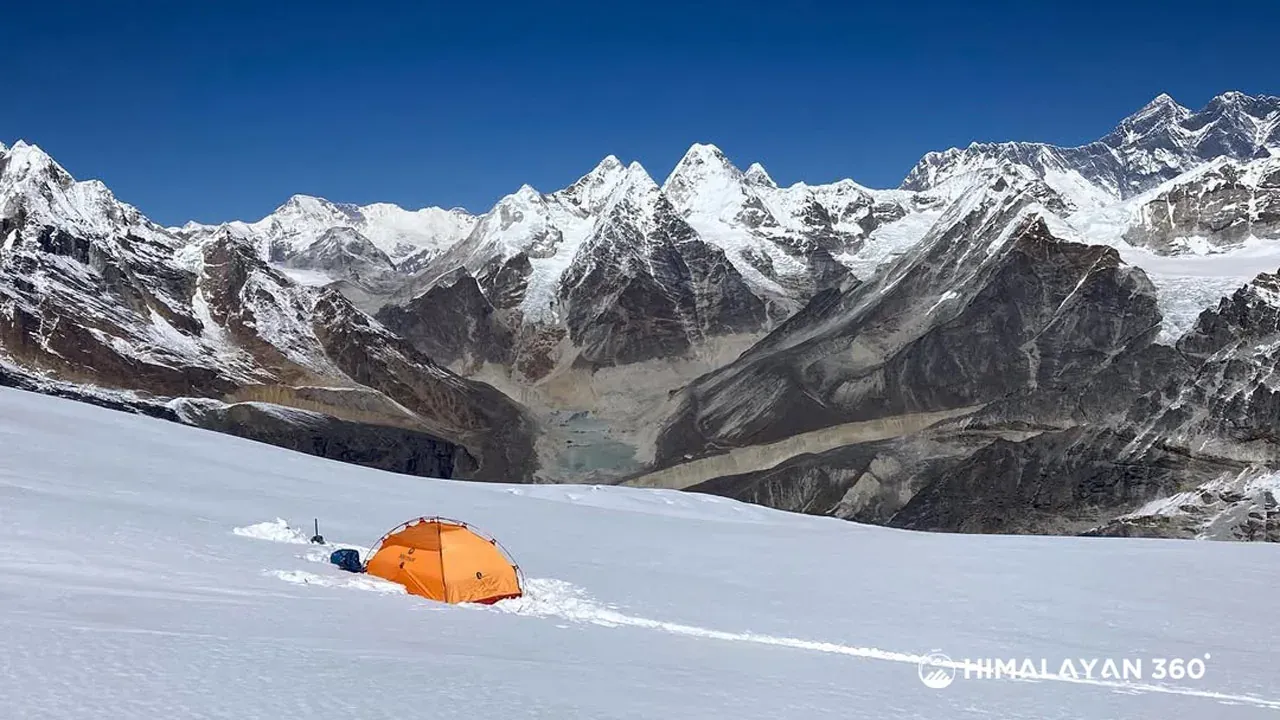
We will come across the icy section, so we will wear helmets and crampons for safety, especially since parts of the trail may be prone to rockfalls. After crossing the glacier, we’ll finally reach Mera Base Camp. Overnight at camping accommodation in Mera Peak Base Camp. We are just one step away from completing the ascent of Mera Peak.
Day details
Fact
Details
Meals:
Breakfast, Lunch, and Dinner
Accommodation:
Camping
Day 11: Summit Days; Mera High Camp to Summit (6,476 m/21,247 ft) and return to Khare
Day details
Fact
Details
Time:
04-14
Trek Distance:
13.6 km/8.5 miles
Ascent:
1126 m/3,694 ft
Descend:
1,431 m/4,695 ft
Trek Duration:
10 hours
Highest Altitude:
6,476 m/21,247 ft Mera Peak
We will finally summit Mera Peak today. We will start early in the dark and slowly climb up to Mera Peak High Camp. We walk across wide snowfields and pass through areas with crevasses. The final stretch of the Mera Peak expedition path takes us through a rocky section before we arrive at the high camp. Now, from high camp, we need to climb steeply and require using an ice axe and other climbing gear. The final section before the summit is the steep climb and most challenging, but we take our time and support each other.
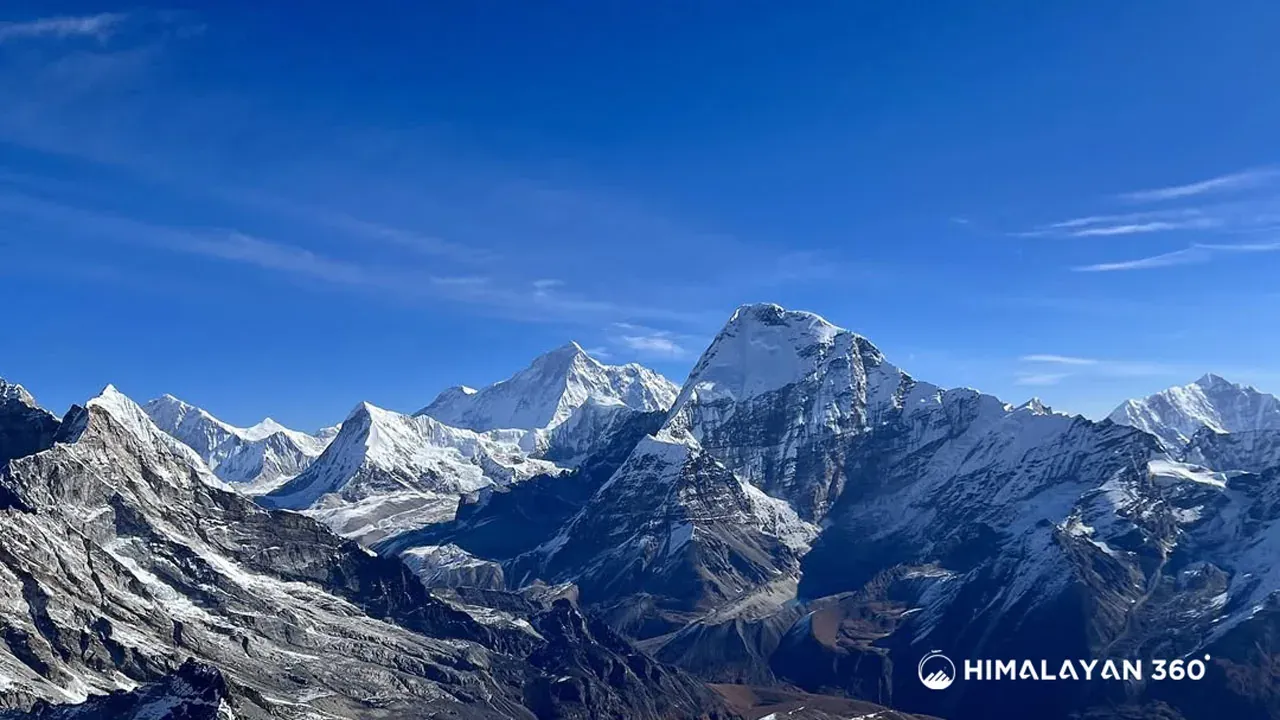
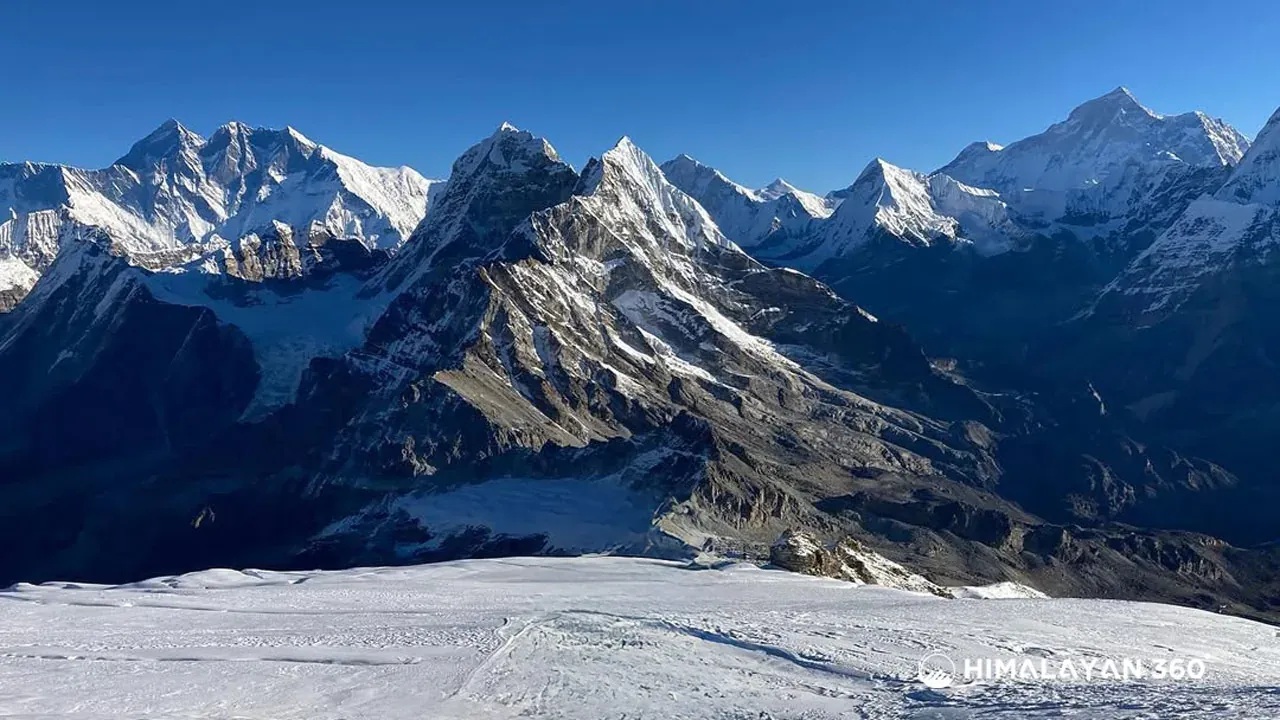
We will attempt to reach the highest of the three summits of Mera Peak. Once we climb to the top of Mera Peak Summit, we’ll be standing on Nepal’s highest trekking peak at 6,476 meters. From here, you can see Mount Everest, Makalu, Lhotse, Cho Oyu, Kanchenjunga, and many other peaks all around. After enjoying the view and taking photos, we carefully descend back to High Camp for a short rest and lunch. Then, we continue our descent to Khare. It’s a long and tiring day but one of the most rewarding of the entire trek.
Day details
Fact
Details
Meals:
Breakfast, Lunch, and Dinner
Accommodation:
Tea House or Lodge
Day 12: Contingency day for weather conditions
Today is a backup day in case the weather was not good for the summit climb yesterday. If strong winds or heavy snow delay the ascent or make the Mera Peak expedition difficult, we can use this extra day to try again. If everything went well on Day 11 and we have already reached the summit, then we’ll use this day to rest, relax, or explore around Khare before heading back.
Day details
Fact
Details
Meals:
Breakfast, Lunch, and Dinner
Accommodation:
Tea House or Lodge
Day 13: Trek back from Khare to Kote (3,691 m/12,110 ft)
Day details
Fact
Details
Time:
08-16
Trek Distance:
12.8 km/7.9 miles
Ascent:
52 m/171 ft
Descend:
1,406 m/4,613 ft
Trek Duration:
7 hours
Highest Altitude:
5,045 m/16,552 ft Khare
We will begin our return trek from Khare to Kote after breakfast. The trail is long and downhill, but the beautiful views of the mountains, valleys, and forests make it an enjoyable walk. We will pass back through places like Thaknak and follow the same route we took earlier, but this time it’s mostly descending.
The trek is tiring on the knees, but since we are losing altitude, breathing gets easier. After about 7 hours of walking through rocky paths, open pastures, and glacier views, we will reach Kote. Here, you can finally rest and enjoy a warm meal in the comfort of your lodge.
Day details
Fact
Details
Meals:
Breakfast, Lunch, and Dinner
Accommodation:
Tea House or Lodge
Day 14: Trek back from Kote to Thuli Kharka (4,300 m/14,108 ft)
Day details
Fact
Details
Time:
08-16
Trek Distance:
7.2 km/4.5 miles
Ascent:
720 m/2362 ft
Descend:
111 m/364 ft
Trek Duration:
6 hours
Highest Altitude:
4,300 m/14,108 ft Thuli Kharka
On this day, we begin the steady uphill trek to Thuli Kharka. The trail goes up and down and crosses a few small streams flowing from the Inkhu Khola. As we walk, we come to a split in the trail near Taktho village and follow the right-hand path.
On the way, we pass by a chorten (a Buddhist monument), then go down a steep slope before making a final climb to Thuli Kharka. We pass one more chorten just before reaching the village. After a long day, we rest overnight in a lodge at Thuli Kharka.
Day details
Fact
Details
Meals:
Breakfast, Lunch, and Dinner
Accommodation:
Tea House or Lodge
Day 15: Trek back from Thuli Kharka to Lukla (2,840 m/9,318 ft)
Day details
Fact
Details
Time:
08-16
Trek Distance:
9.5 km/5.9 miles
Ascent:
310 m/1,017 ft
Descend:
1,770 m/5,807 ft
Trek Duration:
8 hours
Highest Altitude:
4,610 m/ 15,125 ft Zatrwa la
Today is the last day of the trek to Mera Peak. After breakfast, we leave Thuli Kharka and begin our long descent toward Lukla. The trail first climbs up to Zatrwa La Pass (4,610 m), the highest point of the day. From here, we get a beautiful view of Lukla Valley and the surrounding mountains.
Then, we make a steep downhill trek all the way to Lukla. It’s a long and tiring walk, but also rewarding with amazing views. Once we reach Lukla, we check into a lodge and enjoy our final night in the mountains.
Day details
Fact
Details
Meals:
Breakfast, Lunch, and Dinner
Accommodation:
Tea House or Lodge
Day 16: Flight back to Kathmandu or Ramechhap Airport from Lukla and same day drive back to Kathmandu
Day details
Fact
Details
Flight Hours:
35 mins flight from KTM or 5-6 hrs drive & 20 min flight from Manthali
Highest Altitude:
2,860m/9,383ft (Lukla)
It’s the day to say goodbye to the mountains and take a morning flight to Kathmandu from Lukla. Depending on the weather and airport traffic, we’ll either fly directly to Kathmandu (35 minutes) or to Ramechhap (20 minutes) and drive back to Kathmandu, which takes about 5 to 6 hours.
Once we reach Thamel, a lively area in Kathmandu, we’ll check into our hotel and relax. In the evening, enjoy a nice farewell dinner and reflect on the amazing adventure you’ve just completed.
Day details
Fact
Details
Meals:
Breakfast and Dinner
Accommodation:
3-Star Hotel
Day 17: Transfer to the International Airport for your Final Departure
We will take you to the international airport for your flight back home. We hope you had an amazing time in the Himalayas and returned with wonderful memories. Safe travels, and goodbye for now!
Day details
Fact
Details
Meals:
Breakfast
Mera Peak Climbing Cost: Included and Excluded
Cost Includes
Cost Excludes
Transfer
Kathmandu to Ramechap airport to Kathmandu by shared vehicle
Ramechap to Lukla to Ramechap flight ticket
Airport transfer for domestic and international Flight
International and Domestic airfare
Extra vehicle service then mentioned in itinerary
Heli services for rescue (if needed)
Accommodation & Meals
2 Night in Kathmandu with 3star accommodation (sharing basis)
1 Night Ramechap local lodge accommodation (on a sharing basis)
12 nights in Mountain Tea House Lodge (sharing basis)
1 nights camping tents (Sharing)
Meals: 16 Breakfast, 13 Lunch, 13 Dinner
Extra night accommodation in Kathmandu due to early arrival or late departure, or early return from the Trek.
Extra night in tea house during the trek
Extra nights in tent during the climbing
Personally ordered foods
Soft drinks and alcohol during the trek
Pemits
Sagarmatha National Park permit fees
Peak climbing permit
Garbage deposit fees
Climbing permit for others peak (if you wanna climb others peak then mentioned in itinerary, that types of permit is totally not included in costing)
Support
One guide during the Trek
Climbing Sherpa during the climb
Porter to carry your luggage (2:1 porter)
Emergency high-altitude rescue and evacuation services fees.
Kitchen Equipment, Trekking tents, Dining tent, Kitchen Tents, Toilet Tents, Table and chairs, and Mattresses for Lobuche peak climbing.
Climbing guide and staff insurance
Appreciation Certificate after the successful Trek
Farewell dinner at the end of the Trek
Duffle bag during trek (should return after trek)
MEDICAL KIT: Comprehensive Medical kit.
Any expenses incurred due to unforeseen events, such as adverse weather conditions, landslides, itinerary modifications, illness, government policy changes, or strikes.
Personal clothing, gear, and expenses: shopping, snacks, boiled water, drinks, hot showers, alcohol, Wi-Fi, calls, battery charging, extra porters, etc.
Travel insurance that covers emergency high-altitude rescue and evacuation (compulsory)
Tips for staff (it is expected)
All other costs and expenses not listed in “include”
Route & Elevation
Highest point reached on each day, plotted against distance walked. Metres on the left, day number along the bottom.
Mera Peak Climbing Information
Everything to check before you book.
Grade
Strenuous
Max altitude
6,476M/21,247FT
Best months
Feb, Mar, Apr, May, Jun, Sep, Oct, Nov, Dec
Distance
76KM/47Miles
Sleeps in
Tea house
Plan your tour
Cost
From $2,050 per person
The price is per person and drops as your group grows.
Group size
Price per person
1 person
$3,070
2 to 3 people
$2,450
4 to 6 people
$2,290
7 to 12 people
$2,220
13 to 20 people
$2,190
21 to 30 people
$2,050
Mera Peak Climbing cost
At Himalayan360, the Mera Peak climbing costs range from $2050 to $3070. This cost includes accommodation, transportation, meals, permits cost, guides and porters fees, some climbing gear, and farewell dinner. The price varies according to the group size. The more people in a group, the less the trip costs.
Look at the table below to know about the cost as per the group size:
Mera Peak is not a technical climb, but at 6,476 m the summit is higher than Everest Base Camp and it is reached by a long snow plod in the cold. Altitude and cold are what turn people around here, not difficulty, so preparation is mostly about endurance and about giving your body time.
Train for four to six weeks at least
Build cardiovascular endurance with running, cycling, swimming or hill walking, add leg and core strength for carrying a pack over uneven ground, and do long hikes with the pack you will actually carry rather than an empty one. Summit day runs 10 to 12 hours and comes after two weeks of 5 to 7 hour days, so stamina counts for more than raw strength. Mental resilience counts too, because much of this climb is discomfort held for a long time.
Let the itinerary do the acclimatization
Zatrwa La at 4,610 m comes early in the trip, and the drop afterwards to Kote at 3,691 m looks like wasted altitude but is textbook climb high, sleep low. The rest day at Thangnak (4,356 m) is not optional. Khare at 5,045 m holds the last lodges, and the day there is a rope, harness, crampon and ice axe session with the climbing guides. Above Khare you are on the glacier, with base camp at around 5,350 m and high camp in tents on snow. Tell your guide about headache, nausea or fatigue, and go down rather than up if the symptoms are worse the next morning.
Get the boots and the glacier kit right
Start with the boots: insulated, rigid-soled mountaineering boots that take crampons, worn in before you fly. Beyond those you need crampons, an ice axe, harness, helmet and jumar, glacier goggles and UV sunglasses, a down or synthetic insulated jacket, a waterproof and windproof shell, a cold-rated sleeping bag, and a headlamp with spare batteries. Most of it can be rented or bought in Kathmandu, and the climbing hardware on this trip is provided. Carry your passport, permits, photocopies and passport photos in your daypack, not in the duffel the porter takes.
What is it like sleeping at high altitude while stargazing?
Sleeping at high altitude while stargazing is a surreal experience. The air is crisp and thin, the surroundings are silent, and the night sky is incredibly clear. With little to no light pollution, you can see countless stars, the Milky Way, and even shooting stars stretching across the sky. It’s peaceful, humbling, and unlike anything you’d experience at lower elevations.
However, sleeping at high altitude can also be challenging. You might find it harder to breathe, wake up often, or feel a bit restless experience at high altitude due to the low oxygen levels. Thus, you need proper acclimatization and need to stay warm.
Can I climb Mera Peak in the Off-season?
Yes, you can climb Mera Peak during the off season in Nepal, which includes the Winter season (December-February) and the Monsoon/summer season (June-August). However, you need to be extra prepared and cautious during these off-seasons. In winter, the mountain area starts to receive snow and cold winds from early December. By January, the temperatures drop a lot, and there can be thick snow and strong windstorms. To handle this, you’ll need proper winter gear, climbing equipment, training, and experience. If you can’t wait for the main season, early December and late February are the best times to climb in winter.
Similarly, the monsoon season is another off-season time. During this period, trails become muddy, wet, and slippery due to heavy rain. This is not the best time to climb Mera Peak, as there are also more leeches, and there is a risk of landslides and floods. However, some experienced climbers still try the climb in the monsoon, especially in early June or late August, when the rain is lighter with proper Mera Peak preparation. During this season, the skies are usually cloudy, but after the rain, the air becomes clean, and the mountain views can be very beautiful.
The best part of doing the Mera Peak expedition in the off-season is that the trails are quiet and less crowded. You may also get discounts on flights, permits, and lodging. If you are looking for a peaceful trekking experience and don’t mind the extra challenges, the off-season can be a good option. Just make sure you are well-prepared and ready for changing weather conditions.
On the tour
How to choose the right guide or Trekking Agency for Mera Peak Climbing?
Follow these measures to choose the right guide or trekking agency for climbing Mera Peak in Nepal:
Choose a guide or agency with good reviews and years of experience in Mera Peak or similar high-altitude climbs.
Make sure they provide certified, trained guides who know the route and safety protocols well.
Check if the agency offers proper climbing gear and support, like porters, which makes your trek easier.
Look for companies that focus on safety, including acclimatization days and emergency plans.
Confirm their communication is clear and they answer your questions honestly before booking.
See if they are flexible with your schedule or special requests.
Prefer agencies that support local communities and follow eco-friendly practices.
Weigh it up
How Mera Peak Climbing compares with the trips people most often weigh it against.
Mera Peak is in the Solu-Khumbu region of Nepal, near the Everest area.
The peak stands at 6,476 meters (21,247 feet and is the highest Nepal trekking peak.
You need two permits: a climbing permit from the Nepal Mountaineering Association and a Sagarmatha National Park permit.
It is a moderately difficult climb, so you need to be physically fit.
The usual route starts with a flight to Lukla and passes through villages like Chutanga, Thuli Kharka, Kote, Thangnak, and Khare.
You’ll be trekking for 5-7 hours daily over rugged terrain, with long summit days (10-12 hours).
The final summit push begins from High Camp (5,800m).
The full Mera Peak trip takes around 16 to 18 days, including acclimatization and return.
You will stay in teahouses or lodges throughout the trek.
The best time to climb Mera Peak is during spring (March to May) and autumn (September to November), when the weather is clear and stable.
It’s important to acclimatize properly and go with a trained guide or join a trekking agency for safety.
You will need equipment like crampons, an ice axe, a harness, a helmet, ropes, and warm clothing, which can be rented or bought in Kathmandu.
FAQs for Mera Peak Climbing
Is Mera Peak hard to climb?
Frankly No. Mera Peak is not a technical climb, but it remains physically challenging due to its high altitude (6,476 m/21,247 ft) and the long trekking days involved, especially on summit days. You’ll need strong endurance, the ability to walk for hours daily, and basic mountaineering skills to handle snow and glacier sections near the summit.
Is Mera Peak harder than Kilimanjaro?
Yes, Mera Peak is harder than Kilimanjaro. It’s higher in elevation and involves glacier travel, cold weather, and some use of mountaineering gear. Kilimanjaro is a trekking-only peak, while Mera Peak combines trekking and basic alpine climbing.
What grade is the Mera Peak climb?
Mera Peak is graded as Alpine PD (Peu Difficile or “a little difficult”) in the Alpine grading system. That means it’s not technical but still requires glacier walking, proper gear, and some climbing knowledge. Climbers must be able to use crampons, ropes, and an ice axe on the final snow-covered stretch.
How fit do you have to be to climb Mera Peak?
You need to be physically fit and mentally prepared to be able to complete the Mera Peak expedition. You should be able to walk 6–8 hours a day for multiple days, carry a backpack, and manage altitude. Hence, start training for cardiovascular endurance, strength, and altitude trekking experience 3-4 weeks in advance.
What are Mera Peak climbing permits?
To climb Mera Peak, you need three permits – a Mera Peak Climbing Permit from the Nepal Mountaineering Association (NMA), a Makalu Barun National Park entry permit, and a Khumbu Rural Municipality entry permit. These are essential for legal and safe trekking.
What is Mera Peak height?
Mera Peak is 6,476 meters (21,247 feet) high. It’s the highest trekking peak in Nepal and offers incredible views of five of the world’s tallest mountains, including Everest, Lhotse, and Makalu from its summit.
How many days does it take to climb Mera Peak?
Climbing Mera Peak typically takes 16 to 20 days. This includes trekking through remote valleys, acclimatization days, and summit day. The duration can vary based on your route, fitness, and weather conditions.
Is Mera Peak easier than Island Peak?
Yes, Mera Peak is generally easier than Island Peak to summit. The climb from Mera High Camp to the summit is less steep and has fewer crevasses. There is no need to cross ladders or steep ice walls. Also, the final summit push is shorter, about 570 meters from High Camp.
How do I prepare for the Mera Peak expedition?
To prepare for the Mera Peak expedition, train with cardio (running, swimming, biking) and strength workouts. Also, go for long hikes with a backpack, if possible walk at high altitude. Additionally, learn how to use climbing gear like crampons, ice axes, and ropes before the climb.
Mera Peak climbing is a trek or a climb?
It’s both. The route up to the base camp is a trek and involves trekking through forested trails and remote villages. However, the final part of the summit is a non-technical climb on snow, which requires basic mountaineering gear and skills.
This site uses cookies to optimize your user experience. By using this site, you are consenting to our use of these cookies. Check out our Privacy Policy.



 3 Days
 Trek
Trek By air
 Pilgrimage
 Festivals
 Wildlife
 Luxury
 Yoga
Yoga Food
Food Heritage