Strenuous, and not technical. No ropes, crampons or climbing skills are needed on this route in spring or autumn. What the 12 day itinerary asks for is endurance: ten days on the trail, most of them 6 to 8 hours, with only one day to acclimatize before the pass.
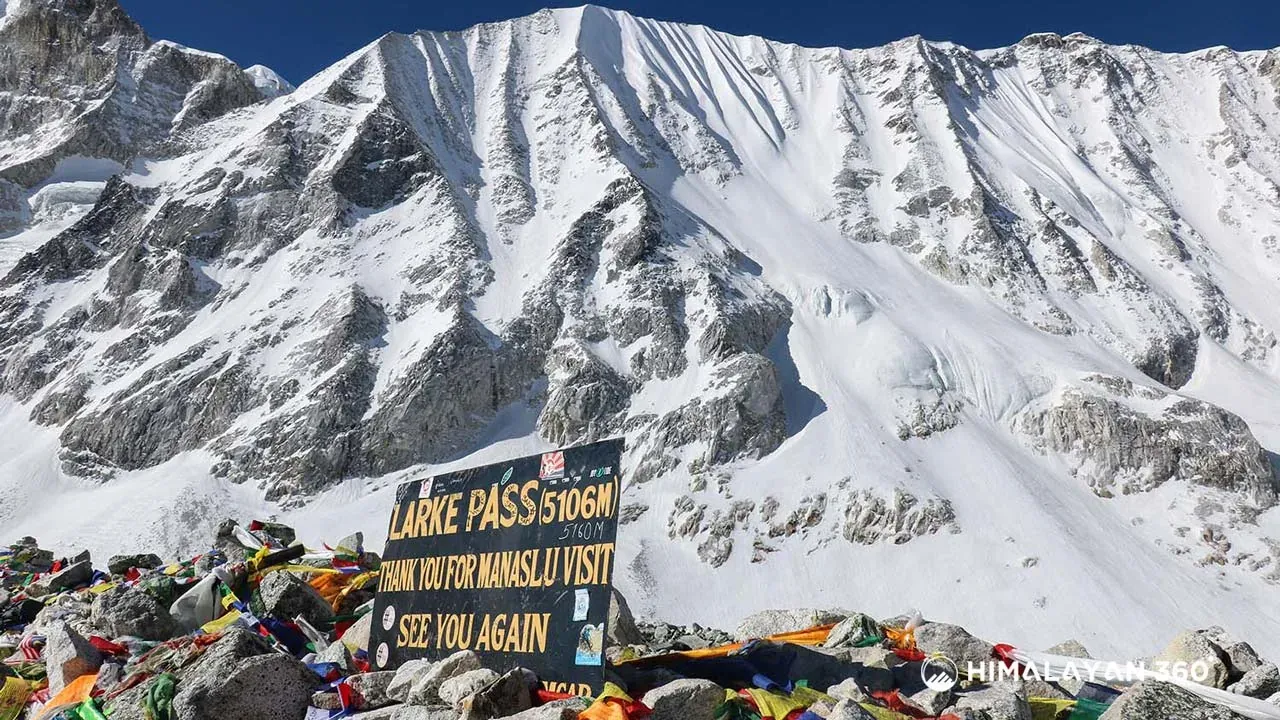
- Altitude. Six nights are spent above 3,000M, and Dharamsala at 4,470M is the last bed before Larkya La (5,106M). Altitude sickness is the most common reason trekkers turn back.
- One day to acclimatize. You spend two nights at Samagaon but only one at Samdo, with no higher walk to rehearse the pass before you climb to Dharamsala and cross it.
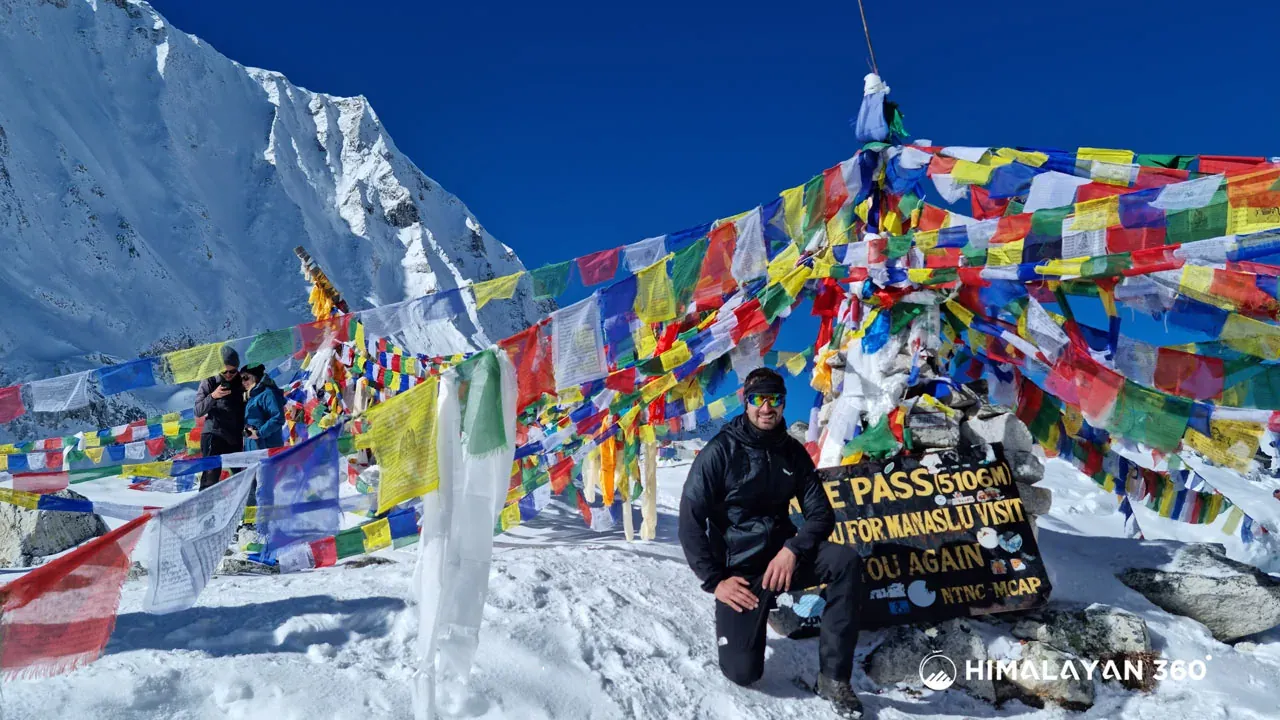
- The pass day. About 24.8KM and 9 hours, leaving before dawn, with a steep 1,386M drop to Bimthang.
- Cold. Near the pass it reaches -20°C even in season, and nothing above Samagaon is heated.
- Remoteness. No road reaches the trail between Machha Khola and Tilje, so a helicopter is the only fast way out in an emergency.
Train for 6 to 8 weeks with hikes of 5 to 7 hours on hills, ideally two days back to back with the daypack you will carry, and add step ups and squats for the long descents. If you have not trekked above 3,000M before, choose the 13 day version.
Manaslu Trek Route and Terrain
The Manaslu Circuit trek route starts at Machha Khola in the Gorkha District and follows the Budhi Gandaki Valley north through a deep, canyon-like gorge, then swings west around the Manaslu range close to the border with the Tibet Autonomous Region before crossing Larkya La into the Marsyangdi valley. It is a horseshoe rather than a true circle, which is why the trek needs transport at both ends. Almost all of it lies inside the Manaslu Conservation Area, a protected area where open fires are banned and rubbish must be carried out.
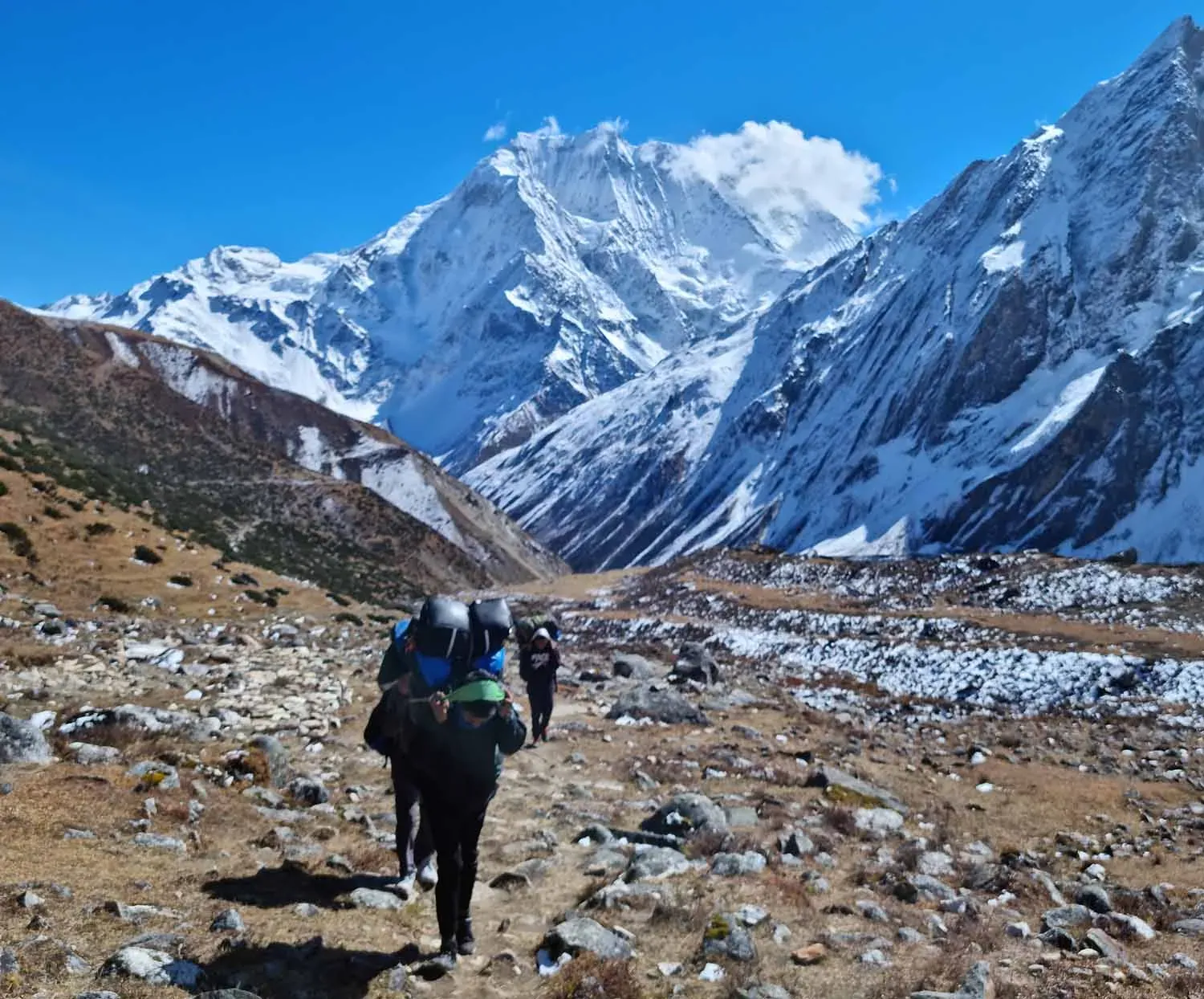
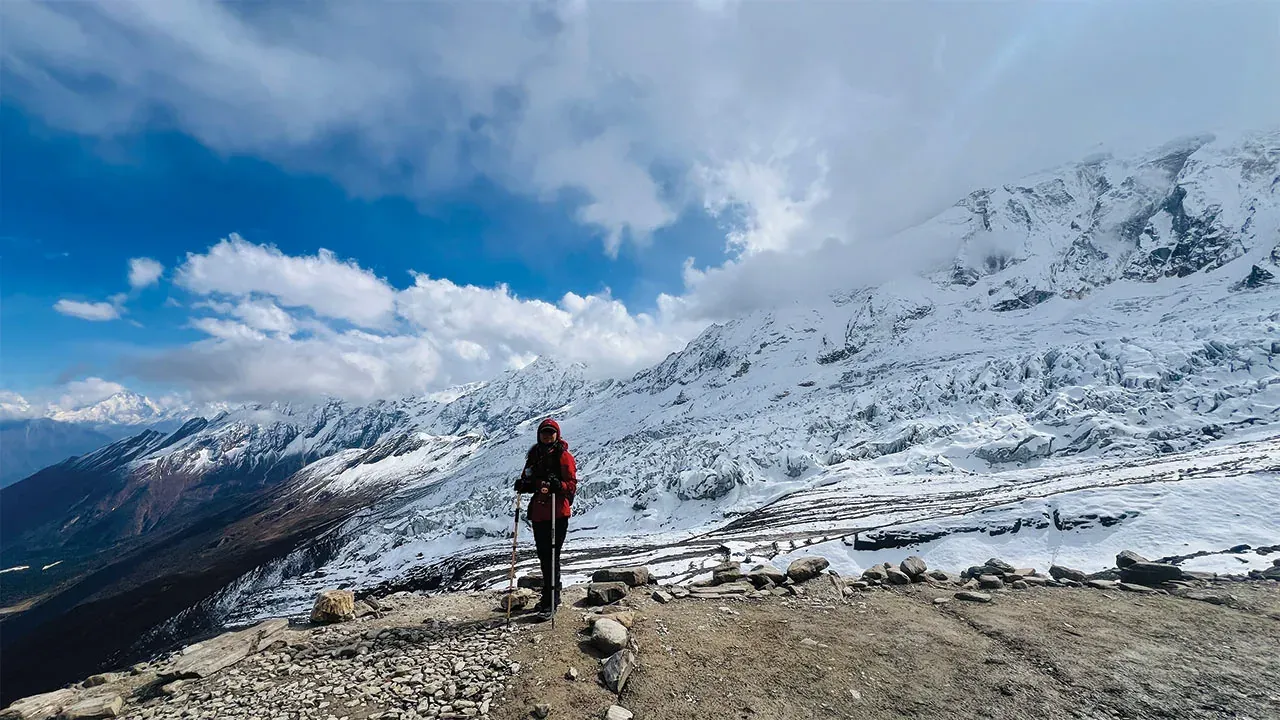
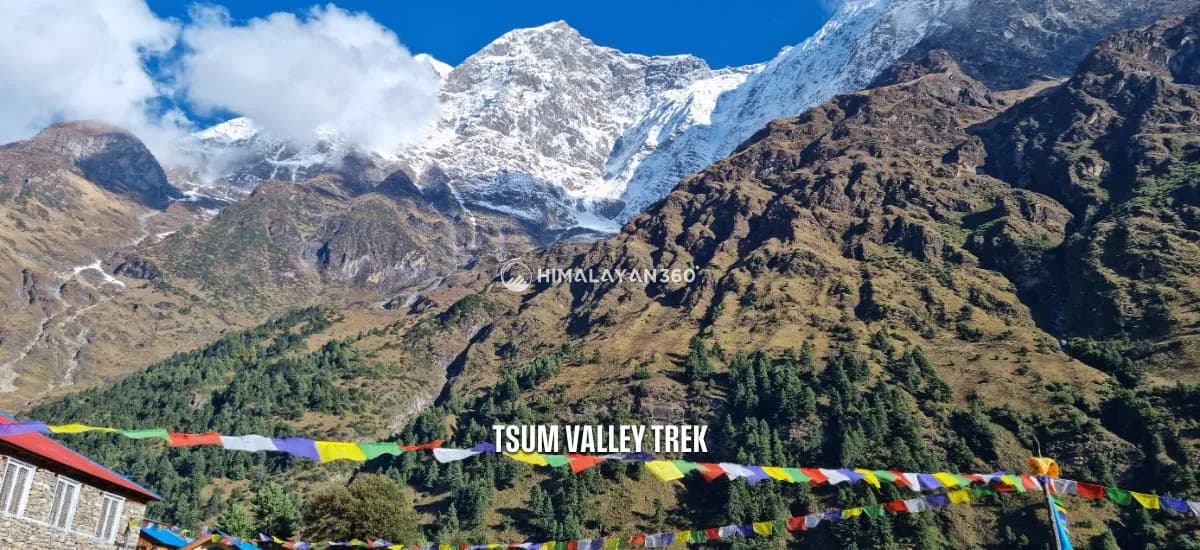
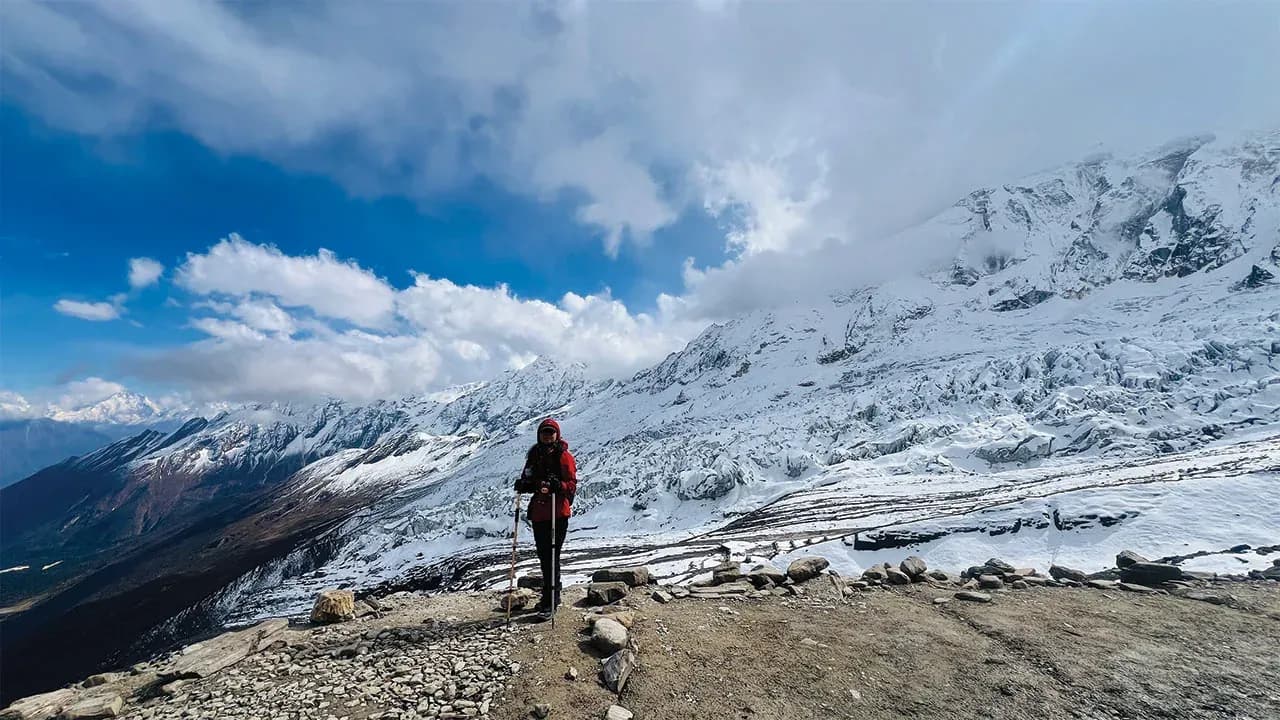
The landscape and vegetation change every few days: subtropical forest and suspension bridges below Jagat, pine and rhododendron to Namrung, open yak pasture and mani walls in the Nubri valley, then moraine and scree above Samdo, with views across to the Annapurna range from the pass. Expect long walking days of 6 to 8 hours, and a descent from Larkya La, the highest point on the Manaslu Circuit, that is harder on the knees than the climb.
Altitude Sickness and How to Prevent It
Acute Mountain Sickness (AMS) feels like a bad hangover: headache, nausea, dizziness and tiredness. Two rarer forms are dangerous. HAPE affects the lungs and causes breathlessness at rest, and HACE affects the brain and shows as confusion, poor balance and out-of-character behaviour. The risk of altitude sickness rises above 3,000M, which on this Manaslu trek means from Shyala onwards.
- Above 3,000M, gain no more than 300 to 500M of sleeping altitude a day where the route allows. The day to Shyala gains more, so it is walked slowly.
- Drink 3 to 4 litres of water a day and keep eating even when your appetite drops.
- Treat the second day at Samagaon as part of the trek, not a day off: climb high and sleep low.
- Tell your guide the moment you notice symptoms. Descending is the treatment, and some trekkers take preventive medication on medical advice.
Trekking Manaslu Circuit 12 Days: Pacing and the Larkya La Crossing
With only one day to acclimatize, pacing decides how the 12 day plan feels. Walk the day to Shyala slowly, use the second day at Samagaon for the climb toward Base Camp or the walk to Birendra Lake, and spend the free afternoon at Samdo walking up the hill behind the village before coming back down to sleep. On the morning you leave Dharamsala, start around 5 AM so you reach the pass before the wind builds, and save something for the 1,386M descent to Bimthang. If you feel unwell at Samdo, tell your guide straight away rather than pushing on.
Can a Beginner Do the 12 Day Trek?
A fit beginner can, but the 12 day plan leaves little room for a bad night at altitude. Nothing on the trekking trail needs mountaineering skills, so what matters is condition and pacing. If you can already walk 6 to 7 hours on hills, two days running, carrying a daypack, you have the base. More treks end early because of new trekking boots and sore knees than because of thin air, so break your boots in and use poles on every descent.



 15 Days
 Trek
 By air
 Pilgrimage
 Festivals
 Wildlife
 Luxury
 Yoga
 Food
 Heritage
