Strenuous, and not technical. You need no ropes, crampons or climbing skills on this route in spring or autumn. The challenge is endurance: eleven days on the trail, most of them 6 to 8 hours, broken up by two days to acclimatize.
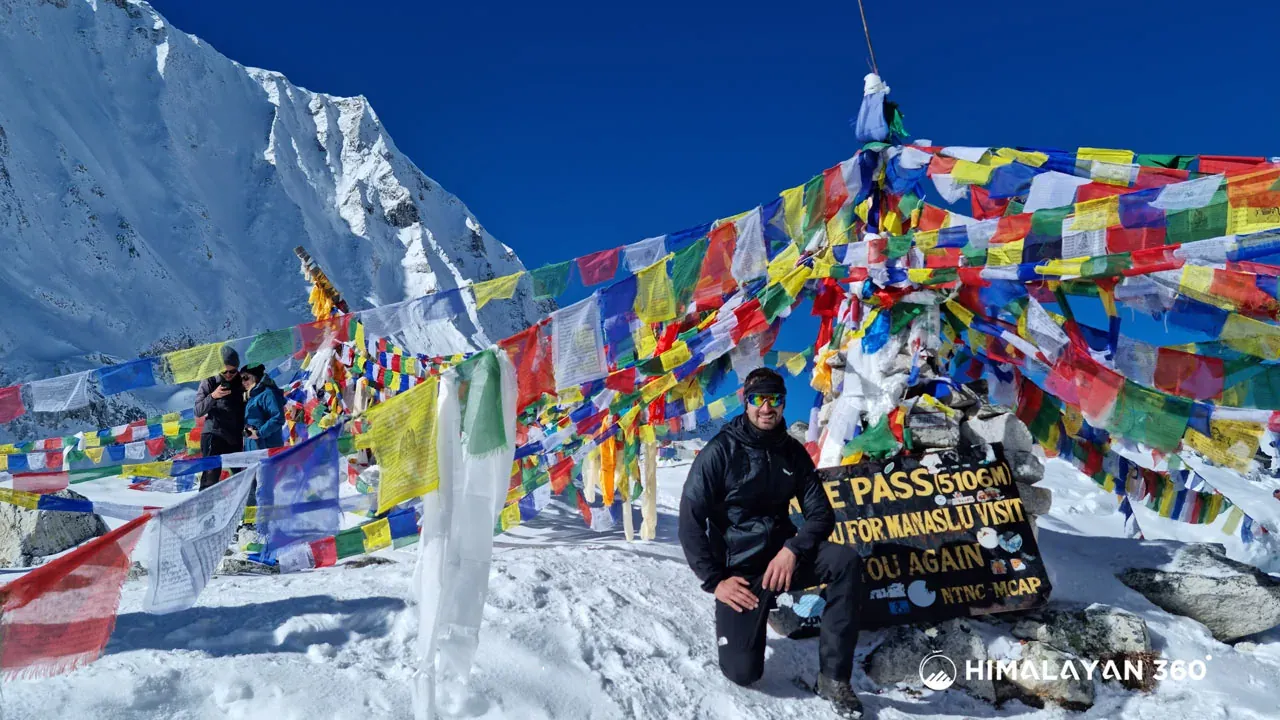
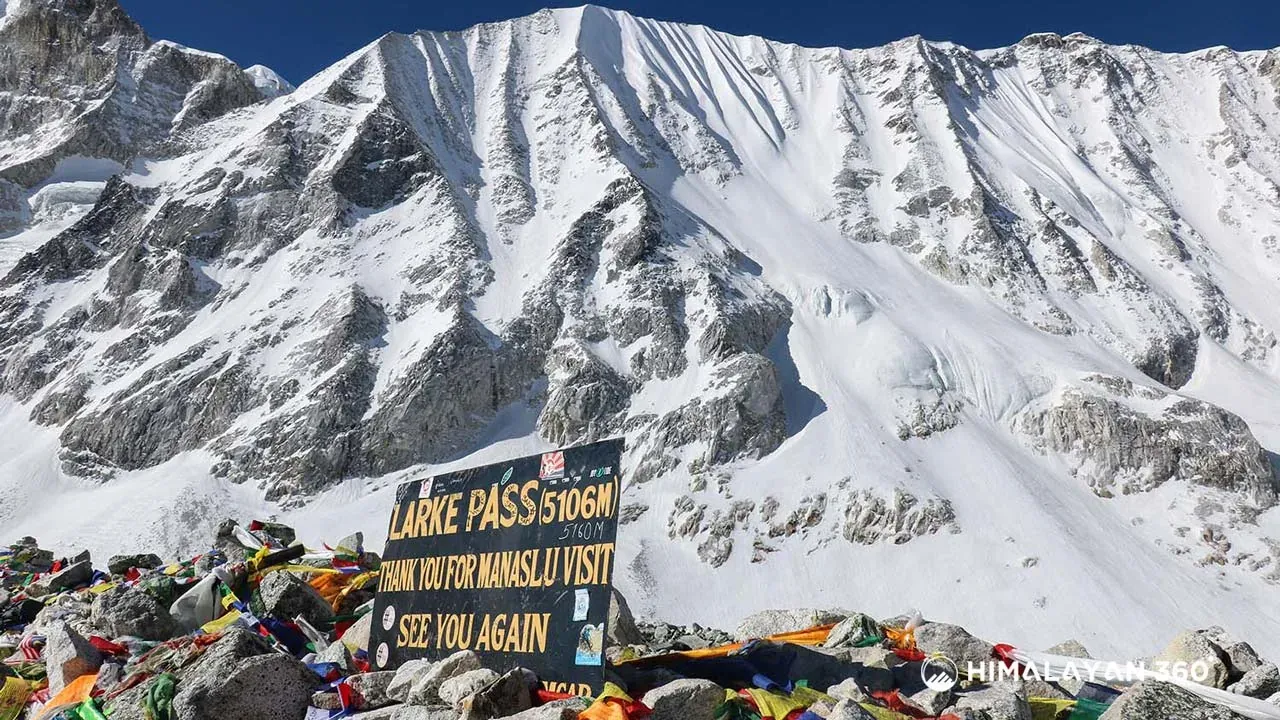
- Altitude. Seven nights are spent above 3,000M, and Dharamsala at 4,470M is the last bed before Larkya La (5,106M). Altitude sickness is the most common reason trekkers turn back.
- Two days to acclimatize. Samagaon and Samdo. The Tibet border walk from Samdo climbs to 5,058M, close to the height of the pass, so you find out how you react before the crossing.
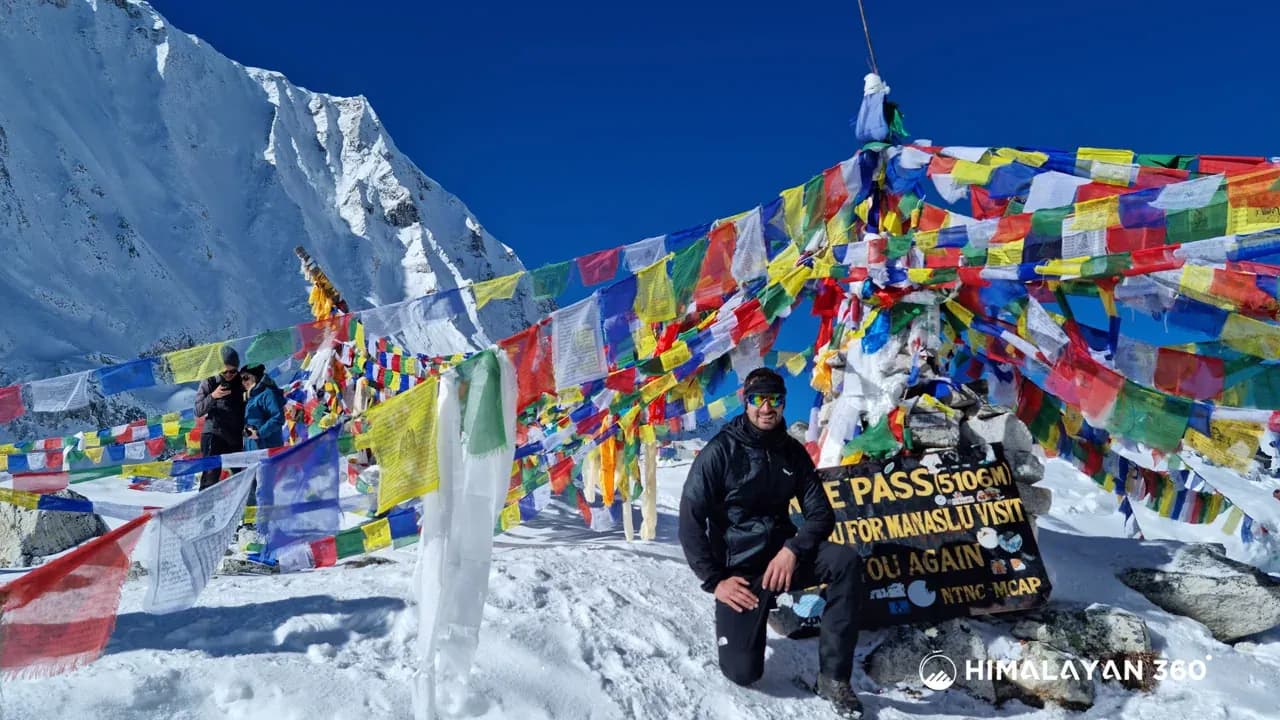
- The pass day. About 24.8KM and 9 hours from a pre-dawn start, with a steep 1,386M drop to Bimthang.
- Cold. Temperatures near the pass reach -20°C even in season, and no room above Samagaon is heated.
- Remoteness. No road reaches the trail between Machha Khola and Tilje, so evacuation means a helicopter.
Prepare over 6 to 8 weeks with 5 to 7 hour hill walks, two days back to back where you can, carrying your daypack, plus step ups and squats for the knees. This is the itinerary we suggest for a first trek at altitude. If you have trekked high before and are short of time, the 12 day version is one day shorter.
Manaslu Trek Route and Terrain
Starting the Manaslu Circuit trek at Machha Khola in the Gorkha District, you follow the Budhi Gandaki Valley north through a deep, canyon-like gorge, then curve west around the Manaslu range near the border with the Tibet Autonomous Region and cross Larkya La into the Marsyangdi valley. The route is a horseshoe, not a true circle, so there is transport at both ends. Nearly all of it lies inside the Manaslu Conservation Area, a protected area with strict rules on fires and rubbish.
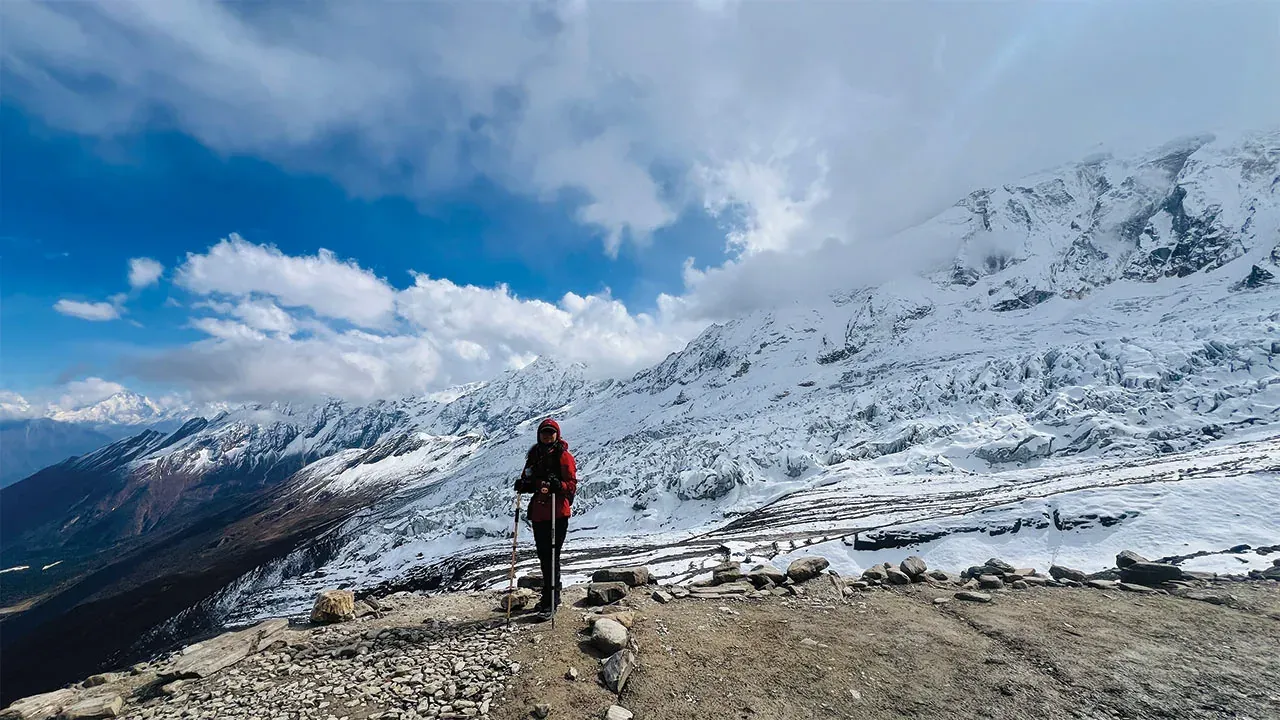
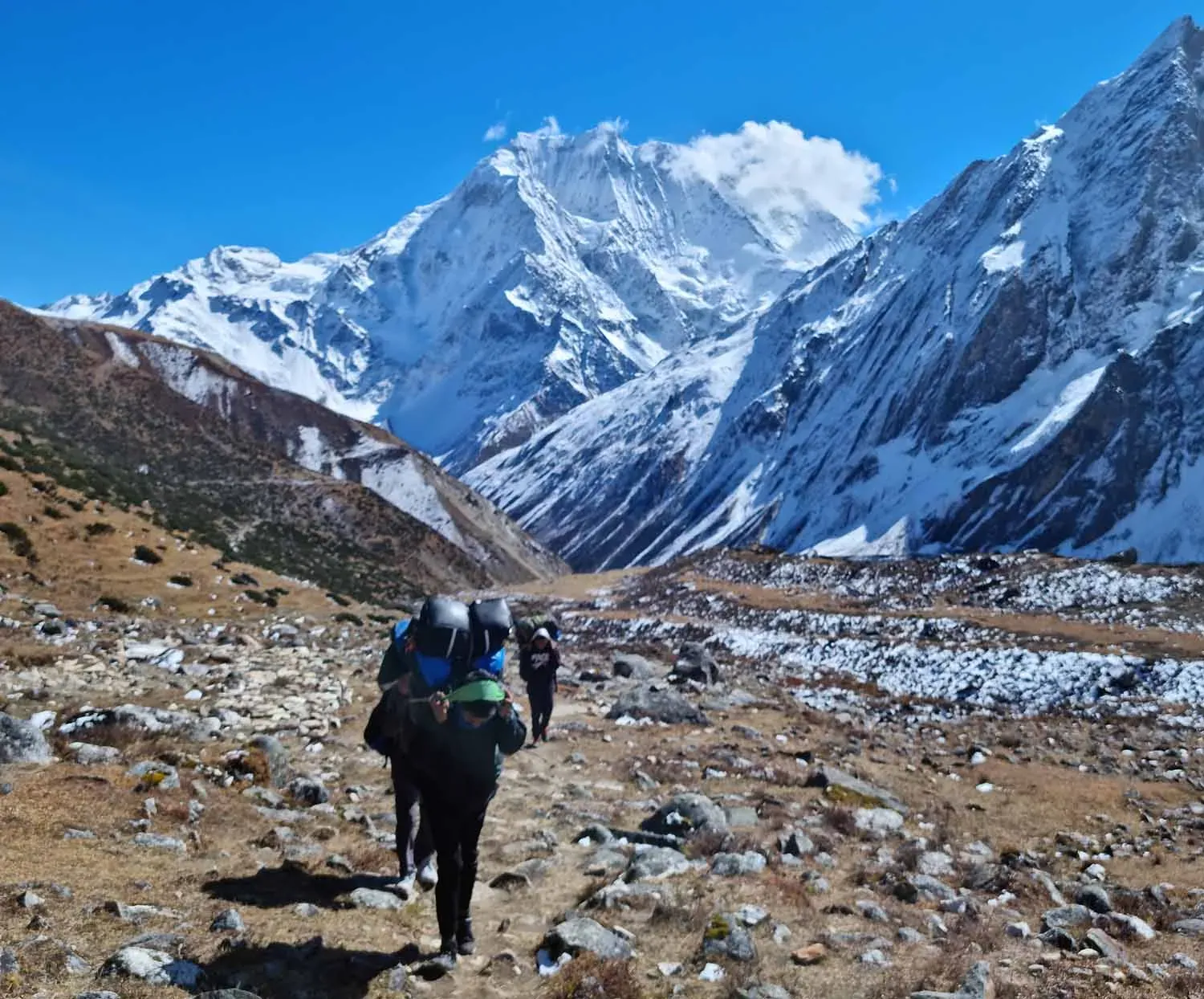
The terrain of the Manaslu Circuit changes every few days: river gorge and suspension bridges below Jagat, forest and farmland to Namrung, yak pastures and mani walls through Nubri, then moraine and scree above Samdo. Long walking days of 6 to 8 hours are normal, and the descent from the pass is harder on the knees than the climb.
Altitude Sickness and How to Prevent It
Acute Mountain Sickness (AMS) is the common form and feels like a strong hangover: headache, nausea, dizziness and tiredness. HAPE and HACE are rarer and dangerous. HAPE affects the lungs and causes breathlessness at rest; HACE affects the brain and shows as confusion, poor balance and behaviour that is out of character. The risk of altitude sickness begins above 3,000M, from Shyala onwards on this route.
- Above 3,000M, aim to gain no more than 300 to 500M of sleeping altitude a day. The climb to Shyala is bigger, so walk it slowly.
- Drink 3 to 4 litres of water a day and eat properly, even when the appetite goes above Samagaon.
- Use the two extra days, which make the trek safer. The hikes to Manaslu Base Camp and toward the Tibet border are climb high, sleep low exercises rather than sightseeing.
- Report any symptoms to your guide straight away. Descending is the only reliable treatment, and pace and honesty do more than any tablet.
Manaslu Trek 13 Days Itinerary: Base Camp and the Samdo Acclimatization Day
Two days on this itinerary are for acclimatizing rather than moving on. On day 7 at Samagaon you climb toward Base Camp at 4,800M, about 1,270M above your bed, or take the shorter walk to Birendra Lake, and sleep back at 3,530M. On day 9 at Samdo you walk the old trade route to the Tibet border at 5,058M and return to 3,875M. By the time you leave for Dharamsala you have already been within about 50M of the height of Larkya La, which is the whole point of the extra day.
Can a Beginner Do the 13 Day Trek?
Yes, if you are fit and you train for it, and this is the version we suggest for a first trek at high altitude. Nothing on the route needs climbing experience. Someone who can walk 6 to 7 hours on hills, two days back to back, with a daypack, will finish. Beginners are most often stopped by footwear and knees rather than altitude, so wear broken-in trekking boots and use poles for the 1,386M descent from Larkya La.



 12 Days
 Trek
 By air
 Pilgrimage
 Festivals
 Wildlife
 Luxury
 Yoga
 Food
 Heritage
