Route Status, 9 September 2026
On 26 August 2026 a glacial lake outburst sent ice, rock and meltwater down the Lhende river to the Nepal and China border. It destroyed Gyirong Port on the Chinese side and the Rasuwagadhi customs and immigration complex on the Nepali side. The Nepal Mountaineering Association found 644 people at the Rasuwagadhi immigration facility when it struck, 517 of them foreign nationals.
That crossing is the one every Kathmandu overland yatra uses. Where each way in stands today:
- Kathmandu overland via Rasuwagadhi and Kerung. Closed. The border post no longer exists, and the US Embassy in Beijing reported permit issuance suspended. Australia's DFAT advisory, still current on 9 September 2026, says plainly: postpone overland travel between Tibet, China, and Nepal, including Mount Kailash and Lake Manasarovar circuits. This is not a route that reopens after a repair season.
- Simikot to Hilsa by helicopter. Outside the flood catchment. This corridor sits in Humla, west of the damaged valley, and flies Nepalgunj to Simikot to Hilsa without approaching Rasuwagadhi. The Embassy of India in Kathmandu warns in writing to expect delays of days.
- Kathmandu or mainland China to Lhasa by air, then west overland. Unaffected. Longer, higher and a different permit set, but it avoids the damaged border.
- Tatopani and Kodari. Closed, and closed before the flood. One operator claims limited service has returned, with nothing official behind that.
- The government yatra. Finished for 2026. It closed on 24 August with the final batch, and 941 pilgrims completed it, 477 via Lipulekh and 464 via Nathu La.
We sell this route, so read it with that in mind. Any operator still selling a 2026 Kathmandu overland departure through Kerung is not telling you the truth. Our dated board for the whole of Nepal is in the post-flood status guide.
The Yatra at a Glance
| Kora distance | 52KM circuit, of which about 42KM is walked, over three days from Darchen |
| Highest point walked | Dolma La, about 5,600M / 18,400FT |
| Highest night | Dirapuk, about 5,000 to 5,200M, the night before the pass |
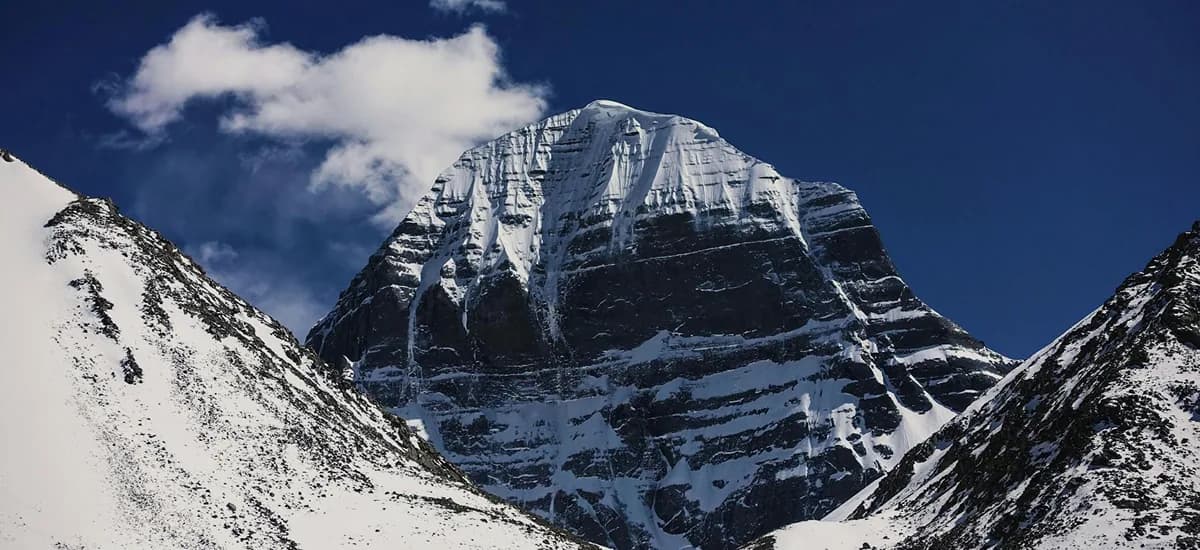
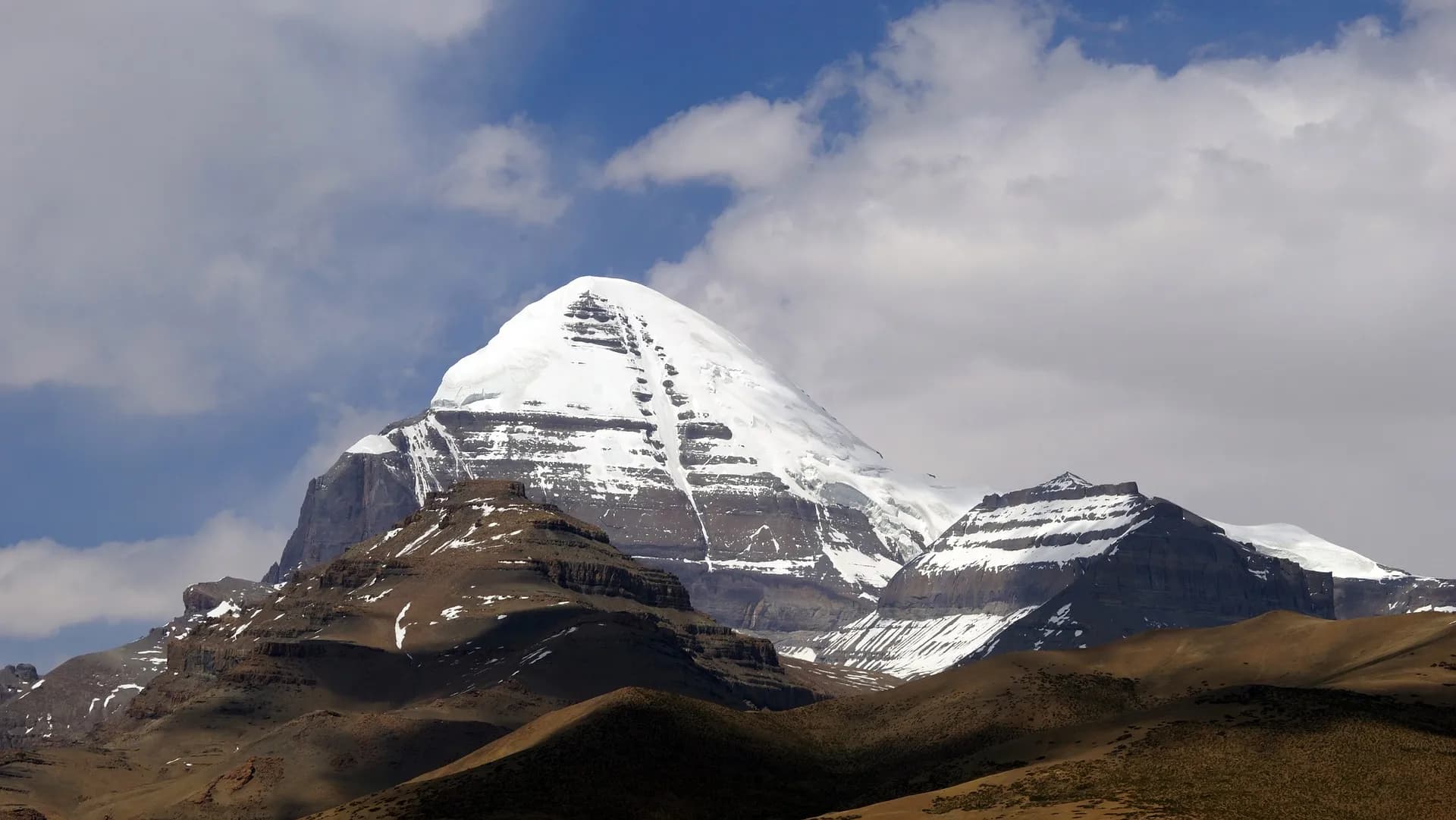
| Mount Kailash | 6,638M / 21,778FT, never climbed, climbing forbidden by law |
| Lake Mansarovar | About 4,590M / 15,060FT. Bathing prohibited, carrying water allowed |
| Duration | 10 to 14 days Nepal overland, 9 to 11 days by helicopter, about 22 days MEA Lipulekh, about 21 days MEA Nathu La |
| Difficulty | Strenuous, non technical. Pony and porter available on the kora |
| Best months | Late May, September and early October |
| Who can go | Any nationality through Nepal. Indian passport holders aged 18 to 70 on the government routes |
| Permits | Chinese visa, Tibet Travel Permit, Alien's Travel Permit, military permit. Agency filed, never individual |
| Accommodation | Guesthouse and tented camp, unheated, shared rooms and shared bathrooms |
| Package price | From USD 1,870, about Rs 1.65 lakh, per person |
Government Yatra or Private Yatra Through Nepal?
The Ministry of External Affairs runs the yatra each June to August on two routes, Lipulekh Pass in Uttarakhand and Nathu La in Sikkim. In 2026 it ran 10 batches of 50 on each, so 1,000 places, given out by a computer-generated random draw on 21 May 2026. It is cheap and well run, and the odds are the odds.
Against that, China fixed a quota of 24,000 Indian pilgrims travelling privately through Nepal for 2026, up from 20,000 in 2025, against demand that had already crossed 40,000. The Kathmandu Post put it plainly: because the Indian government caps its own pilgrimage at 1,000 people, most Indian pilgrims prefer to travel privately through Nepal.
So the framing is not which is better. It is 1,000 places behind a lottery, 24,000 behind a booking. If you are selected, take the government yatra. If you are not, or the rules shut you out before you apply, the private route is not a consolation prize. It is where most Indian pilgrims already go.
Three differences beyond price:
- Time off work. The portal says about 22 days for Lipulekh and 21 for Nathu La, but the MEA FAQ says 23 to 25 because it counts the four days in New Delhi for passport, visa, medicals and briefing. Nepal overland is 10 to 14 days, helicopter 9 to 11.
- Refunds. The fee page states in capitals that any amount paid at any stage is not refundable and cannot be transferred. Declared unfit at Gunji or Sherathang, you go home, and you are not moved to a later batch.
- Walking. MEA puts trekking on the Lipulekh route at about 200KM. Nathu La is motorable, about 35 to 40KM, which is the parikrama itself. The Nepal routes are closer to Nathu La.
Who Can Go, and Who the Lottery Shuts Out
The government route gates hard. The Nepal route barely gates at all. This is the most useful table on the page if you are over 65 or hold an OCI card.
| Gate | Government routes, Lipulekh and Nathu La | Private route through Nepal |
|---|
| Age | 18 to 70 as on 1 January of the year. Hard rule | No official age limit. Operators carry pilgrims over 70 subject to a full physical |
| Nationality | Indian citizens with an ordinary Indian passport only. OCI card holders are ineligible | All nationalities, NRIs, OCI and PIO holders included |
| BMI | 25 or below advised, though the FAQ says doctors may not be rigid if you are otherwise fit | Not applied |
| Medical | Compulsory tests at the Delhi Heart and Lung Institute and the ITBP Base Hospital, New Delhi. Other hospitals not accepted. Second check at Gunji (3,220M) or Sherathang (4,115M) | Fitness certificate from a registered doctor, arranged by you |
| Passport | Valid six months as on 1 September of the year. Handwritten passports not accepted | Valid six months beyond your return date, two blank pages |
| Paperwork you sign | An undertaking for helicopter evacuation at your own cost, an indemnity bond, a consent form for cremation | Operator terms and an insurance certificate |
Read the age row again. A medically fit 71 year old is not too old for Mount Kailash. He is too old for the lottery. Only one of those is about a mountain.
State Grants: The Money Almost Nobody Claims
The central government gives nothing. The Kailash Manasarovar Yatra portal says so on its front page: the Ministry of External Affairs provides no subsidy to yatris. Some states do, and one of them has a rule nobody publishes.
| State | Amount | Does a private Nepal-route yatra qualify? |
|---|
| Uttar Pradesh | Rs 1,00,000 lump sum | Yes, explicitly. The Government Order extends it to pilgrims who complete the yatra from their own resources and through a private travel agency |
| Madhya Pradesh | 50 percent of expenses, maximum Rs 30,000 | No. Requires selection by the Ministry of External Affairs, and the applicant must not be an income taxpayer |
| Uttarakhand | Rs 50,000 | No. Must be the Government of India yatra through Kumaon Mandal Vikas Nigam on the Pithoragarh route |
| Gujarat | Kailash Darshan Yatra scheme, amount not published | No. Requires being a selected pilgrim |
That first row is worth Rs 1 lakh to a resident of Uttar Pradesh who was never selected. Apply online only, at the state's dharmarth karya portal, within 90 days of completing the yatra, with Aadhaar, PAN, residence certificate, passport and visa, bank details and a completion certificate. Once in a lifetime, paid from the financial year in which you apply. Madhya Pradesh is offline, to the District Collector, within 60 days.
Operator pages carry figures for six other states. We could not verify any against a state source, so we are not printing numbers you might act on.
Every Route to Kailash, Compared
Every route ends in the same three-day walk. What differs is where you cross, how long you are away, what it costs and, right now, whether it is open.
| Route | Days | Cost | Who it suits | Status, 9 Sep 2026 |
|---|
| Nepal overland, Kathmandu to Kerung | 10 to 14 | From USD 1,870 (Rs 1.65 lakh) | Anyone. Best acclimatisation | Closed. Crossing destroyed 26 Aug 2026 |
| Simikot to Hilsa by helicopter | 9 to 11 | From USD 3,400 (Rs 2.99 lakh) | Short leave, or no tolerance for long drives | Corridor unaffected. Delays of days are ordinary |
| Lhasa fly-in, then west overland | 12 to 15 | From USD 3,350 (Rs 2.95 lakh) | Lhasa and Everest on the same trip | Unaffected. Needs an individual Chinese visa |
| Lipulekh Pass, Uttarakhand (MEA) | 22, or 23 to 25 with the Delhi days | Rs 2.09 lakh | Indian citizens 18 to 70 who win the draw | Season closed 24 Aug. About 200KM of trekking |
| Nathu La, Sikkim (MEA) | About 21 | Rs 3.31 lakh | Least walking of any route, about 35 to 40KM | Season closed 23 Aug. Three days on a bus each way |
| Aerial darshan by chartered flight | 2 nights, 3 days ex Lucknow | Rs 42,000 to Rs 99,000 | Anyone who cannot pass a medical | Selling. No visa, no permit, no kora, no landing |
Two things in that table the market does not say. Nathu La at Rs 3.31 lakh costs more than most private helicopter packages, which is counter-intuitive and true. And aerial darshan is not a yatra: a flyover with no landing and no ritual, an honest answer for a parent who will never clear a medical and a dishonest one sold as a substitute for the kora.
The Kora: Outer, Inner and Charan Sparsh
The kora is the pilgrimage. Everything before it is transport.
| Outer kora | Inner kora | Charan Sparsh |
|---|
| What it is | The full circuit from Darchen | A shorter loop behind Nandi, inside the outer one | Not a kora. An out and back walk to the north face |
| Distance | 52KM circuit, about 42KM walked | Published figures range 22 to 34KM, no agreement | 3.5KM each way, 7KM in total |
| Days | Three | One to two | 4 to 6 hours, added to a kora day |
| Highest point | Dolma La, about 5,600M | Sanglam La, about 5,680M, operator sourced | About 5,200 to 5,300M at the base |
| Ground | Jeep track, rocky path, one scree climb, one long loose descent | Unmarked, no lodges, no water, no rescue | Unmarked moraine and glacial debris |
| Who does it | Essentially every pilgrim | Restricted, extra permit. Tradition asks for 12 or 13 outer koras first | Strong pilgrims already acclimatised at Dirapuk |
The 52KM That Is Really 42KM
Every page says 52KM and none says where it goes. The reconciliation is in the Indian government's own paperwork. A road now runs from Darchen to Yam Dwar and a few kilometres past Dirapuk, and the MEA's 2026 itinerary books the first kora leg as "7+12, Bus+Trek", then 19KM on foot, then 5KM. Its 2006 guidebook is blunter: the first 10KM go by bus, and the proper trek begins at Yam Dwar.
So the circuit is 52KM and you walk about 42 to 43KM of it: roughly 12KM to Dirapuk, 19KM over Dolma La to Zuthulpuk, then 5 to 8KM out. A first-hand GPS record from July 2026 has day two running 07:40 to 18:20.
Which One Should You Book?
If you are over 60, or this is your first time above 4,000M, book the outer kora and add nothing to it. Day two is already ten hours long at half the oxygen of sea level, and every add-on lands on the same tired legs. Take a pony and a handler if you are unsure: the pony carries you up, and riders dismount to walk the descent, which is the part that needs the shoe and the knees. Do not plan a trip around the inner kora, which operators in Tibet describe as not officially open and which has no rescue.
Charan Sparsh, and Whether You Can Do It
Charan Sparsh is not a kora and should never be sold as one. A kora is a closed circuit. Charan Sparsh walks out from Dirapuk monastery to the base of the north face and back the same way, about 7KM, on unmarked moraine, rising to roughly 5,200 to 5,300M. It is the closest a pilgrim may stand to the mountain.
Its 2026 status is contested and we will not pretend otherwise. Several Tibet operators say it is barred after glacial recession, permafrost thaw and rockfall, and describe a boundary line short of the old turning point. At least one says a batch reached the north face in August 2026. There is no government bulletin either way. Ask your operator to confirm it in writing, dated, before you pay a supplement, and treat any page that calls it flatly open or flatly banned without a source as a page that does not know it. Our Kailash Charan Sparsh tour runs 10 days from USD 1,999 (Rs 1.76 lakh), with the north face walk confirmed per departure.
Why Four Faiths Walk Around This Mountain
Four religions put the centre of the world on the same peak, and it shows on the trail: it is why some pilgrims walk towards you.
| Faith | Name | What it holds | Direction |
|---|
| Hinduism | Kailash | The abode of Shiva with Parvati, Ganesha and Kartikeya, and identified with Mount Meru | Clockwise |
| Buddhism | Kang Rinpoche | Mount Meru itself, seat of Chakrasamvara. Kailash the father, Mansarovar the mother | Clockwise |
| Jainism | Ashtapada, the Eight Steps | Where Rishabhadeva, the first Tirthankara, attained moksha | Clockwise |
| Bon | Yungdrung Gutseg | The nine stacked swastikas mountain, abode of the sky goddess Sipaimen | Counter-clockwise |
The best story on the mountain is the Milarepa contest, and the trade almost always garbles it. Vajrayana Buddhists hold that Milarepa and the Bon practitioner Naro Boncham fought a battle of wits that neither won, so they agreed the summit would settle it. Naro sat on his magic drum and began to climb. Milarepa reached the summit riding on the rays of the sun, and won. He gave the neighbouring mountain, since called Bonri, to Bon.
That is a legend about a miracle, not a mountaineering claim, and it answers the question everyone asks. Nobody has climbed Mount Kailash. Hugh Ruttledge circled and studied it in 1926 and called it utterly unclimbable. Reinhold Messner was offered the climb in the mid-1980s and declined. In 2001 a Spanish request was refused and the prohibition made explicit. Setting foot on the slopes is forbidden by law.
One clearing-up, because it circulates on every Indian social feed. NASA has published exactly one thing about Mount Kailash, an ASTER satellite image acquired on 20 January 2003 with a plain geographic caption. There is no NASA electromagnetic finding and no spinning compass. The pyramid and rapid-ageing claims trace to a Russian ophthalmologist's 1999 expedition book, not to published science.
Lake Mansarovar and the Holy Dip
Lake Mansarovar sits at about 4,590M / 15,060FT, covers 320 square kilometres and is 88KM around. It is one of the highest freshwater lakes in Asia, and Hindu tradition holds Brahma made it. Immediately west lies Rakshastal, separated by about 10KM of the Ganga Chhu channel, salt, lifeless and in tradition the dark twin.
Bathing in Lake Mansarovar has been prohibited since 2018, and the Tibet Autonomous Region tourism authority instructs visitors not to enter the lake. Collecting water for religious use is still allowed. Pilgrims perform puja on the shore, take an achman, fill their kamandal and carry the water home, and that is what your itinerary will contain. Tell your family before you leave. We have seen more disappointment at that shoreline than anywhere else on the trip, all of it avoidable with one sentence.
How Hard Is It, Really?
Start with the Government of India, which sells nothing. Its travel advisory for pilgrims going with private operators says the very high altitude, rarefied atmosphere and inhospitable terrain make the trip one of the most difficult in the Himalayas, and that people who are aged, or have a history of blood pressure, diabetes, chest pain, heart conditions or breathing difficulties, are strongly advised not to go. No operator prints that, and it is the truest paragraph about this trip.
Now the reframing that makes it survivable. This is a two week journey in which you walk about 42KM. Road tolerance matters more than trekking fitness: Saga to Darchen is roughly 500KM in a day above 4,500M, and the Nathu La route runs 295KM, 477KM and 475KM on three consecutive days. If long vehicle days at altitude break you, this trip breaks you before you lace a boot.
What the hardest day asks of a sixty year old:
- Up at 0300, walking in the dark and cold from Dirapuk, after the worst night's sleep of the trip.
- Five to six hours of climbing on scree and boulder field to Dolma La, where there is about half the oxygen of sea level.
- A long, steep descent on dust and loose stone past Gauri Kund, where ankles and knees fail and the pony cannot help.
- Ten to eleven hours in total to Zuthulpuk at 4,780M, and another walking day after it.
There is no shame in the pony and no prize for refusing it. Train by walking, not running: four to six long walks in the boots you will wear.
Where the Altitude Actually Gets You
Not at the pass. The pass is only where it shows.
| Point | Altitude | Oxygen vs sea level |
|---|
| Kathmandu | 1,400M | 84% |
| Simikot | 2,910M | 70% |
| Taklakot (Purang), acclimatisation night | About 3,900M | 62% |
| Saga | About 4,640M | 56% |
| Lake Mansarovar | 4,590M | 56% |
| Darchen | 4,650M | 56% |
| Dirapuk, the highest night of the trip | About 5,000 to 5,200M | 54 to 52% |
| Dolma La, the highest point walked | About 5,600M | 49% |
| Zuthulpuk | About 4,780M | 55% |
Sleeping altitude peaks at Dirapuk, not at Dolma La, and it does so the night before the pass. That is missing from almost every page about this pilgrimage and it is the fact that decides the crossing. You arrive tired, sleep badly above 5,000M, then get up at three in the morning to climb. A bad night at Dirapuk is what turns people back.
Age is not the main risk factor, and that can be sourced to the government rather than to "studies show": the Kailash Manasarovar Yatra FAQ observes that some young people aged 19 to 30 are more prone to altitude sickness than older people, because they respect acclimatisation less. The MEA advisory prescribes three nights at 9,000FT and two each at 12,000 and 15,000FT before going higher. Hold your operator's itinerary against that. General rules are in our altitude sickness guide.
Permits, Visa and the New Delhi Rule
Here is the sentence missing from the whole first page of Google, and the failure behind pilgrims stranded in Nepal.
If you hold an Indian passport and you are going through Nepal, your Chinese visa is issued by the Embassy of China in NEW DELHI, not in Kathmandu, and you must have it before you leave India. The Embassy of India in Kathmandu states it in writing. It binds Indian passport holders wherever they live, even if they already hold a valid China visa, and no individual submissions are permitted.
On 27 June 2026 the Ministry of External Affairs issued an advisory after Indian pilgrims were stranded in Nepal because their operators did not hold valid Chinese visas and Tibet permits, telling citizens not to begin the journey until all documents are in hand. That advisory exists because of the rule above.
NRIs, OCI holders and foreign nationals are the opposite case: their China group visa is issued in Kathmandu, minimum four applicants at the embassy and five for the Tibet Tourism Bureau invitation letter, filed through a local agency.
| Permit | Issued by | What it covers | Can you get it yourself? |
|---|
| Tibet Travel Permit | Tibet Tourism Bureau, Lhasa | Entering the Tibet Autonomous Region at all | No. Individual applications are not accepted. Agency filed, 8 to 9 days |
| Alien's Travel Permit | Public Security Bureau | Travel beyond Lhasa into Ngari, where Kailash and Mansarovar are. Dropped for Shigatse in 2025, still required for Ngari | No. Agency filed |
| Military permit | Military Affairs Office, Lhasa | Military-sensitive areas, expressly including Purang county | No. Agency filed, about a month ahead |
| Nepal restricted area permit | Nepal Immigration | Simikot and Hilsa, or Rasuwagadhi, per the route | No. Held by your Nepali agent |
Passport: valid six months beyond your return date, with two blank pages. Handwritten passports are not accepted.
What to Check Before You Pay an Operator
You have no choice about using one, because the permits cannot be filed any other way. The only useful question is which, and the Embassy of India in Kathmandu has published the checklist for you.
- Ask to see the Chinese visa route. Indian passport, New Delhi. If you hold an Indian passport and an operator tells you the visa will be arranged in Kathmandu, stop there.
- Ask when your visa and Tibet permit will be in hand. The answer must be before you leave India. Anything else is the 27 June 2026 advisory happening to you.
- Ask whether they hold the Nepal restricted area permit for your sector, in their own name.
- Ask what happens if the helicopter does not fly. The Indian government warns in writing that delays of days are ordinary on the Simikot and Hilsa sector. Who pays for the hotel, and does the departure carry buffer days?
- Ask about evacuation. Who calls it, who pays, what your insurer needs. Ground evacuation to Darchen runs 500 to 700 yuan, to Purang about 1,000. A helicopter is a different order of money.
- Ask for the Charan Sparsh position in writing, dated, if you are paying for it.
Cheapest is rarely the risk here. Under-documented is.
Which Month to Go
The season is May to early October, and the reason is the passes rather than the temperature. November to April brings sub-zero cold, heavy snow and closed roads.
Now the part where we disagree with the whole first page of Google. Every guide tells you to time the yatra to Saga Dawa, the full moon of the fourth Tibetan month, when the Tarboche flagpole is raised near Darchen. The Embassy of India in Kathmandu puts the opposite in its DON'Ts list: avoid travel during or near full moon days, because of traveller density and overbooking, leading to pilgrims being stranded in Simikot and Hilsa. It names the helicopter sector specifically.
The resolution is not "never go at Saga Dawa". It is this:
- If you want the festival, book very early, accept the crowding, and build spare days into the return.
- If you want the mountain, take late May, September or early October. You will see it clearly, with a fraction of the people.
- July and August are not a write-off. The local monsoon is weak: warmer days up to about 25 degrees, some rain, a green plateau, trails still passable. For an Indian pilgrim Sawan is a reason to go, not to avoid.
Saga Dawa Duchen falls on 18 June 2027 and 7 June 2028. Our departures are on the fixed departure dates page.
Best Shoes for Kailash Mansarovar Yatra
The failure mode here is not the climb. It is the descent off Dolma La, on inclined, dusty, loose scree at the end of a ten hour day. Buy for that.
- A mid or high-cut waterproof boot with a stiff-ish sole. Not a mountaineering boot, which is more boot than this route needs, and not a running shoe. Nothing on the outer kora is technical: no rock, no ice axe, no fixed rope.
- Half a size up, not a full size. The market says one full size and it is wrong. A boot already cut for a thick sock, plus a full size, gives heel lift, and heel lift on a ten hour descent is the blister this list exists to prevent. Buy in the evening, in the sock you will wear.
- Waterproof yes, insulated no. Kora days between May and September run about 10 to 14 degrees, and wet comes from snow patches and streams, not cold.
- Break them in over at least 50KM. Not around the house: four to six long walks. New boots are the commonest mistake Indian pilgrims make.
- Trail runners are defensible for wide or flat feet. If you cannot get comfortable in a stiff boot, a trail runner with deep lugs and a rock plate beats a boot that blisters you on day one. You trade ankle support on the boulder field and warmth on a cold morning. No operator page says this.
- Women should buy a women's last, not a smaller men's boot. The heel cup and instep volume differ, and the heel is where a poor fit punishes you.
- Camp shoes are not optional, and a pony does not save you. Two nights in boots at Dirapuk and Zuthulpuk is worse than the walking, and riders dismount for the descent.
Budget: an Indian-market boot from Decathlon, Wildcraft, Gokyo or Himmaleh runs Rs 4,000 to Rs 9,000, Columbia or Salomon Rs 9,000 to Rs 16,000. Fit beats brand.
What to Pack for the Kailash Mansarovar Yatra
Dress in thin layers, not one thick coat, because you will add and remove them every half hour on the climb to Dolma La. Split the kit in two: your duffel travels by vehicle and you will not see it during the walking day, so anything you need between breakfast and the guesthouse lives in the daypack. On the helicopter sectors the limit is a soft bag of 10 to 12KG, and hard trolleys are not accepted.
Down jackets, sleeping bags and poles rent in Thamel for USD 1 to 3 a day. Buy the personal items, rent the bulky ones.
What Chinese Customs Actually Takes
No page in this market covers this properly, and it is what most often costs a pilgrim something at the border.
What gets you questioned. Images of the Dalai Lama, including on your phone, the snow lion flag, political printed matter, and maps. The rules cover storage media for computers, not only paper, and phone searches at the Gyirong crossing are reported first-hand in 2025 and 2026. The map problem is specifically Indian: a map drawing Aksai Chin or Arunachal Pradesh the Indian way fails the national standard, and carrying a non-conforming map across the border is barred outright. That covers a school atlas, a tourist map bought in Delhi and a printed itinerary map.
What gets confiscated. Satellite phones and messengers, Garmin inReach, Zoleo and SPOT included, because Chinese regulation requires satellite traffic to route through an approved domestic gateway and none of these can. Drones, because Purang county is controlled airspace by operation of law. One correction: the "three years imprisonment" figure attached to satellite phones is India's law, not China's, which matters more rather than less, since you carry the device through India first.
The reassurance nobody prints. Your own puja kit, in personal quantity, is expressly lawful. Chinese regulation permits religious material for personal use in reasonable quantity, set at fewer than 10 books or 20 discs. A Gita, a Gutka Sahib and a mala are fine. A carton of them to hand out is not.
China caps inbound cash at 20,000 yuan per person, about USD 2,800, and the excess is prohibited outright, a trap for a group leader carrying pooled money. The rule that matters most: declare honestly and you stay in the administrative regime. Conceal, and it becomes smuggling.
What the Kailash Mansarovar Yatra Costs
A private Nepal-route yatra runs from USD 1,870 (about Rs 1.65 lakh) for the 10 day overland trip to USD 3,400 (about Rs 2.99 lakh) by helicopter, with the 14 day overland at USD 2,770 (Rs 2.44 lakh). The government routes are Rs 2.09 lakh via Lipulekh and Rs 3.31 lakh via Nathu La, none of it refundable.
One judgement the numbers make for you: here the cheaper option is the safer one. Overland costs less and acclimatises you better, because you gain altitude across days of driving instead of being set down at 3,700M.
Two lines Indian budgets miss. Pony and porter on the kora, 3,500 to 4,000 yuan, cash on the spot. And cash itself, because cards, UPI and international ATM cards do not work in western Tibet.
Every line is broken down in the full Kailash Mansarovar Yatra cost breakdown, including the 10 day overland yatra from USD 1,870 and the 14 day overland yatra from Kathmandu.
Travel to Kailash With Us
We have run this pilgrimage since 2014. We file the Chinese visa and every Tibet-side permit, and we travel with oxygen, a medical kit and Hindi-speaking support, because the paperwork and the altitude are what go wrong.
- Kailash Mansarovar Yatra. 14 days from Kathmandu, from USD 2,770 (Rs 2.44 lakh). The best acclimatisation profile we run.
- 10 day Mount Kailash and Lake Mansarovar Yatra. From USD 1,870 (Rs 1.65 lakh). The same pilgrimage starting at the Tibet border, and our best value.
- Kailash Mansarovar Yatra by Helicopter. 11 days, from USD 3,400 (Rs 2.99 lakh). Buy it for the days it saves, not the price.
- Kailash Charan Sparsh Tour. 10 days, from USD 1,999 (Rs 1.76 lakh). The outer kora with the walk to the north face.
- Lhasa, Everest, Kailash and Kathmandu. 14 days, from USD 3,350 (Rs 2.95 lakh). Fly into Lhasa and cross Tibet, missing the damaged border.
If the lottery shut you out, or you are over 70, or you hold an OCI card, tell us and we will say honestly what is open to you. Make an enquiry with your dates.
More on this pilgrimage: what it costs · route status after the 2026 flood · fixed departure dates
 Trek
Trek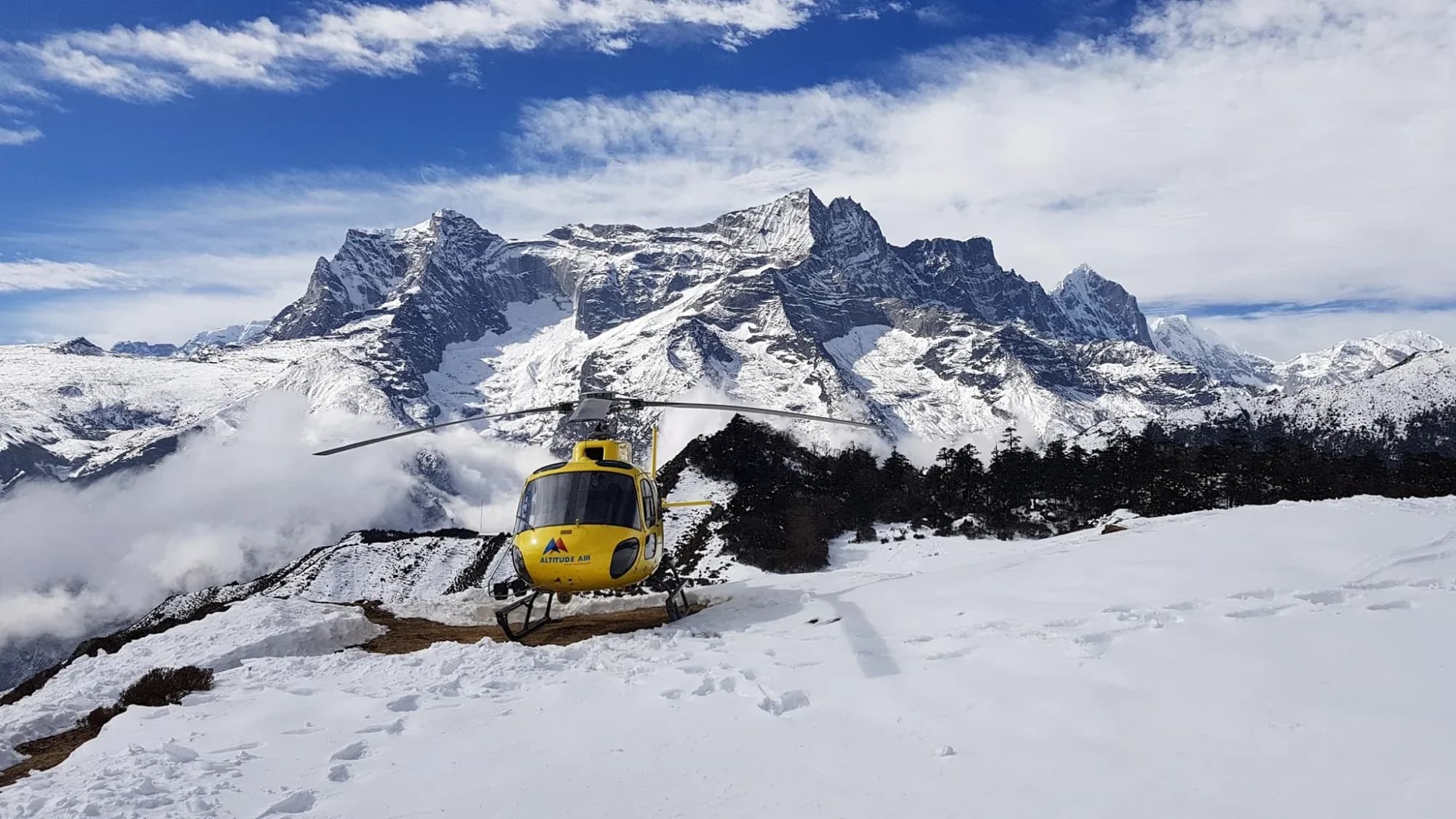 By air
 Pilgrimage
 Festivals
 Wildlife
 Luxury
 Yoga
Yoga Food
Food Heritage