Bird Watching and Wildlife
3 Trips
Why Bird Watching in Nepal is a Unique Experience
Despite occupying only 0.1% of the Earth’s landmass, Nepal is home to about 9% of bird species in the world, with over 915 recorded species. This huge variety makes the country one of the best destinations in the world to go and see birds. Here are some key points that make bird watching in Nepal a truly unique experience:
- In a short travel distance, you can explore wetlands, grasslands, broadleaf forests, temperate hills, and alpine landscapes, which are home to different bird communities.
- Nepal is the only place on Earth where the Spiny Babbler can be found.
- Endangered birds like Bengal Florican can be found in protected areas like Chitwan National Park and Koshi Tappu Wildlife Reserve.
- Nepal lies in the Central Asian Flyway, an important route for migrating birds.
- In winter, more than 150 bird species arrive from colder regions such as Siberia, China, Mongolia, and create a surreal environment for birdwatching.
- Wetlands such as Koshi Tappu attract many waterbirds like storks, herons, kingfishers, and migratory ducks, throughout the year
A Relief from your Monotonous Daily Routine in Peace with Nature
Everyone has their own way of refreshing their mind and breaking free from the predictable rhythm of daily life, work-life, monotonous daily routine, or whatever you may want to call it. For some, they find peace in nature and being able to watch a variety of birds and wildlife in their natural habitat, and simply breathing fresh air away from the noise. And if you belong to this group of nature lovers, we’ve created special birdwatching and wildlife tours designed just for you. No matter you choose our 9-day, 12-day, or 14-day wildlife and birdwatching tour packages, we guarantee that you will have quality time in Nepal’s two protected areas: Chitwan National Park (Nepal’s first national park and a UNESCO World Heritage Site) and Bardia National Park (the largest national park in Nepal). By the time you come to the end of the trip, you will have gained what you expect from this trip, which is rare wildlife sightings, a refreshing escape, encounters with nature, and a deeper connection to the wild.
| Trip Name | Destination Covered | Duration | Cost |
| 12 Days Wildlife and Birdwatching Photography Tour | Bardia National Park, Lumbini grassland, Lumbini Wetland, Chitwan National Park | 12 | USD 1,999 |
| 14 Days Wildlife and Birdwatching Photography Tour | Bardia National Park, Lumbini grassland, Lumbini Wetland, Chitwan National Park, Koshi Tappu Wildlife Reserve | 14 | USD 2,441 |
| Wildlife and Birdwatching Photography Tour | Lumbini, Chitwan National Park | 9 | USD 1,388 |
Seal your Memories with Professional Photographs
Get a chance to capture the birds and wildlife in their natural habitat with this tour package like never before. Get a picture-perfect photo to post on Instagram, Facebook, or other social media pages, and bring a lifetime memory with you.
Wildlife Diversity from the Capital to Buddha’s Birthplace
Wildlife and bird watching photography tour is a 9 days trip full of adventure for anyone who wants to explore Nepal’s wild side. The tour starts in Kathmandu and moves to Lumbini, where you’ll wander through lush jungles and capture amazing photos of birds in their natural habitats. Next, you’ll visit the Vulture Restaurant and then head to Chitwan National Park. In Chitwan National Park, you’ll enjoy jeep safaris and guided walking tours with nature experts. You will have close encounters with birds, rhinos, and the vibrant life of the Terai jungles. Additional information:
- Best time to visit: March, April, May, September, October, November, December
- Highlights: Jungle safaris in Chitwan National Park, bird-watching in Terai greenland, and wetlands
- Transportation: Road transport from Kathmandu to Lumbini, Lumbini to Chitwan, and Chitwan back to Kathmandu
- Permits / Fees: Chitwan National Park permit and other entry fees included
12 Days Wildlife and Birdwatching in the dense Nepalgunj Jungles
This 12 days bird watching and wildlife photography tour is perfect for serious wildlife and birdwatchers enthusiasts who want to fully explore Nepal’s Terai jungles and wetlands. The journey begins in Kathmandu, followed by a flight to Nepalgunj. You’ll spend three full days in Bardiya National Park, enjoying jeep safaris and guided bird-watching sessions to spot a variety of wildlife and birds. Next, the tour moves to the wetlands and greenlands of Lumbini, where you can photograph migratory birds such as Sarus Cranes, Mallards, Warblers, Northern Shovelers, and Northern Pintails. After Lumbini, you’ll continue to Chitwan National Park for three more days of wildlife exploration. Here, jeep safaris and walking tours with expert guides offer a chance to see the park’s rich biodiversity, including rhinos, tigers, elephants, and many bird species. You’ll also visit the famous Vulture Restaurant in Chitwan. Additional information:
- Best time to visit: March, April, May, September, October, November, December
- Highlights: Jeep safaris in Bardiya and Chitwan National Parks, bird-watching in Lumbini wetlands and greenlands, walking tours, and Vulture Restaurant visit
- Transportation: Flight from Kathmandu to Nepalgunj. Road/jeep travel between parks and back to Kathmandu
- Permits / Fees: Bardiya and Chitwan National Park permits included, plus other entrance fees
- Ideal for: Intermediate photographers, bird-watchers, and multi-day nature seekers
Where Better than National Parks and Wildlife Reserves!
This 14 days wildlife and birdwatching photography tour begins in Kathmandu. It takes you to Bardiya National Park, then Lumbini, Chitwan National Park, and finally the eastern plains at Koshi Tappu Wildlife Reserve. Along the way, you’ll explore diverse habitats from dense forests to rich wetlands. Expect to photograph Bengal tigers, swamp deer, one-horned rhinos, and a wide variety of birds in their natural surroundings. This tour offers maximum wildlife encounters and photography opportunities. You’ll enjoy jeep safaris, walking tours, and guided bird-watching sessions across all the parks. Additional information:
- Best time to visit: March, April, May, September, October, November, December
- Highlights: Endangered species like Bengal tigers and one-horned rhinos, swamp deer, expert naturalist guides, and multiple parks in one tour
- Transportation: Private vehicle drives and domestic flights (Kathmandu → Nepalgunj, Biratnagar → Kathmandu)
- Permits / Fees: Bardiya National Park, Chitwan National Park, Koshi Tappu Wildlife Reserve entry fees included
- Ideal for: Serious wildlife photographers, nature enthusiasts with time, and travelers seeking full immersion in Nepal’s natural beauty
Detailed Cost Analysis for Bird Watching and Wildlife Tours in Nepal
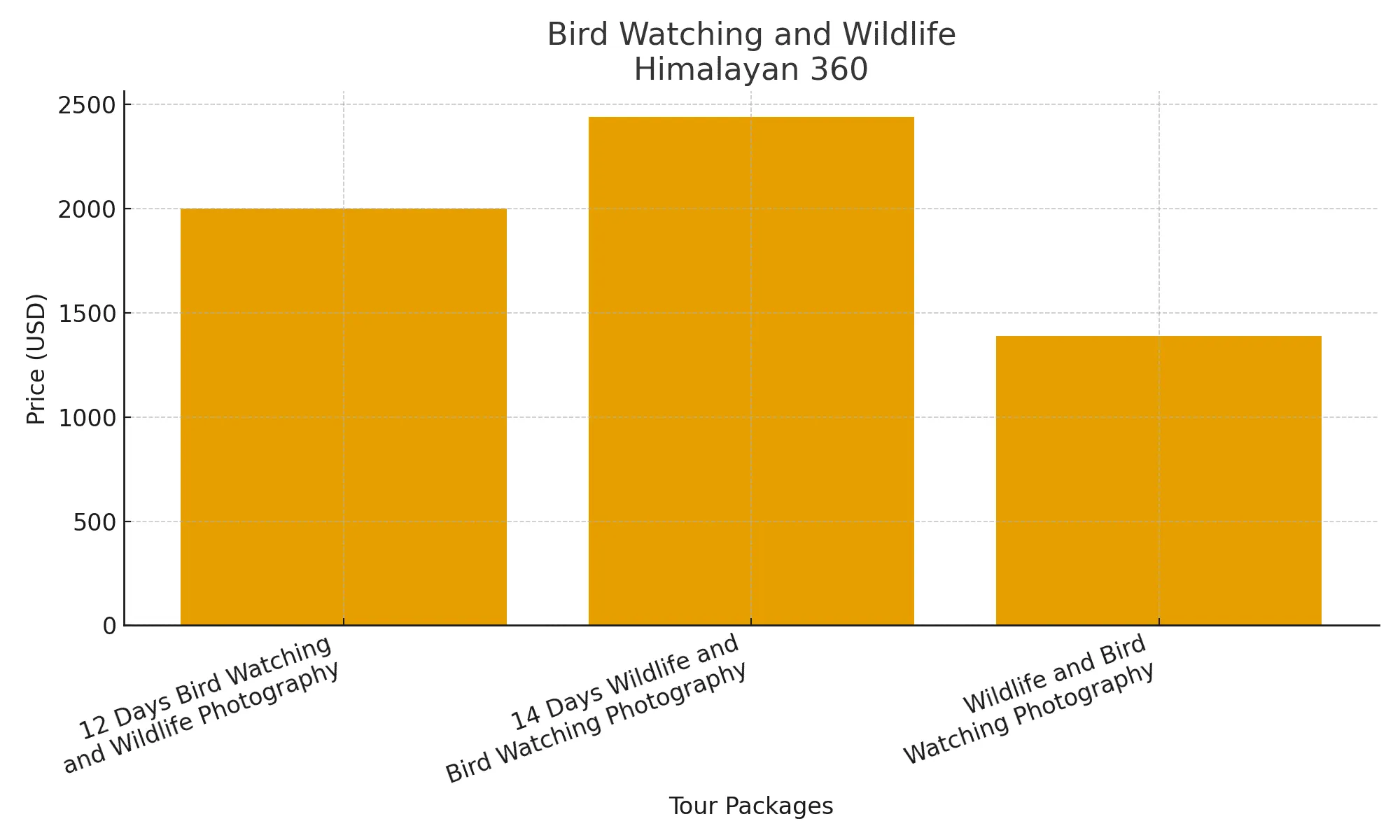 The bar graph above shows the bird-watching and wildlife photography tours offered by Himalayan 360. Among the three packages, the 14 Days Wildlife and Bird Watching Photography Tour is the most expensive, priced at USD 2,441. This tour is the longest and offers the most extensive wildlife and bird photography experiences, which explains its higher price. The 12 Days Bird Watching and Wildlife Photography Tour comes next at USD 1,999. It is slightly shorter but still provides a comprehensive experience, placing it in the mid-price range. Finally, the Wildlife and Bird Watching Photography Tour is the most affordable at USD 1,388. It is a shorter and more focused itinerary, suitable for budget-friendly travelers.
Best Time for Bird Watching and Wildlife Treks
The best time for bird watching and wildlife treks in Nepal is during spring (March–May) and autumn (September–November). During this time, the wildlife activity is more compared to other times of the year. The table below provides more information.
| Season | Best For | Main features |
| Spring (Mar–May) | Breeding & Blooms | Birds show bright breeding colors, rhododendrons bloom, and wildlife becomes active after hibernation |
| Autumn (Sep–Nov) | Migration | Best mountain views; migratory birds begin arriving from the north |
| Winter (Dec–Feb) | Waterfoul | Over 150 species of migratory birds arrive from Siberia/Mongolia to the Terai wetlands |
| Monsoon (Jun–Aug) | Greenery | Peak season for cuckoos and barbets. |
Conclusion
Bird watching and wildlife treks in Nepal are becoming very famous because more people are getting interested in them every day. From colorful birds and wildlife to dense forests and protected areas like Chitwan National Park, Bardia National Park, and Koshi Tappu Wildlife Reserve, the country provides endless opportunities for exploration and photography.
View Bird Watching and Wildlife trips
Buddhist Cultural Tour
9 Trips
Why Nepal Is the Heartland of Buddhist Culture
Nepal is the heartland of Buddhist culture because it is the birthplace of Siddhartha Gautama, who was born in Lumbini around 623 BCE. This sacred site is now a UNESCO World Heritage destination and one of the four most important pilgrimage places for Buddhists. The Ashoka Pillar, built in 249 BCE, indicates the exact birthplace of the Buddha in Lumbini.
Buddhism in Nepal also grew strong because of royal support and local traditions. The Lichhavi Dynasty and the Malla Dynasty constructed monasteries and learning centers that spread Buddhist knowledge all over the Himalayan region.
The people of the Kathmandu Valley also developed their own special form of Buddhism. The Newar community preserved one of the oldest Vajrayana traditions that still survives today and keeps ancient rituals alive through temples, festivals, and art.
Best Buddhist Sites Covered in This Tour
Nepal and the Himalayan region offer many Buddhist sites that attract pilgrims and travelers from around the world. Important places such as Lumbini, Swayambhunath Stupa, Boudhanath Stupa, and Paro Taktsang have a higher spiritual value for Buddhist followers. These destinations are included in popular journeys such as the Lumbini Tour, Bhutan Tour, and Buddhist Pilgrimage Tour. Below are some of the best sites and the tours through which you can visit them.
Lumbini
Lumbini is one of the most important pilgrimage destinations for Buddhists across the world. The site attracts monks, scholars, and travelers who wish to discover the spiritual heritage of Buddhism in Nepal. This holy place can be visited through tours such as the Buddhist Pilgrimage Tour, Lumbini Tour Nepal, and the Celebrate Buddha Purnima in Lumbini Tour. Here are some key facts about Lumbini.
- It is a UNESCO World Heritage Site known for its global religious and historical importance.
- The Ashoka Pillar, built in 249 BCE, confirms the birthplace of the Buddha.
- The Maya Devi Temple is the exact location where Queen Maya Devi gave birth to the Buddha.
- The Lumbini Development Zone covers 4.8 sq km and has more than 20 international monasteries built by different Buddhist nations.
Mount Kailash and Lake Mansarovar
Mount Kailash and Lake Mansarovar are among the most holy spiritual destinations in the Himalayan region for Buddhist. Pilgrims visit this area to perform the kora (a circumambulation around Mount Kailash) and to meditate and pray on the shores of Lake Mansarovar. These holy sites can be explored via guided tours, such as the Kailash Mansarovar helicopter tour. Some key facts about Kailsh Mansarovar are:
- Mount Kailash (6,638M) is considered sacred in Buddhism, Hinduism, Jainism, and Bon traditions
- The kora around Mount Kailash is about 52KM, and many pilgrims complete it in 3-4 days
- Lake Mansarovar (4,590M) is one of the highest freshwater lakes in the world
- The region lies in the remote Ngari area of the Tibet Autonomous Region and attracts thousands of pilgrims every year
Thimpu and Tiger Nest Monastery
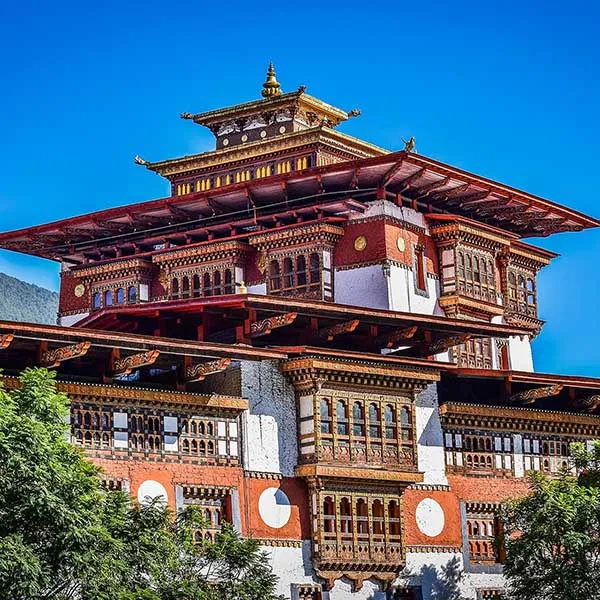
Thimpu and Paro Taktsang are the most revered Buddhist pilgrimage sites in Bhutan. Pilgrims and travelers visit these places to explore monasteries, join prayer rituals, spin prayer wheels, and hike to the Tiger Nest Monastery, situated on a cliff above the Paro Valley. These spiritual sites can be visited through journeys such as the Druk Path Trek, Bhutan Tour, and the Tibet Nepal Bhutan Tour. Here are some facts about Thimpu and the Monastery:
- Tiger’s Nest Monastery, about 900M above the Paro Valley, is the most famous Buddhist monastery in the Himalayas.
- The Tiger monastery is devoted to Padmasambhava, who is believed to have meditated here in the 8th century.
- Thimphu is the capital of Bhutan and contains important monasteries, temples, and Buddhist cultural centers.
- Buddha Dordenma is a 51.5M tall gilded bronze Buddha statue in Bhutan that contains about 125000 smaller Buddha statues inside.
Syambhunath, Namobuddha, and Boudhanath
Swayambhunath Stupa, Namo Buddha, and Boudhanath Stupa are three of the most sacred Buddhist sites in the Kathmandu Valley. Pilgrims visit these places to walk around the stupas, perform meditation, spin prayer wheels, and light butter lamps for blessings and peace. These spiritual destinations can be visited through journeys such as the Three Stupa Tour Near Kathmandu Valley and the Buddhist Pilgrimage Tour.
- Swayambhunath Stupa is believed to be more than 2000 years old. It
- Boudhanath Stupa is one of the largest spherical stupas in the world and an important place for Tibetan Buddhism in Nepal.
- Namo Buddhais the sacred place where Siddhartha Gautama is believed to have offered his body to a starving tigress.
- The three sites are located within a short travel distance from Kathmandu and are among the most visited Buddhist pilgrimage.
Best Time to Go on a Buddhist Cultural Tour in Nepal
The best time to go on a Buddhist Cultural Tour in Nepal is during spring, from March to May, and autumn, from September to November. The table below provides a clear overview of the different seasons, so you can review it for more details.
| Season | Month | Why Best for Buddhist Pilgrims? |
| Spring | March – May | Buddha Jayanti and Tiji Festivals fall in this season |
| Summer | June – Aug | Gunla: A holy month for Newar Buddhists Yartung: Horse racing and offerings at Muktinath, takes palce in this season |
| Autumn | Sept – Nov | Mani Rimdu: Famous masked dances at Tengboche monastery (Everest region), lies in this season |
| Winter | Dec – Feb | Sonam & Gyalpo Lhosar: Tamang and Tibetan New Year festivals. Monlam Chenmo: The Great Prayer Festival for world peace takes place |
Who Can Join This Buddhist Cultural Tour?
A Buddhist cultural tour in Nepal is suitable for many kinds of travelers because it focuses on culture, history, and traditions rather than difficult trekking. Below is the list of travelers who can take part in this tour.
- Children aged 10 to 12 years or older are recommended due to the risk of altitude sickness.
- Participants who are able to walk for about 5 to 8 hours a day
- Students and researchers who want to learn about Buddhist philosophy, art, and heritage in the Himalayan region
- Photography and travel enthusiasts who enjoy capturing photos of temples, monasteries, or any other cultural monuments.
- Travelers with severe heart disease, uncontrolled blood pressure, or serious respiratory illness are not advised to join
Your Path to Spiritual Discovery
A Buddhist Cultural Tour is more than just travel; it is a journey inward, a chance to walk the same paths that monks, pilgrims, and seekers have walked for centuries. From the birthplace of the Buddha in Lumbini to the monasteries of Kathmandu, the temples in Bhutan, and the sanctified shores of Kailash Mansarovar, every destination carries a story and a spiritual energy that stays with you long after you return home. Let us guide you every step of the way. Book your Buddhist Cultural Tour package with us today and begin your spiritual journey.
View Buddhist Cultural Tour trips
Heli Tours
5 Trips
Skip the Trek, Catch the View
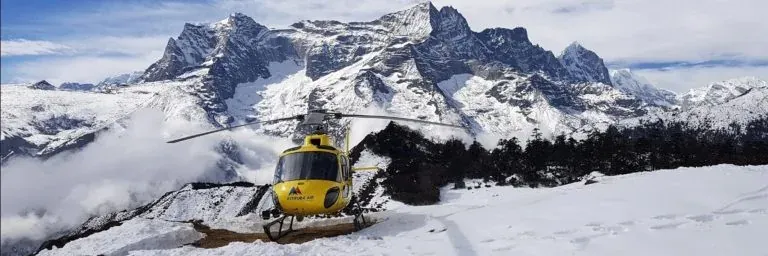
You want to see the Himalayas in Nepal. But you have three days, not three weeks. A heli tour gives you a close view of peaks that trekkers take 14 days to reach on foot, and you’re back in Kathmandu by noon. Nepal welcomed over 943,716 international visitors in just the first ten months of 2025, and a growing share of them are choosing helicopter tours over traditional treks. The reason is that helicopters reach 5,000M altitudes in under an hour, require no fitness preparation, and suit everyone from elderly pilgrims to first-time Himalayan travelers. This guide covers every heli tour offered through Himalayan 360, from a USD 215 mountain flight to an 11-day journey to Kailash Mansarovar, so you can match the right tour to your time, budget, and goals.
Why a Heli Tour in Nepal Makes Sense
Nepal only has about 13 helicopters running Himalayan tours, which means only 60 to 65 people per day can take the Everest helicopter circuit. That scarcity is not a problem; it is a feature. Every flight offers a private and close aerial experience instead of a crowded bus tour. For travelers with limited mobility, altitude sensitivity, or tight schedules, a helicopter removes every physical barrier between you and the Himalayas. The Annapurna Base Camp, which takes trekkers 7 to 10 days on foot, is reachable in roughly one hour by helicopter from Pokhara. The savings in time, logistics, and permit complexity are significant.
The 5 Heli Tours Explained
Everest Mountain Flight
The most accessible Everest experience available, the Everest Mountain Flight departs from Kathmandu domestic airport daily between 6:00 AM and 8:00 AM when mountain visibility is at its clearest. This is not a landing tour. It is a fixed-wing scenic flight that takes roughly one hour. For travelers who want to see Everest without the cost or commitment of a full helicopter charter, it is the most direct option at the lowest price point.
- Duration: 1 day
- Cost: USD 215
- Altitude: ~8,849M (aerial view)
- Highlights: aerial view of Lhotse, Makalu, Ama Dablam, Gauri Shankar, Langtang Lirung, Cho Oyu, and Shisha Pangma
Everest Base Camp Helicopter Tour
The EBC Helicopter Tour is the longest Himalayan helicopter experience in Nepal. The full tour runs 4 to 5 hours from Kathmandu, flying over Lukla, Namche Bazaar, and Pheriche before landing at Kalapatthar (5,545M) for photos and at Everest Base Camp (5,364M). The helicopter stops at the Everest View Hotel in Pheriche, where passengers have breakfast with a direct sightline to Everest, Lhotse, and Ama Dablam. If you only have one day in Nepal and want to stand at the foot of the world’s tallest mountain, this is the tour.
- Duration: 1 day
- Cost: USD 1,070
- Altitude: 5,545M (Kala Patthar)
- Highlights: Kala Patthar, Everest View Hotel, EBC, and the mountains of the Mahalangur Himalayan Range
Annapurna Base Camp Heli Tour
Departing from Pokhara, the Annapurna Base Camp Heli Tour reaches the base camp in about 30 minutes. The entire excursion, including hotel pickup, flight, and return, wraps up by 8:00 AM. It is suited for families, senior travelers, or anyone visiting Nepal primarily for the Annapurna region. If you’re planning a multi-day Pokhara trip, Himalayan 360 can bundle the ABC heli tour with a lakeside stay for a seamless itinerary.
- Duration: 1 day
- Cost: USD 444
- Altitude: 4,130M (Annapurna Base Camp )
- Highlights: Aerial biodiversity, South Annapurna Glacier views, Annapurna I, Machhapuchhre (Fishtail)
Muktinath Heli Tour
The Muktinath Helicopter Tour carries a different weight than the pure mountain experiences above. Muktinath Temple, situated at 3,760M in the Mustang district, is one of the most sacred sites in both Hinduism and Buddhism. Departing from Kathmandu, the helicopter stops at Jomsom Airport to refuel before continuing to Muktinath, where you have time for darshan, puja, and the ritual bath under the 108 water spouts. The full tour takes approximately 3.5 hours from Kathmandu.
- Duration: 1 day
- Cost: USD 999
- Altitude: 3,710M (Ranipauwa)
- Highlights: Muktinath Temple, Eternal Flame (Jwala Mai), Kali Gandaki Gorge, Desert Landscape of Mustang
Kailash Mansarovar Yatra by Helicopter
The Kailash Mansarovar Yatra by Helicopter is the most spiritually and logistically complex tour in this category. The itinerary begins in Kathmandu with a cultural tour of heritage sites, including Pashupatinath Temple, then connects via domestic flight to Nepalgunj and onward to Simikot. From Simikot, a helicopter flight crosses the Nepal-Tibet border at Hilsa, followed by an overland drive to Taklakot and then to Lake Mansarovar. The helicopter leg eliminates the overland segments of the traditional Mansarovar Yatra, cutting the journey from 20+ days to 11 days without compromising the spiritual core of the Kora.
- Duration: 11 days
- Cost: Varies
- Altitude: 4,550M (Mansarovar)
- Highlights: Mount Kailash, Lake Mansarovar, Kora, Yamdwar, Gauri Kunda, Rakshastal
How to Choose the Right Heli Tour
The decision comes down to three things: time, purpose, and budget.
- One day, tight budget: Everest Mountain Flight (USD 215) gives you a verifiable Everest sighting without any physical demands
- One day, want a landing: Annapurna Base Camp at USD 444 is the most cost-effective landing experience
- One day, want the full Everest experience: EBC Helicopter Tour at USD 1,070 gets you to 5,364M with breakfast at the Everest View Hotel
- Spiritual pilgrimage, one day: Muktinath Heli Tour at USD 999 covers the Mustang region without the 10-day Annapurna Circuit
- Once-in-a-lifetime religious journey: Kailash Mansarovar Yatra by Helicopter is a 11-day program that combines helicopter access with the Kailash Kora
What Affects Your Heli Tour
All Nepal helicopter tours are weather-dependent. Departures run in the early morning between 6:00 AM and 10:00 AM, when mountain air is firm and visibility peaks. The monsoon season (Jun – Sept) grounds many flights due to cloud cover and turbulence. The best seasons are March to May and Oct to Nov, which fit with the two main trekking seasons in Nepal. Group size also affects cost and experience. Most helicopter tours seat up to 5 passengers plus the pilot. Private charters run at a higher per-person rate but provide flexible departure times.
Book Your Nepal Heli Tour
You do not need two weeks or a high fitness level to see the Himalayas. Helicopter tours in Nepal put Everest Base Camp, the Annapurna sanctuary, Muktinath Temple, and Mount Kailash within reach of any traveler, in a single day or eleven. Himalayan 360 manages all five tours above. Browse the full heli tour collection and get a custom quote based on your travel dates and group size.
View Heli Tours trips
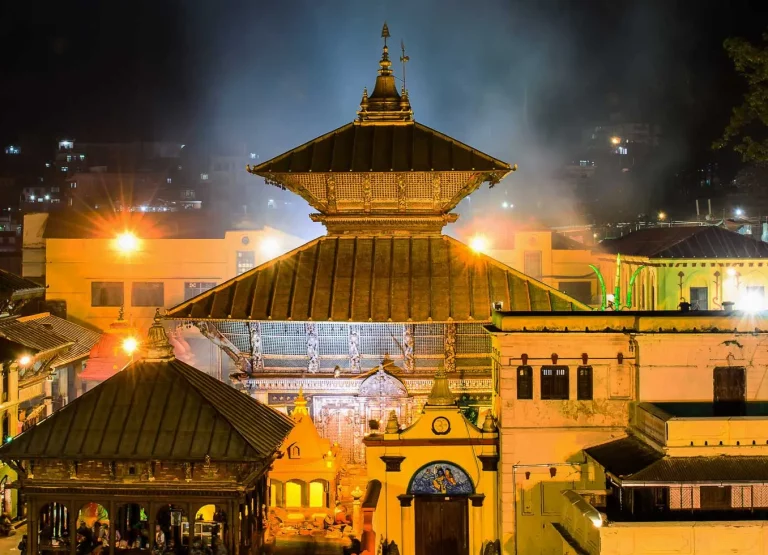
Hindu Pilgrimage Tour
6 Trips
Why choose Hindu Pilgrimage Tour? Going on a Hindu pilgrimage tour to holy places like Muktinath Temple, Mount Kailash, and Gosaikunda is often seen by devotees as a life-changing spiritual journey rather than just a regular holiday. Here are some reasons to Hindu pilgrimage tour as your next spiritual journey: Many sites are believed to be “Mukti Kshetra” (Place of Liberation), so visiting them is said to purify a lifetime of sins These tours take you to the physical locations where gods are believed to reside, such as Mount Kailash (the home of Lord Shiva and Parvati) Pilgrims gain the opportunity to perform rituals like bathing at the 108 water spouts in Muktinath or taking a dip in Lake Mansarovar These trips unite spiritual travelers from around the world by fostering friendship and brotherhood Learn about Hindu culture, traditions, festivals, and centuries-old religious activities. Everything: From Days Long Sacred Kora to Comfortable Heli Tour Why settle for just a walk when you can choose between a multi-day Kora or a helicopter ride over the mountains? Our Hindu pilgrimage tour packages offer every kind of spiritual journey, from rigorous treks to ultra-comfortable heli tours, so you can choose according to your own style. Tour Name Region Itinerary Days Cost (USD) Muktinath Jeep Tour Mustang 7 1,005 Mount Kailash Charan Sparsh Tour Tibet 10 2,150 Gosaikunda Short Trek Langtang 5 200 Langtang Gosaikunda Trek Langtang 13 830 Muktinath Heli Tour Mustang 1 5,299 Kailash Mansarovar Yatra from Kathmandu Tibet 9 1,180 Kailash Yatra from Kathmandu via Lhasa Tibet 15 N/A Kailash Yatra by Heli via Kathmandu Tibet 11 – (fluctuate) Note: Prices for the helicopter tour may change depending on current helicopter fares Detailed Cost Analysis for Hindu Pilgrimage Tour The bar graph titled “Hindu Pilgrimage Tour Packages – HIMALAYAN360°” presents the cost comparison of popular pilgrimage and spiritual travel packages. Among the listed tours, the Muktinath Heli Tour is the most expensive at USD 5,299, followed by the Mount Kailash Charan Sparsh Tour at USD 2,105 and the Mustang Jeep Tour at USD 1,005. More budget-friendly options include the Gosaikunda Short Trek at USD 200 and the Langtang Gosaikunda Trek at USD 830. The graph also includes two pilgrimage options with uncertain or variable pricing: Kailash Yatra from Kathmandu via Lhasa, marked as N/A, and Kailash Yatra by Heli via Kathmandu, marked as Fluctuate, highlighting their price dependency on season and travel conditions. This visual comparison helps travelers quickly identify the cost range and choose a pilgrimage journey that fits their budget and preference. Each Journey Holds Its Own Magic Nepal is a land of many cultures and religions, where temples and traditions combine beautifully across mountains and plains. Among them, Hinduism stands as the largest and most vibrant faith. That’s why our Hindu pilgrimage packages come in so many forms. Whether you trek, drive, or fly, every experience feels special in its own unique way. Muktinath Jeep Tour The Muktinath Jeep Tour takes you to the sacred temple of Muktinath, located in the Mustang district of Nepal. This journey is perfect for pilgrims and travelers who prefer a comfortable ride instead of a long trek. The main goal of this tour is to reach the holy Muktinath Temple (3,710 m), a place worshipped by both Hindus and Buddhists for its eternal flame and natural spring. Difficulty Level: Easy Best Season: Mar-May and Sept-Nov Permits & Fees: Annapurna Conservation Area Permit (USD 30) and TIMS Card (USD 30) Transportation: Jeep Drive Highlights: Dhaulagiri (8,167M) and Nilgiri (7,061M) peaks, Kagbeni Monastery, Kali Gandaki River, ancient Jharkot village, Muktidhara springs, Mount Kailash Charan Sparsh Tour The Mount Kailash Charan Sparsh Tour is a sacred journey to the base of Mount Kailash (6,638 m), located in the remote Ngari region of Tibet, near the Nepal-China River. The main aim of this pilgrimage is to reach the base of the holy mountain and perform Charan Sparsh-touching the divine feet of Mount Kailash. Difficulty Level: Challenging Best Season: May-Sept Permits & Fees: China Group Visa, Tibet Travel Permit (USD 100), Alien Travel Permit (USD 50) Transportation: Private Vehicle (Drive) Highlights: Mount Kailash, Lake Mansarovar, Rakshas Tal Lake, Yam Dwar, Dirapuk Monastery, Brahmaputra River basin, Langtang Gosaikunda Trek The Langtang Gosaikunda Trek takes you through the beautiful Langtang Valley and up to the sacred Gosaikunda Lake (4,380 m), located in the Rasuwa district of Nepal. You’ll visit the holy alpine lake of Gosaikunda, which is believed to have been created by Lord Shiva according to Hindu mythology. This trek is best for trekkers who love both cultural villages and natural beauty. Difficulty Level: Moderate Best Season: Mar-May and Sept-Nov Permits & Fees: Langtang National Park Entry Permit (USD 30) and TIMS Card (USD 30) Transportation: Private Vehicle (Drive) Highlights: Langtang Lirung (7,234M), Ganesh Himal (7,422M), Kyanjin Gompa Monastery, Langtang Glacier, Gosaikunda Lake Kailash Yatra from Kathmandu via Lhasa The Kailash Yatra from Kathmandu via Lhasa is a spiritual and scenic journey that begins in Kathmandu, Nepal, and travels through the high plateaus of Tibet. It offers a comfortable route to the sacred Mount Kailash and Lake Mansarovar. The objective of this tour is to complete the holy Kora (circumambulation) around Mount Kailash, believed to wash sins and bring spiritual liberation. Difficulty Level: Strenuous Best Season: May-Sept Permits & Fees: Tibet Travel Permit (USD 100), Alien Travel Permit (USD 50), Mount Kailash Conservation Fee (USD 30) Transportation: Flight to Lhasa and Drive by Jeep Highlights: Mount Kailash, Lake Mansarovar, Pashupatinath Temple, Potala Palace, Yam Dwar, Lhasa city Conclusion Choosing a Hindu Pilgrimage Tour in the Himalayas is far more than ordinary travel; it is a journey of faith, perseverance, and spiritual growth. Whether you want to visit the “Place of Salvation” at Muktinath, the home of Lord Shiva at Mount Kailash, or the holy waters of Gosaikunda, these tours connect the everyday world with their spiritual beliefs. With options ranging from adventurous jeep rides and moderate treks to luxury helicopter tours, these holy destinations are now easier to reach for pilgrims of all ages.
View Hindu Pilgrimage Tour trips
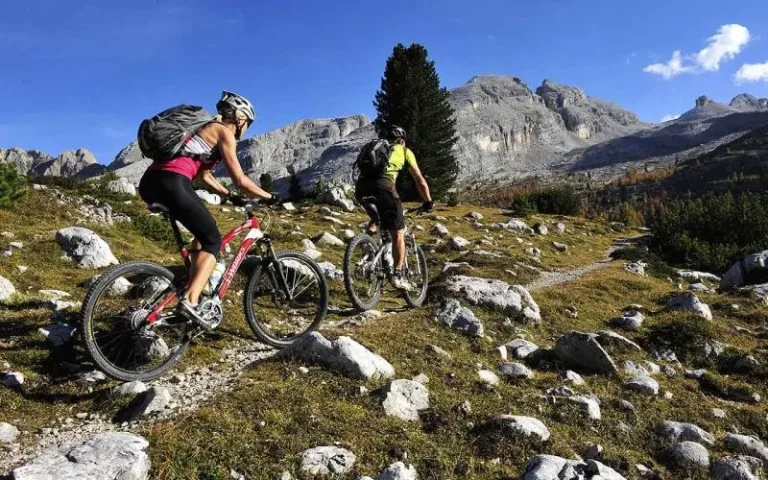
Mountain Biking in Nepal
1 Trips
Why Mountain Biking in Nepal is a Must-Try Adventure Nepal has a huge range of elevations, from just 60M above sea level in the southern Terai to 8,849M at the top of Mount Everest. Because of this, the country has many different types of landscapes within short distances. The Kathmandu Valley is about 1,350M high and is surrounded by hills that go up to 2,780M. The area has many jeep tracks, dirt roads, and old trails that people used long before vehicles existed. Outside the valley, you can travel to places like Mustang, where the environment changes quickly from green forests to dry, desert-like land in just a few days. Although roads have improved in recent years, much of the terrain is still rough and unpaved, which makes it perfect for biking. The best time for riding is from September to June. Autumn (Sept – Nov) and spring (Mar – May) are the best seasons because the weather is consistent and the trails are not damaged. Best Mountain Biking Trails in Nepal Nepal offers some of the most exciting mountain biking experiences in the world, from the trails of the Kathmandu Valley Rim Mountain Bike route to the rugged adventure of the Upper Mustang Motorbike Tour. These routes show everything from green hills to barren desert landscapes, and below, they are explained briefly. Kathmandu Valley Rim Mountain Biking The Kathmandu Valley Rim route is a multi-day mountain biking trail that goes around the hills of the Kathmandu Valley. The ride covers singletracks, jeep tracks, and country roads, passing through terraced farmlands, pine and rhododendron forests, and Newari villages. It is one of the most popular biking routes in Nepal because it offers Himalayan panoramas, rich local culture, and fun. Duration: 6 riding days Type: Pedal mountain biking Terrain: Singletracks, jeep tracks, country roads Highest Point: Nagarkot (2,175M) Difficulty: Demanding and Technical Main Stops: Chisapani, Nagarkot, Dhulikhel, Namobuddha, Panauti, Godavari Upper Mustang Motorbike Tour Upper Mustang is a trans-Himalayan region of Nepal. It was closed to foreigners until 1992 and still requires a special permit to visit. The Upper Mustang Motorbike Tour takes you on a Royal Enfield bike, riding from Kathmandu to Pokhara, then along the Kali Gandaki River up to Lo Manthang at 3,840M. This is not a smooth highway ride. After Beni (about 82KM from Pokhara), the road becomes mostly rough and off-road. Duration: 13 days Type: Motorbike (Royal Enfield) Terrain: Off-road, river gorges, high-altitude desert Highest Point: Lo Manthang (3,840 M) Permits: Upper Mustang permit (USD 500/10 days) + ACAP Main Stops: Kathmandu, Pokhara, Tatopani, Kagbeni, Lo Manthang, Kalopani Cost of Mountain Biking in Nepal The cost of mountain biking in Nepal depends on the type of trip, how long it is, and how remote the route is. A multi-day guided trip like the Kathmandu Valley Rim costs about USD 1,050 to 1,785 per person for 6 to 8 days. This price includes accommodation, a bike (hardtail or full-suspension), a guide, entry fees, and breakfast. Lunch and dinner are not included, and they cost around USD 15 to 20 per day. Short, one-day mountain biking tours in the Kathmandu area are cheaper, costing between USD 120 and USD 165 per person. These trips normally include a bike, helmet, guide, and lunch. Motorbike tours in restricted areas like Upper Mustang are more expensive because of permits and logistics. These tours cost between USD 2,200 and USD 5,000 per person. Most full motorbike tour packages include the bike, fuel, guide, mechanic, support vehicle, meals, accommodation, and permits. However, they usually do not include travel insurance, personal expenses, international flights, or visa fees. Guided vs Solo Mountain Biking in Nepal Mountain biking in Nepal can be done either with a guide or on your own. It depends on your experience and comfort level. Both options offer advantages, from local support and safety to flexibility and independence. Aspect Guided Mountain Biking Solo Mountain Biking Navigation Guide handles routes and directions You navigate using maps/GPS Safety Higher safety with local support and first aid More risk in remote areas Local Knowledge Learn about culture, trails, and history Limited understanding of the area Cost More expensive (guide, support, permits) Cheaper overall Mechanical Support Often includes backup/tools/mechanics You handle all repairs yourself Permits & Logistics Organized for you You arrange everything yourself Best For Beginners, first-time visitors, complex routes Experienced riders, repeat visitors Essential Tips for First-Time Mountain Bikers in Nepal For a first-time mountain biker in Nepal, success is less about speed and more about pacing, preparation, and respect for the terrain. The trails are not made just for bikes, they are shared with hikers, used by locals, and by local jeeps. Here are some important tips for first-time mountain bikers: If you plan to ride above 3,000m, give your body some time to adjust to prevent altitude sickness Before a multi-day trip, take a short day ride to get used to the bike’s performance on fast sections and bends When going downhill, do not stay seated. Stand on the pedals with your knees and elbows slightly bent Don’t stare at rocks or roots right in front of you, look a bit ahead on the trail so you can choose a smooth path and avoid obstacles Use sunglasses to protect your eyes from UV rays, dust, and low-hanging branches in forested areas. Wear bright colors so others on the trail, animals, and vehicles can see you easily. If you’re new, don’t ride alone in remote areas, a group or guide can help with directions, bike problems, and emergencies. Conclusion Mountain biking in Nepal offers very different experiences. The Kathmandu Valley Rim takes you through traditional villages with beautiful mountain views, while the Upper Mustang ride takes you into a remote region that has stayed almost unchanged for centuries. One route goes around the capital in less than a week, while the other takes you into an isolated kingdom. However, both give you a unique riding experience in landscapes you won’t find in many other places.
View Mountain Biking in Nepal trips
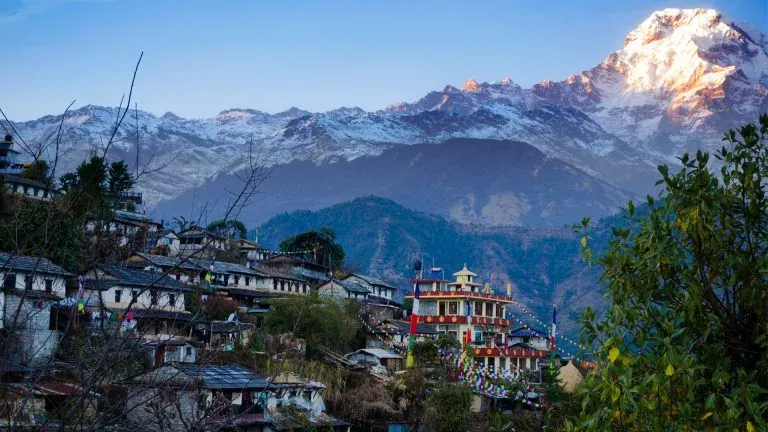
Peak Climbing
4 Trips
Beyond the Clouds Experience, Literally!
Himalayan 360 offers special high-altitude peak climbing expeditions for the adventurous spirit who wants real adventure and loves going “beyond the clouds.” Our climbing packages focus on three famous peaks: Island Peak (6,189M), Lobuche East Peak (6,119M), and Mera Peak (6,476M). These climbs are rated moderate to challenging, so climbers need to have excellent physical fitness and strong mental preparedness. Climbers who join these climbs are rewarded with stunning views of Everest, Lhotse, Makalu, and many other huge mountains. Along the way, they also get to explore Sherpa villages, peaceful valleys, and spend nights in both cozy teahouses and mountain camps under clear, starry skies. This peak climbing is suitable for beginners taking their first steps into mountaineering, as well as for experienced climbers who hunger for a tougher, more technical challenge.
| Trip Name | Difficulty | Altitude | Total Duration |
| Mera Peak Climbing | Strenuous / Technical trekking peak (requires prior high-altitude experience and basic mountaineering skills) | 6,476M (21,247FT) | 17 days |
| Island Peak Climbing | Moderate -Challenging trekking peak (good first Himalayan summit with guided technical support) | 6,189M (20,305FT) | 16 days |
| Island Peak Climbing from Chhukung | Moderate -Challenging. Shorter, more focused climb for acclimatized trekkers already in Khumbu | 6,189M (20,305FT) | 3 days |
| Island Peak Climb with EBC Trek | Challenging. Full EBC trek + Island Peak summit, long itinerary | 6,189M (20,305FT) | 18 days |
| Lobuche East Peak Climbing from Lobuche | Challenging / Technical trekking peak (steeper, more technical than Island Peak) | 6,119M (20,075FT) | 3 days |
Detailed Cost Analysis for Peak Climbing in Nepal
From the bar graph above, it is clear that Mera Peak Climbing is the most expensive option at USD 3,070 among the five packages. Island Peak Climb with EBC Trek and Island Peak climbing follow closely to this price at USD 2,813 and USD 2,751, respectively. The most budget-friendly options are Island Peak Climbing from Chhukung and Lobuche East Peak Climbing from Lobuche, both priced at USD 899, making them accessible choices for climbers who want a focused summit push without a long approach trek.
A Himalayan 360° View of the World at your Feet
From Mera Peak and Island Peak to Lobuche East, these climbs take you above 6,000 meters into a 360° world of ice, rock, and endless sky. Mount Everest and its sister giants frame the horizon in every direction, and you see the whole Khumbu spread out below you. It’s a moment you never forget.
Mera Peak Climbing
Mera Peak is the highest trekking peak in Nepal, standing at 6,476 meters. On the Mera Peak Climbing, you will be trekking through the quiet Hinku Valley, across glaciers, and reach a high, non-technical but physically tough summit. From the summit, you can see five of the world’s tallest mountains, Everest, Lhotse, Makalu, Cho Oyu, and Kanchenjunga on a clear day. It is ideal for fit trekkers with some high-altitude experience who want their first real Himalayan climbing experience. The trip includes skilled guides, acclimatization days, and proper high-camp support to make the climb safe and successful.
- Best time to climb: February, March, April, May, June, September, October, November, December
- Trip duration: 17 Days
- Maximum altitude: 6,476M (21,247FT) at Mera Summit
- Key highlights: Summit of Mera Peak, views of five 8,000ers, crossing Zatrawala Pass, remote Hinku Valley, teahouse trekking and tented camp experience, and using basic mountaineering skills like glacier walks and rope work
- Transportation: Drive (Kathmandu to Ramechhap airport), Flight (Manthali to Lukla)
- Required permits: Mera Peak Climbing Permit from the Nepal Mountaineering Association and Sagarmatha National Park Permit
Island Peak Climb with EBC Trek
The Island Peak Climb with Everest Base Camp Trek is an 18-day adventure that combines two amazing experiences in one: visiting Everest Base Camp and climbing Island Peak (6,189M). First, you will follow the famous Everest trekking trail and explore Namche Bazaar, Tengboche, Dingboche, Lobuche, Everest Base Camp, and Kala Patthar. After enjoying these highlights, the route leads to Island Peak Base Camp, where you will prepare for your summit climb. The final climb includes glacier walking, using fixed ropes, and a steep push to the top. This expedition is suitable for trekkers who want to stand on the base of the world’s highest peak while also experiencing the excitement of climbing a real Himalayan peak.
- Best time to climb: February, March, April, May, June, September, October, November, December
- Trip duration: 18 Days
- Maximum altitude: 6,189M (20,305FT) at Island Peak Summit
- Key highlights: Reaching Everest Base Camp (5,364M), sunrise from Kala Patthar (5,555M), Island Peak summit, Tengboche Monastery, Sherpa culture, Himalayan wildlife, and glacier walking with basic mountaineering gear.
- Transportation: Drive (Kathmandu to Ramechhap airport), Flight (Manthali to Lukla)
- Required permits: Island Peak Climbing Permit from the Nepal Mountaineering Association and Sagarmatha National Park Permit
Lobuche East Peak Climbing from Lobuche
Lobuche East Peak Climbing from Lobuche is a short yet challenging 3-day summit add-on for trekkers who are already on the Everest trail. The climb starts from Lobuche village and follows a direct route to the 6,119M summit, where you will see 360 degree view of Everest, Lhotse, Nuptse, Ama Dablam, and the Khumbu Glacier. The itinerary includes 1 preparation day in Lobuche, overnight at Lobuche High Camp, and an early morning summit push. It is suitable for fit trekkers who want a serious mountaineering experience without committing to a long duration.
- Best time to climb: February, March, April, May, June, September, October, November, December
- Trip duration: 3 Days
- Maximum altitude: 6,119M (20,075FT) at Lobuche East Peak Summit
- Key highlights: Summit of Lobuche East, close-up views of Mount Everest, Lhotse, Ama Dablam, and Nuptse from the summit, walking on Lobuche and Khumbu Glaciers
- Transportation: None
- Required permits: Lobuche Peak Climbing Permit from the Nepal Mountaineering Association
Is Peak Climbing in Nepal Safe for Beginners?
Yes, peak climbing in Nepal is safe for beginners, but only with proper preparation and guidance. Nepal offers many “trekking peaks” below 6,500 m that are suitable for first-time climbers, with lower technical difficulty and strong support systems like guides, fixed ropes, and rescue services. Popular beginner climbs like Island Peak have success rates of about 70–85%, and this can increase to nearly 90% for climbers who are well prepared.
However, it is not risk-free. High altitude, changing weather, and physical demands can still make climbing challenging. Risks like altitude sickness and avalanches exist, and hundreds of accidents have occurred in the Himalayas over time. The main difference is preparation. Choosing the right peak, giving time to adjust to altitude, and climbing with experienced guides improves safety and success for beginners.
Physical Fitness & Preparation for Peak Climbing
Proper fitness and preparation are essential for peak climbing in Nepal. An organized 12-week plan builds strength step by step. In the first 4 weeks, focus on creating a routine with 3–4 cardio sessions of 30 minutes, 2 light strength workouts, and a 1–2 hour hike on weekends. From weeks 5–8, increase intensity with 4 cardio sessions of 45 minutes, 2 strength sessions with added weight, and longer weekend hikes of 3–5 hours to improve stamina.
In weeks 9–10, training reaches its peak with back-to-back hikes lasting 5–8 hours while carrying a full backpack, along with hard training sessions to build stamina. The final 2 weeks are for recovery, where training is reduced by half and replaced with light walks to keep your body fresh. This step-by-step approach prepares you physically and makes your climb safer and more successful.
Beginner Tips for a Successful Peak Climbing Experience
For beginners, successful peak climbing in Nepal is less about technical skills and more about good preparation, strong fitness, and respecting the altitude. Here are some good tips for beginners.
- Practice walking with “duck feet” in crampons and learn how to use an ice axe to stop yourself if you start sliding
- Check weather conditions before climbing
- Inform your guide immediately if you experience headaches, nausea, or dizziness
- Hire experienced guides and support staff
- Learn how to use a Jumar (ascender) to climb steep sections and a Figure-8 or ATC (descender) to safely rappel down
- Wear your trekking boots on training hikes for months before the trip to avoid blisters
- Drink 3–5 liters of water every day, as dehydration can thicken your blood and raise the risk of altitude sickness
Start Your Peak Climbing Journey Today
Moving from trekking to peak climbing is an exciting milestone. Choosing beginner-friendly peaks like Mera or Island Peak helps you gain both climbing skills and mental strength while reaching your first summit.
With proper physical training, a trusted local guide, and slow acclimatization, these trekking peaks are achievable. From watching the sunrise over the Everest range on Mera Peak to tackling the final ice wall on Island Peak, your first summit will stay with you forever.
View Peak Climbing trips
Short Hiking
4 Trips
Why Short Hiking in Nepal is Perfect for Everyone
Short hiking in Nepal works because it removes the biggest barriers that stop people from trekking. Most short routes remain below 3,500M, which reduces the risk of altitude sickness and makes walking easier for beginners and older travelers. Trails like Ghorepani Poon Hill and Nagarkot are well developed, with regular teahouses for rest, food, and shelter.
At the same time, short hikes give you more reward for less effort. Within just a few days, you can enjoy views of major Himalayan peaks like Annapurna and Machhapuchhre, and even Mount Everest from places like Pikey Peak or Nagarkot. These hikes are also time and budget-friendly since many trails are close to cities like Kathmandu and Pokhara.
Best Short Hiking Destinations in Nepal
Nepal offers a large range of short hiking destinations that suit different time frames and difficulty levels. From beginner-friendly routes to more challenging adventures, hikers can choose trails like the Chisapani Nagarkot Hike and the culturally rich Nagarkot Changunarayan Hike. For better mountain views and a slightly longer experience, the Ghorepani Poon Hill Trek stands out, while more ambitious travelers can explore routes connected to Island Peak from Chhukung for a short high-altitude adventure.
Chisapani Nagarkot Hike
Chisapani Nagarkot Hike is the most underrated short hike near Kathmandu. The route connects two ridge-top villages, Chisapani and Nagarkot. It passes through Shivapuri Nagarjun National Park, offering views of the Langtang, Ganesh Himal, and Mount Everest ranges. You start from the edge of Kathmandu city and walk into a completely different world within two hours.
- Duration: 5 days
- Best Time: All year round
- Cost: USD 150–300 per person
- Difficulty: Easy to Moderate
Ghorepani Poon Hill Trek
Poon Hill (3,210M) is one of the most photographed viewpoints in Nepal, and the five-day Ghorepani trek is the standard route to reach it from Pokhara. The trail passes dense rhododendron forests (in bloom from March to April), traditional Gurung and Magar villages, and offers a beautiful sunrise where you can see Dhaulagiri, Annapurna South, Machhapuchhre, and Hiunchuli all together in one view.
- Duration: 5 days
- Best Time: Spring (Mar–May) and Autumn (Sept–Nov)
- Cost: USD 488
- Difficulty: Easy to Moderate
Island Peak Climbing from Chhukung
This one is different. Island Peak, locally known as Imja Tse (6,189M), is a proper mountaineering objective. The three-day itinerary from Chhukung assumes you’ve already completed the Everest Base Camp trek or have reached the Khumbu region and are ready to begin your climb. It requires crampon use and a willingness to move in the dark at altitude.
- Duration: 3 days
- Best Time: Spring (Apr–May) and Autumn (Oct–Nov)
- Cost: USD 780 per person
- Difficulty: Challenging
Nagarkot Changunarayan Hike
If you have one free day in Kathmandu and want to use it well, Nagarkot Changunarayan Hike is your route. The route starts from Nagarkot (about 32KM east of Kathmandu) and goes downhill through terraced farms and forests to Changunarayan Temple. This temple is a UNESCO World Heritage Site and has some of the oldest Hindu carvings in Nepal from the 4th century CE.
- Duration: 1 day
- Best Time: All year round
- Cost: USD 48 per person
- Difficulty: Easy
How to Choose the Right Short Hike
Choosing the right short hike in Nepal depends on how much time you have and what kind of experience you want. If you only have one day, the Nagarkot–Changunarayan hike is a great option. For a first trek in Nepal with about five days, the Ghorepani Poon Hill Trek is a better choice.
If you prefer staying close to Kathmandu, the Chisapani–Nagarkot hike fits well into a five-day plan. And if you are already in the Khumbu region and want a more challenging goal, you can go for Island Peak climbing from Chhukung.
Do You Need a Guide for Short Hikes in Nepal
Rules on solo trekking in Nepal have become stricter in recent years. Since 2023 and continuing under updated 2026 regulations, most foreign trekkers are required to hire a licensed guide in popular trekking areas. This includes places like the Annapurna Conservation Area (for Poon Hill) and the Everest region (for Island Peak), as well as other restricted zones.
Short hikes near Kathmandu, such as the Nagarkot day hike or the Chisapani–Nagarkot route, are easier to do independently. However, rules can change, so it’s always best to check the latest requirements with your trekking operator before you go.
How to Prepare for a Short Hike in Nepal
Preparing for a short hike in Nepal is simple and does not require heavy planning. With a few basic steps, you can enjoy the journey comfortably and safely.
- Go for a brisk walk, jog, or cycle 3–4 times a week for 30–45 minutes to build lung capacity
- Do exercises like squats, lunges, and step-ups to prepare for climbs
- Walk on local hills or stairs while carrying a 5–8 kg backpack to simulate your actual trekking load.
- Carry enough water and drink regularly, even if you do not feel very thirsty
- Wear your hiking boots and break them in well before your trip to avoid blisters
- Short hikes are beginner-friendly, so you do not need expensive gear or advanced skills, except for Island Peak Climbing
Conclusion
These short hikes cover the full range of short trekking in Nepal, from a single afternoon to a five-day mountain circuit. The best part is that none of them need major changes to your schedule to enjoy. Himalayan 360 organizes all four of these trips, taking care of licensed guides, permits, and accommodations before you arrive. Browse the short hiking packages here to choose the one that fits your schedule.
View Short Hiking trips
Spiritual Tour
12 Trips
Why Nepal is the Ultimate Destination for Spiritual Journeys
Nepal is seen as a top destination for spiritual journeys because it is like a living museum, where Hindu and Buddhist traditions have coexisted for over 2,000 years. Nepal is the birthplace of Lord Gautama Buddha and home to some of the world’s most revered Hindu temples. Here are some simple reasons why Nepal is a great place for spiritual journeys.
- Sacred Holy Sites: Places like Muktinath Temple are revered by both Hindus and Buddhists
- Ongoing traditions: Spirituality is part of everyday life, seen in rituals, incense, and chants. Observe it during evening Aarti at Pashupatinath Temple.
- The Himalayas: The Himalayas are believed to be the home of gods, and their powerful energy has attracted sages and yogis for centuries.
- Beyuls (Hidden Valley): Certain regions are believed to be Beyuls, blessed by Padmasambhava
- Energy Centers: Sites like Gosaikunda Lake and Namobuddha are believed to be energy centers
Sacred Tours from Kailash Peak to the Plains of Lumbini
Our collection of spiritual tours invites travelers to explore some of the most sacred landscapes in the Himalayas and South Asia. One of the most special trips is the Kailash Mansarovar Yatra, an important pilgrimage for Hindus, Buddhists, Jains, and Bon followers. Whether you go via the classic overland route, by helicopter, or through Lhasa, this journey offers powerful divine energy, ancient stories, and beautiful Himalayan scenery.
Alongside the Kailash tour, we also offer easier sacred trips, such as the Muktinath Jeep/Heli Tours, as well as wellness experiences, such as the Mardi Himal Yoga Trek and Sound Healing Therapy. Beyond the high mountains, our tours extend into the quiet beauty of Bhutan, where travelers can visit ancient monasteries and learn about the country’s deep Buddhist culture. Other journeys, such as the Buddhist Pilgrimage Tour and Nepal Tour packages, guide you to important spiritual sites, from Himalayan gompas and temples to the birthplace of the Buddha.
| Trip Name | Region | Focus Religion | Deity Concerned | Cost (Starting From) |
| Lhasa Everest Kailash Mansarovar Kathmandu Tour | Tibet and Kathmandu | Hinduism, Buddhism, Jainism, and Bon | Lord Shiva (Kailash), Buddhist Deities | USD 3,350 |
| Kailash Mansarovar Yatra by Helicopter | Tibet and Kathmandu | Hinduism | Lord Shiva (Mount Kailash), Buddhist Deities | Make an inquiry for a detailed price |
| Sound Healing Therapy in Kathmandu | Kathmandu | Wellness, Buddhist-influenced healing | N/A (Focus on well-being) | USD 40 |
| Tibet Overland Tour | Tibet | Buddhism | Buddhist Deities | USD 1,350 |
| 7 Days Bhutan Tour | Bhutan | Buddhism | Local historical figures and Buddhist deities | USD 1,290 |
| 5 Days Nepal Tour | Nepal (Kathmandu–Pokhara) | Mixed Hindu and Buddhist culture and sightseeing | Mixed (Hindu/Buddhist) | USD 197 |
| Buddhist Pilgrimage Tour | Nepal (Kathmandu-Pharping-Pokhara-Lumbini) | Buddhism | Lord Buddha | USD 440 |
| Muktinath Jeep Tour | Mustang, Nepal | Hinduism/Buddhism | Lord Vishnu/Avalokiteshvara | USD 291 |
| Mardi Himal Yoga Trek | Annapurna Region, Nepal | Spiritual/Wellness | N/A (Focus on Yoga/Meditation) | USD 770 |
| Mount Kailash and Lake Mansarovar Yatra | Tibet | Hinduism, Buddhism, Jainism, and Bon | Lord Shiva / Buddhist Deities | USD 2,460 |
| Tibet Overland with Everest Base Camp | Tibet | Tibetan Buddhism | Buddhist Deities | USD 999 |
| 5 Days Bhutan Tour | Bhutan | Buddhism | Local historical figures and Buddhist deities | USD 999 |
| 4 Days Bhutan Tour | Bhutan | Buddhism | Local historical figures and Buddhist deities | USD 840 |
| Nepal Tour Package | Nepal (Kathmandu-Chitwan-Pokhara) | Mixed culture, Hinduism and Buddhism | Mixed (Hindu/Buddhist) | USD 382 |
| Muktinath Heli Tour | Mustang, Nepal | Hinduism and Buddhism | Lord Vishnu/Avalokiteshvara | USD 999 |
| Kailash Yatra from Kathmandu via Lhasa | Kathmandu and Tibet | Hinduism and Buddhism | Lord Shiva and Buddhist Deities | Make an inquiry for the detailed price |
| Kailash Mansarovar Yatra | Kathmandu and Tibet | Hinduism and Buddhism | Lord Shiva and Buddhist Deities | USD 2,770 |
Note: The tour is not limited to a focused religious group only and can be taken by a variety of interested people from different groups and ethnicities.
Detailed Cost Analysis for Spiritual Tours
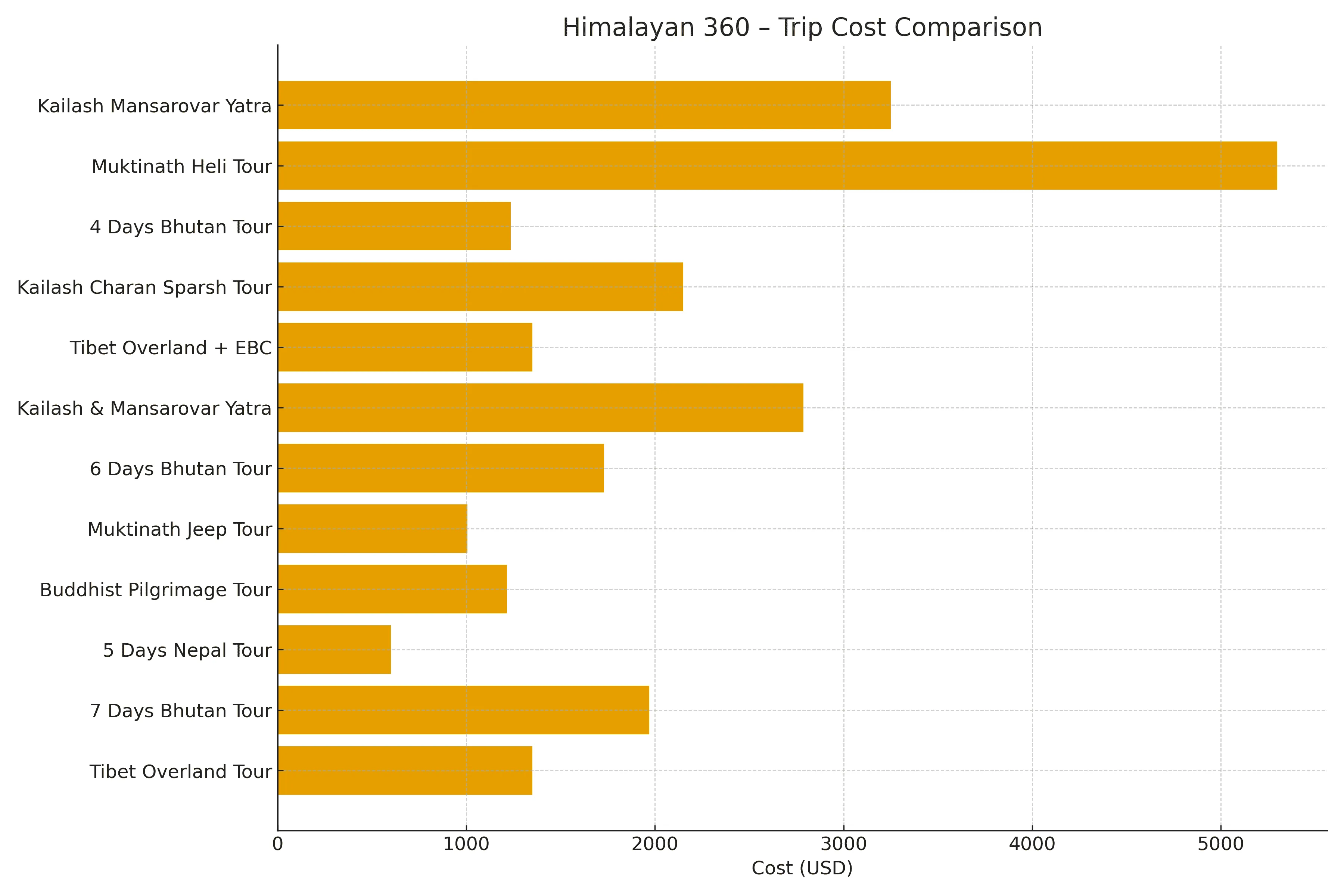
The bar graph above shows that Himalayan 360 offers travel packages that suit every budget. There are cheap wellness to expensive, long spiritual journeys. The priciest packages are the Lhasa Everest Kailash Mansarovar Kathmandu Tour (USD 3,350), Kailash Mansarovar Yatra (USD 2,770), and Mount Kailash & Mansarovar Yatra (USD 2,460). These trips are costly because they involve traveling to remote areas, crossing borders, obtaining Tibet permits, and hiring trained high-altitude tour guides. They also need careful planning, long drives, and support teams, which makes the price higher.
On the cheaper side, packages like Sound Healing Therapy in Kathmandu (USD 40), 5 Days Nepal Tour (USD 197), Nepal Tour Package (USD 382), and Muktinath Jeep Tour (USD 291) are great for short and simple holidays. These are perfect for travelers who want relaxing or cultural experiences without spending much. Mid-range trips include the Mardi Himal Yoga Trek (USD 770), Buddhist Pilgrimage Tour (USD 440), and Tibet Overland Tour (USD 1,350). These options offer a mix of adventure and comfort at a fair price.
Elevated Spirituality at the Literal Abode of Gods
Experience and strengthen your spiritual faith in lands long seen as the abode of gods, bodhisattvas, and enlightened beings. From snowy mountains and high plateaus to quiet valleys and ancient temples, these spiritual travels let you participate in prayer, rituals, and moments of calm, where you can feel close to both the earth and the divine.
Every Major Buddhist Pilgrimage You Can Think of in Nepal
The Buddhist Pilgrimage Tour in Nepal is a 9-day journey to some of the most sacred sites, such as Swayambhunath, Boudhanath, Kopan Monastery, Pharping Monastery, Lumbini, and the World Peace Pagoda in Pokhara. This tour is for travelers who want to learn to learn about Buddha’s life while experiencing Nepal’s living Buddhist culture. Each itinerary day is calm and balanced. You travel slowly, visit temples and monasteries, listen to monks, meditate quietly, and learn about Buddhist traditions.
- Best time: March, April, May, September, October, November, December
- Highlights: Lumbini (birthplace of Buddha), UNESCO stupas in Kathmandu, World Peace Pagoda, monastic visits, and meditation sessions.
- Transportation: Private vehicles on main routes between Kathmandu, Pharping, Pokhara, and Lumbini.
- Permits/fees: All sites entry fees
Kailash Mansarovar in Horse Year 2026
The Kailash Mansarovar Yatra in 2026 is a very special pilgrimage to Mount Kailash and Lake Mansarovar. During the Horse Year, doing just one kora (walking around Mount Kailash) is believed to bring the spiritual benefits of 13 koras in a normal year. This journey takes you through high-altitude roads in Tibet, includes a holy bath at Lake Mansarovar, and the sacred walk around Mount Kailash. It is a rare chance to deepen your faith during this once-in-12-years Tibetan calendar event.
- Best time: May, June, July, August, September 2026
- Highlights: Kora of Mount Kailash, holy bath and puja ceremony at Lake Mansarovar, expansive Himalayan plateau views.
- Transportation: Organized overland transfers by private vehicles, with support logistics and acclimatization stops.
- Permits/visa: Chinese visa and Tibet travel and trekking permits, entrance fees
- Muktinath Jeep Tour
Muktinath Overland in a Cozy Jeep
The Muktinath Jeep Tour is a 7-day road adventure from Kathmandu to the Mustang district. Instead of long trekking days, you travel by private vehicle through valleys, high cliffs, and beautiful mountain roads. The ultimate destination is the famous Muktinath Temple, a holy place for both Hindus and Buddhists.
- Best time: March, April, May, September, October, November, December
- Highlights: Darshan at Muktinath Temple, views of Annapurna and Dhaulagiri ranges, Kali Gandaki Gorge, villages like Marpha and Jomsom.
- Transportation: Private vehicle based on the group size
- Permits/fees: Annapurna Conservation Area Permit (ACAP) and all entrance fees
Benefits of Taking a Spiritual Tour in Nepal
A spiritual tour in Nepal offers more than just travel; it provides a chance to reconnect with yourself and find inner peace. Here are some benefits of taking a spiritual tour in Nepal.
- Yoga and meditation support heart health, lower blood pressure, and boost immunity
- Spiritual treks to places like Muktinath Temple build strength, flexibility, and stamina
- Rituals like kora around Boudhanath Stupa help you understand local spiritual traditions
- Practices like Ayurveda and healthy vegetarian meals detox and restore energy
- Living with fewer comforts during treks teaches gratitude and appreciation for simple things
How to Prepare for Your Spiritual Journey
Preparing for a spiritual journey in Nepal begins with getting your body and mind ready. Many sacred places, like Muktinath Temple and Gosaikunda Lake, are located at high altitudes above 1,300M and sometimes over 3,500M. This means your body needs time to adjust. Simple steps like walking daily, staying hydrated, and doing light stretching or yoga can help improve stamina and reduce the risk of altitude sickness.
Mental preparation is just as important as physical preparation. Before your trip, take some time to think about your purpose, whether it is to find peace, heal emotionally, or gain clarity. Reducing screen time even a few days before traveling can help your mind slow down and adjust to the environment of monasteries and sacred sites like Pashupatinath Temple. It is also important to stay open-minded, as you may experience unfamiliar traditions and rituals.
Conclusion
Nepal doesn’t require you to follow any religion or belief. It simply asks you to be present, listen, and feel. From the sound of temple bells in the mountains to the flame of a butter lamp in an old shrine, every moment here feels timeless. A spiritual tour in Nepal is more than a trip, it can truly change you. Come with an open heart, and Nepal will do the rest.
View Spiritual Tour trips
Tour in Nepal
12 Trips
Why Nepal is One of the Best Travel Destinations in the World?
Nepal is one of the best travel destinations in the world because it offers natural beauty, diverse culture, and unique adventure experiences that are rare to find in a single country. Here are some reasons why Nepal is one of the best travel destinations in the world.
- Nepal has 8 of the world’s 14 peaks above 8,000 m, including Mount Everest (8,848 m)
- It is home to world-class trekking routes such as Everest Base Camp, Annapurna Circuit, and Langtang Valley
- Kathmandu Valley alone has seven UNESCO sites, like the Durbar Squares of Kathmandu, Patan, and Bhaktapur
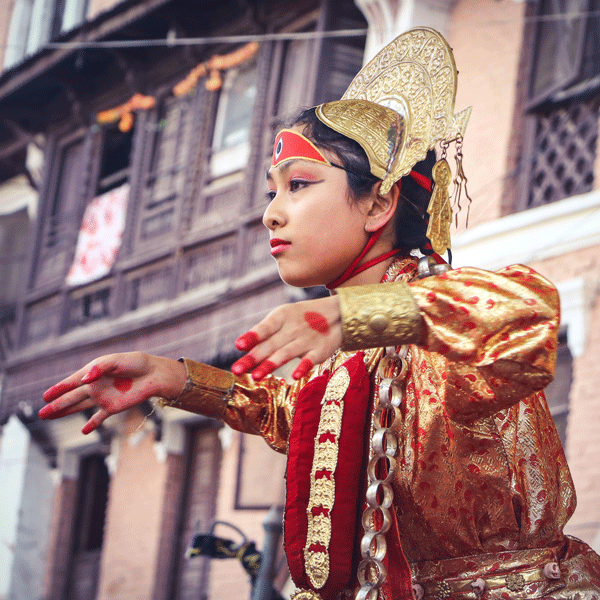
- Nepal is home to a young girl worshipped as a living god known as Kumari
- Lumbini is a holy UNESCO site where Siddhartha Gautama (Lord Buddha) was born
- The subtropical jungles of Chitwan National Park and Bardia National Park are home to rare one-horned rhinos, Bengal tigers, and 850+ bird species.
No Long Detours, Just the Best of Nepal
Note, everyone has weeks to spare, but everyone deserves a taste of Nepal’s best. These short and affordable tours capture what travelers remember most- the Himalayan views, ancient cities, peaceful temples, and local flavors, all packed into a few days.
| Tour Name | Duration | Difficulty | Cost (USD) |
|---|---|---|---|
| Nagarkot Changunarayan Hike | 1 Day | Easy | 95 |
| 4 UNESCO Heritage Site Day Tour in Kathmandu | 1 Day | Easy | 75 |
| 5-Day Nepal Tour Package | 5 Days | Easy | 600 |
| Mustang Overland Jeep Tour | 11 Days | Easy | 1,999 |
| Kathmandu Food Tour | 1 Day | Easy | 45 |
| Kathmandu Day Tour | 1 Day | Easy | 99 |
| Tibet Overland with Everest Base Camp Tour | 8 Days | Hard | 1,350 |
| Wildlife and Birdwatching Photography Tour | 14 Days | Easy | 2,441 |
| 6-Day Nepal Tour Package | 6 Days | Easy | 748 |
| Tsum Valley Trek | 15 Days | Moderate | 1,490 |
| 7 UNESCO Heritage Site Day Tour | 5 Days | Easy | 180 |
| Nepal Tour Package | 7 Days | Easy | 962 |
| Ilam Shree Antu Danda Tour | 6 Days | Easy | N/A |
Detailed Cost Analysis for Nepal Tour in 2025/26
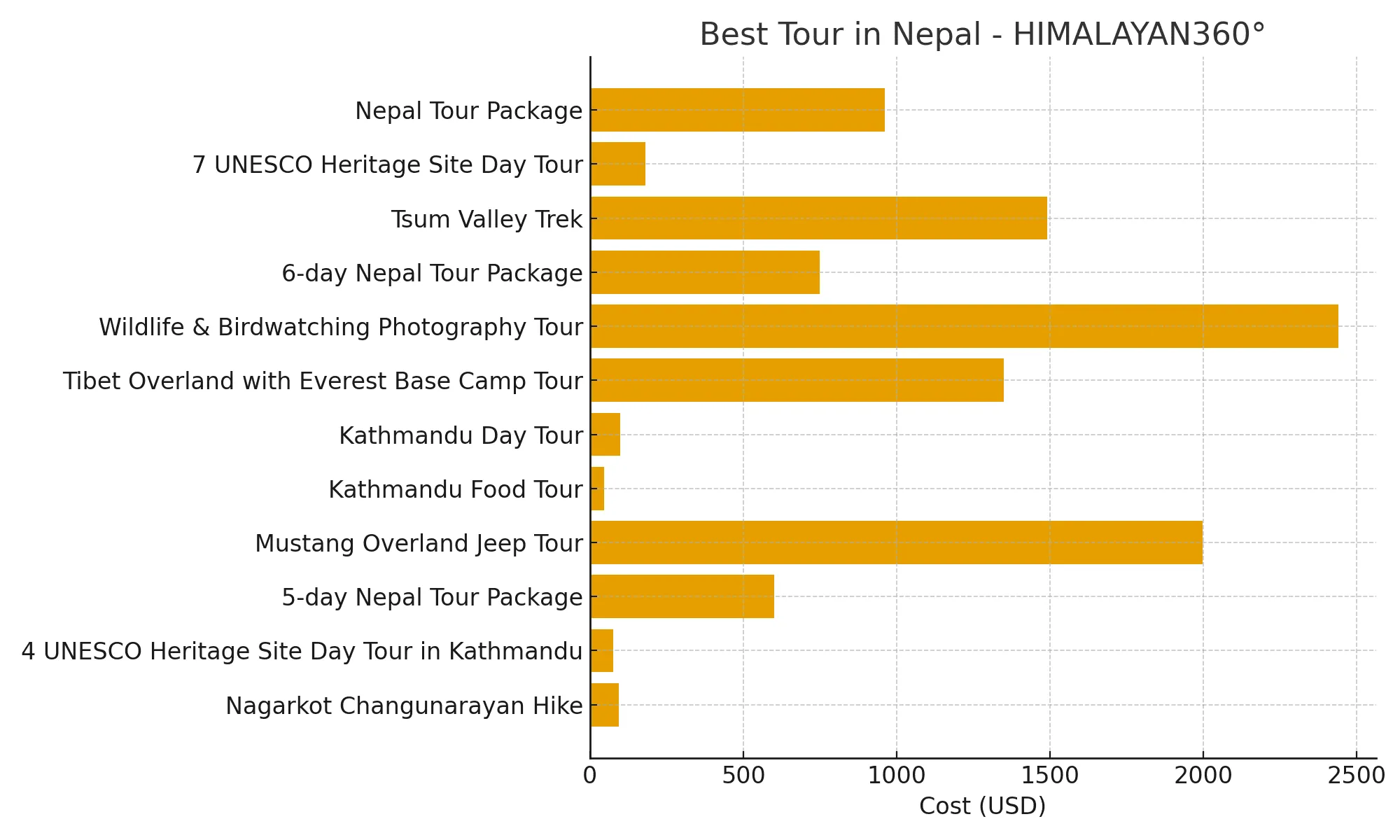 The “Best Tour in Nepal – HIMALAYAN360°” graph visually compares the costs of popular tours and travel packages across Nepal. It ranges from short city experiences like the Kathmandu Food Tour (USD 45) and 4 UNESCO Heritage Site Day Tour (USD 75) to longer adventures such as the Mustang Overland Jeep Tour (USD 1,999) and Wildlife and Birdwatching Photography Tour (USD 2,441). Mid-range packages like the 5-day Nepal Tour (USD 600) and Tsum Valley Trek (USD 1,490) offer a cultural exploration and natural beauty. At the lower end, short and affordable city tours dominate, while the high-cost packages highlight remote destinations and premium travel experiences. Notably, the Ilam Shree Antu Danda Tour is included but marked as N/A, indicating that the price is yet to be determined. Overall, the graph reflects Nepal’s diverse tourism options, from easy day trips to luxury expeditions.
Types of Tours in Nepal for Every Traveler
Nepal offers adventure, culture, and nature in one trip. Enjoy sunrise hikes in Nagarkot, Changunarayan, explore heritage and food in Kathmandu, or take overland tours to Mustang and Tibet with Everest views. These tours let you see the best of Nepal in a short time and on a friendly budget.
5-day Nepal Tour Package
The 5-day Nepal Tour Package is designed to give travelers a complete experience of Nepal’s natural beauty, cultural heritage, and Himalayan adventures. Covering key regions like Kathmandu Valley and Pokhara, this package is perfect for first-time visitors, cultural explorers, and adventure seekers.
- Route: Kathmandu→Nagarkot→Pokhara→Kathmandu
- Best Season: Sept-Nov, and Mar-May
- Accommodations: 3-4 star Hotels
- Transportation: Driving
- Highlights: Pashupatinath Temple, Bindhyabasini Temple, Annapurna range, Machhapuchre (6,993 m), Seti River, Phewa Lake, Begnas Lake
7 UNESCO Heritage Site Day Tour
Located in the Kathmandu Valley, the 7 UNESCO Heritage Sites Day Tour is ideal for cultural enthusiasts, history lovers, and first-time visitors who want to experience the essence of Nepal’s ancient architecture, temples, and monuments. The main aim is to visit the iconic UNESCO World Heritage Sites while enjoying the scenic views of the valley and cultural vibe.
- Route: Kathmandu→Kathmandu Durbar Square→Patan Durbar Square→Bhaktapur Durbar Square→Swayambhunath Stupa→Boudhanath Stupa→Pashupatinath Temple→Changunarayan Temple→ Kathmandu
- Best Season: Sept-Nov, and Mar-May
- Accommodations: Hotel
- Transportation: Private Vehicle, short walk at each site
- Highlights: Swayambhunath Stupa, Krishna Mandir, Patan Museum, Bagmati River, Kumari Ghar, Cremation spot (Arya Ghat)
Wildlife and Birdwatching Photography Tour
The Wildlife and Birdwatching Photography Tour is perfect for nature lovers, wildlife enthusiasts, and photography buffs who want to explore the rich biodiversity of Nepal. Covering Bardia National Park, Chitwan National Park, Lumbini Grassland, and Koshi Tappu Wildlife Reserve, this tour is ideal for travelers seeking close encounters with rare animals, migratory birds, and natural landscapes.
- Route: Kathmandu→Barida National Park→Lumbini Grassland→Chitwan National Park→Koshi Tappu Wildlife Reserve
- Best Season: Oct-Mar
- Accommodations: Hotel
- Transportation: Flight and Drive
- Highlights: Lumbini Monastic Zone, Narayani River, Rapti River, Koshi River, Koshi Tappu Wetlands, Chitwan Riverside habitats
Tibet Overland with Everest Base Camp Tour
The Tibet Overland with Everest Base Camp Tour is a journey across the Himalayas that connects Kathmandu, Nepal, with the highlands of Tibet, China. Starting from the Kathmandu Valley, this overland adventure is perfect for cultural explorers, mountain lovers, and spiritual travelers who dream of reaching the Tibetan Everest Base Camp (5,200 m).
- Route: Kathmandu→Gyirong Border→Tingri→Shigatse→Lhasa→Evrest Base Camp (Tibet)→Lhasa
- Best Season: May-Oct
- Accommodations: Hotel
- Transportation: Private Vehicle
- Highlights: Mount Everest (8,848.86 m), Cho Oyu (8,188 m), Shishapangma (8,027 m), Tashilhunpo Monastery, Sera Monastery, Rongbuk Glacier, Khumbu Glacier, Bhramaputra River
Unique Experiences You Shouldn’t Miss in Nepal
Nepal offers moments that stay with you long after you leave. In the hills of Gorkha, the Gurung community still practices cliffside honey hunting, where hunters climb vertical rock using handmade rope ladders. If trekking is not possible, a short mountain flight from Kathmandu takes you close to Mount Everest and several other peaks above 8,000 m in just about one hour. For adventure lovers, Nepal is home to canyon swing at The Last Resort and paragliding in Pokhara, which is considered one of the best tandem flying spots in the world. Cultural and spiritual experiences in Nepal are equally unique. At Pashupatinath Temple, hundreds of people gather every evening to watch the Sandhya Aarti. In Kathmandu Durbar Square, visitors receive blessings from the Kumari, a living goddess worshipped by both Hindus and Buddhists. In the Everest region, Khumjung Monastery houses what locals believe to be a Yeti relic that attracts curious travelers every year.
Best Time for a Tour in Nepal
Nepal can be visited throughout the year, but each season offers a different kind of experience. Weather, visibility, and local festivals change with the seasons, so the best time depends on what you want to see and do. The table below provides you with clear information.
| Activity | Optimal Months | Why? |
| High-Altitude Trekking | Oct, Nov, Apr | Stable weather with good visibility |
| Wildlife Safaris | Jan, Feb, Mar | Tall grass is cut, so animals like tigers and rhinos are easier to spot. |
| Cultural Tours | Oct, Nov, Mar | Comfortable weather for walking and big festivals |
| White-water Rafting | Oct, Nov | Best river flow post-monsoon |
Why Choose a Guided Tour in Nepal
Choosing a guided tour in Nepal makes your journey safer, easier, and more meaningful. While you can travel alone, a guide serves as your helper, protector, and organizer. Here are some good reasons for choosing a guided tour.
- Better safety in the mountains: Guides can quickly notice early signs of altitude sickness and help you stay safe.
- Easy navigation: Trails can be unclear, but guides know the routes and safer paths.
- Help in emergencies: They can arrange quick support, including rescue services if needed.
- Real cultural connection: Guides help you talk to locals and understand traditions, temples, and daily life.
- Discover hidden places: You can visit viewpoints, small villages, and local food spots that most travelers miss.
- No planning stress: Permits, tickets, and bookings are handled for you.
Plan Your Dream Tour in Nepal Today
Nepal offers adventure, culture, and natural beauty, all in a way that can be affordable and safe with the right planning. From beautiful mountain sunrises and adventurous treks to festivals and delicious local food, every experience is special and unique. Don’t wait, start planning your dream tour in Nepal today, and explore this incredible country with excitement.
View Tour in Nepal trips
Trekking in The Himalaya
28 Trips
To the Sky and Back
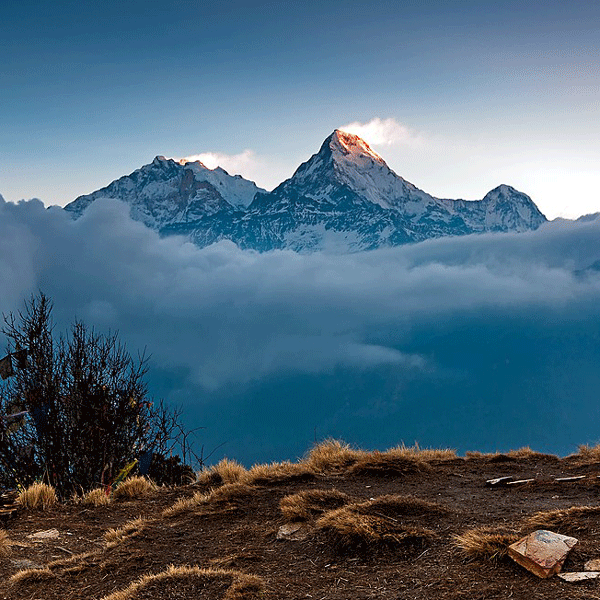
The Himalayan mountain range in Nepal is often referred to as the “Third Pole” because it holds the largest amount of ice outside the North and South Poles. These huge mountains stretch across the north of the country and feel like a place between the earth and the sky. And the treks in the “Trekking in the Himalaya” category with Himalayan 360 take you into a world of ice, rock, glaciers, and high mountain passes. We offer 30+ Himalayan trekking packages, from short and easy walks to long and challenging high-altitude treks. Each trek itinerary is planned for different fitness levels and travel goals. Whether you want to cross high passes, reach famous base camps, or walk through remote mountain villages shaped by Himalayan culture, these treks bring you close to Nepal’s legendary peaks. Below is a quick overview of 12 popular Himalayan treks, with key details to help you choose the right journey for your next adventure in the mountains.
| Trip Name | Days | Highest Altitude (M) | Region | Trek Starting Point |
|---|---|---|---|---|
| Everest Three High Pass Trek | 18 | 5,555 | Everest | Lukla |
| Upper Mustang Trek | 16 | 4,280 | Mustang | Kagbeni |
| Kanchenjunga Circuit Trek | 23 | 5,140 | Kanchenjunga | Sekathum |
| Annapurna Base Camp Trek | 9 | 4,130 | Annapurna | Kimche |
| Langtang Gosainkunda Trek | 13 | 4,984 | Langtang | Syabrubesi |
| Mardi Himal Trek | 7 | 4,500 | Annapurna | Kande |
| Ghorepani Poon Hill Trek | 5 | 3,210 | Annapurna | Ulleri |
| Everest Base Camp Trek | 14 | 5,555 | Everest | Lukla |
| Makalu Base Camp Trek | 17 | 4,870 | Makalu | Num |
| Manaslu Circuit Trek | 14 | 5,106 | Manaslu | Machha Khola |
| Tsum Valley Trek | 15 | 4,200 | Manaslu | Machha Khola |
| Langtang Valley Trek | 8 | 4,984 | Langtang | Syapru Besi |
Detailed Cost Analysis for Himalaya Trek Packages
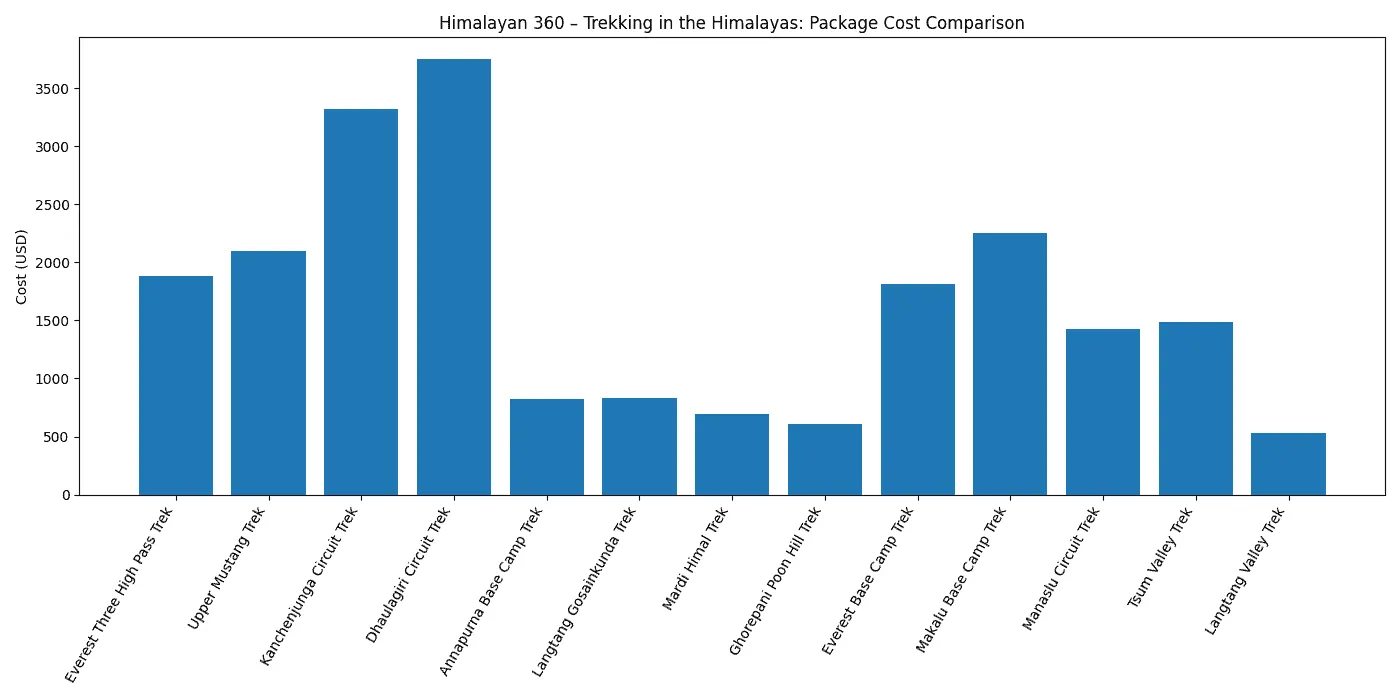 The bar graph above shows the wide range of trekking packages offered by Himalayan 360, making Himalayan trekking accessible for different types of travelers. Budget treks start from around USD 200 to 600 and are ideal for short and scenic walks around natural beauty with moderate difficulty. Mid-range treks sit between USD 800 and USD 2,000 and include popular routes like Annapurna Base Camp, Langtang Valley Trek, Everest Base Camp Trek, and Manaslu Circuit Trek. These treks balance altitude, trek length, and comfort. At the higher price (up to USD 3,700), there are remote and challenging routes like the Kanchenjunga Circuit Trek and Dhaulagiri Circuit Trek with longer days, higher altitude, and extra support. This way, Himalayan 360 offers everything from affordable beginner treks to serious high-altitude adventures, with proper guides, safety, and support at every level.
From Enduring Base Camps to Relaxing Lakes
Trekking in the Himalayas is often considered challenging, but our trek packages offer a full spectrum of experiences. You can choose tough treks that reach high-altitude base camps like Everest, Kanchenjunga, or Makalu. Or you can opt for easier and peaceful routes like Ruby Valley, Gosainkunda Lake, and village homestay treks that focus more on culture, scenery, and slow walking days. This range of options makes it easy for you to choose the trek that fits your fitness level, interests, and travel pace.
A Warm Welcome with Homestay at Local Gurungs
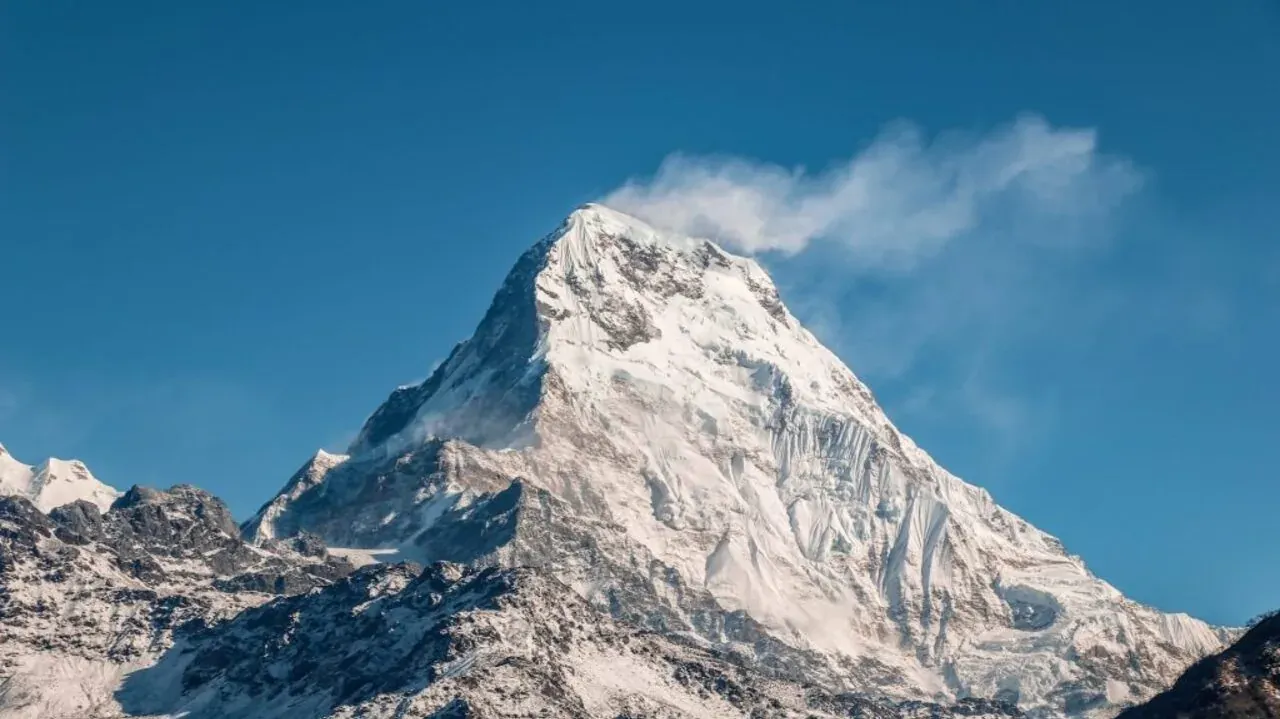 Experience the warm welcome of the Gurung people in one of Nepal’s largest traditional villages. This short and gentle Sikles Eco Homestay Trek combines village life with beautiful mountain views. Highlights:
- Stay in eco homestays with local Gurung families.
- Walk along the scenic trails with views of Annapurna and Lamjung Himal.
- Enjoy home-cooked meals made from local farm produce.
- Perfect for a short, relaxed, and culture-focused trek.
Everest and the Turquoise Gokyo Lakes
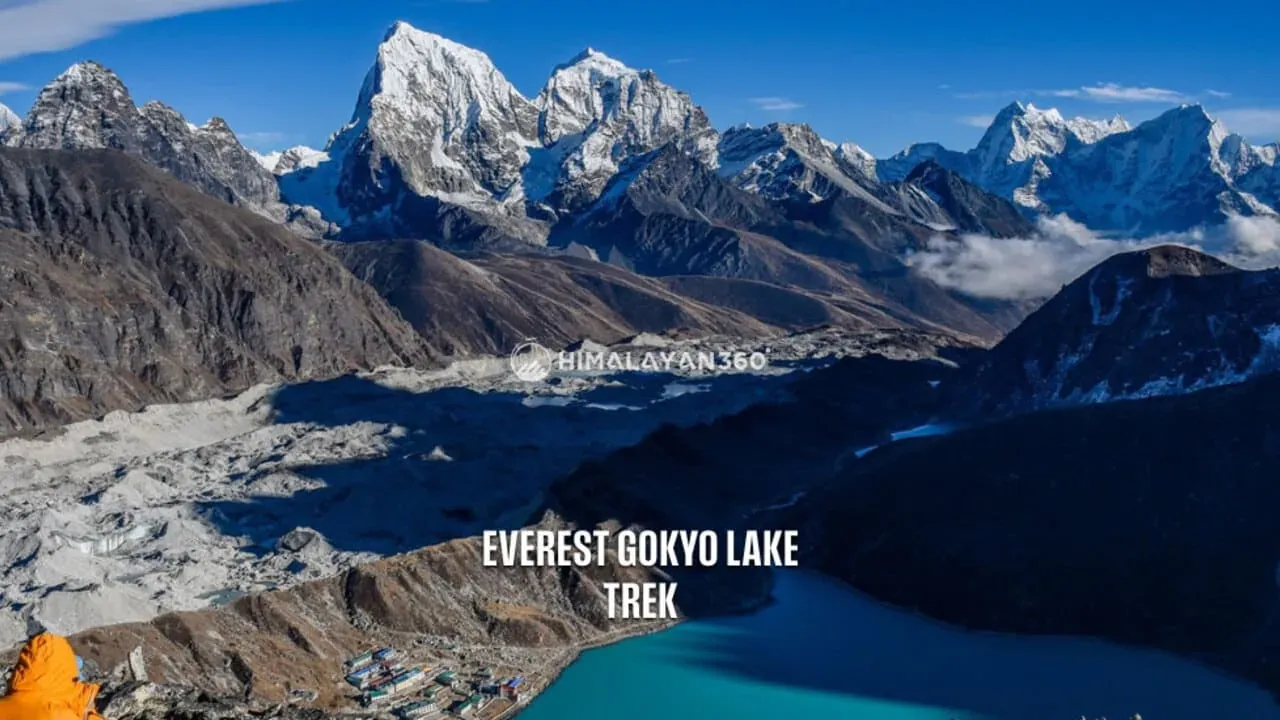 Follow a quiet and scenic route to the beautiful Gokyo Valley, a peaceful alternative to the busy Everest Base Camp trek trail. The trek route separates from Namche. The Everest Gokyo Lake Trek is famous for its six bright blue high-altitude lakes and the amazing views from Gokyo Ri. Highlights:
- Visit the world’s highest freshwater lake system in the Everest region.
- See four 8,000M peaks: Mount Everest, Lhotse, Makalu, and Cho Oyu from Gokyo Ri.
- Walk beside the Ngozumpa Glacier, the longest glacier in the Himalayas.
- Great choice for trekkers who want a high altitude trek and views without going to Everest Base Camp.
The Ancient Tibetan-Influenced Nar & Phu Valley
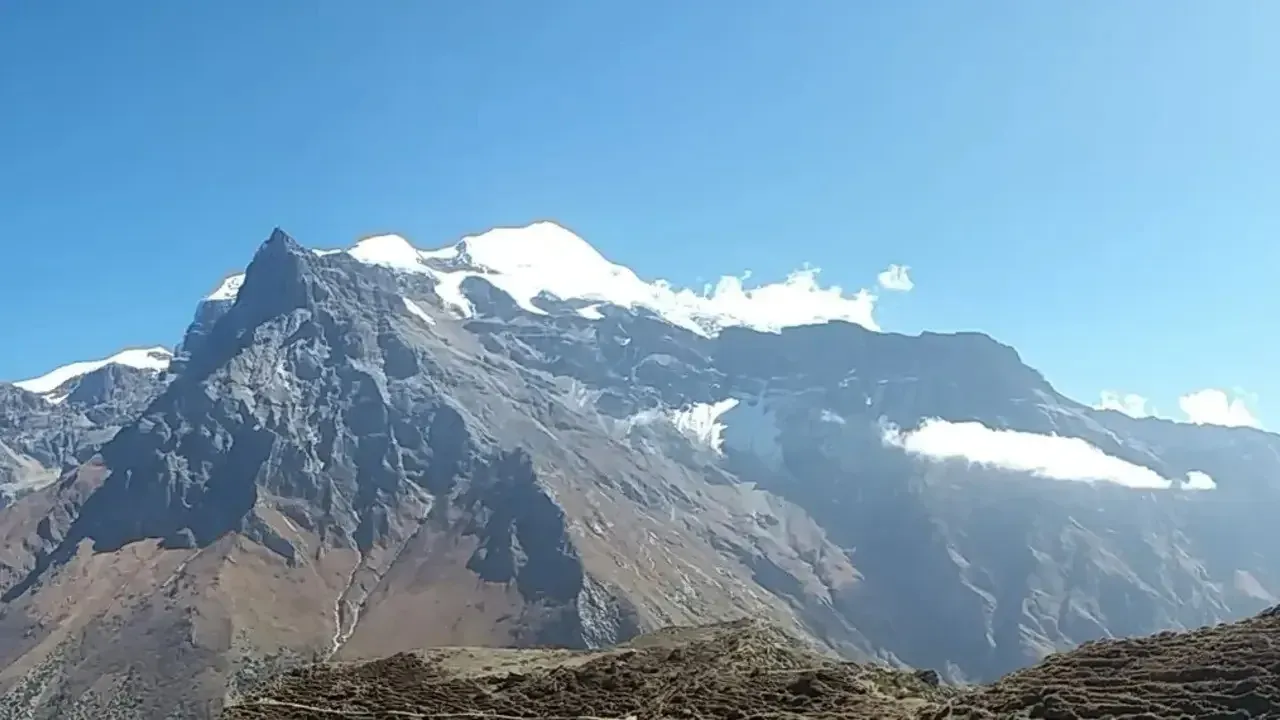 The Nar Phu Valley Trek is a quiet and remote adventure in a hidden part of the Annapurna region, ideal for trekkers who like off-the-beaten-path trails. Explore the ancient, stone-walled villages of Nar and Phu, where Tibetan-influenced culture is still very strong. Highlights:
- Visit the ancient stone villages of Nar and Phu.
- Cross the high Kang La Pass with wide Annapurna mountain views.
- Walk through deep gorges, old monasteries, and remote valleys.
- Explore historic sites like Tashi Lhakhang and Nar Phedi Monastery.
- Suitable for experienced trekkers who enjoy rugged landscapes and deep cultural experiences.
View Trekking in The Himalaya trips
 Trek
Trek By air
 Pilgrimage
 Festivals
 Wildlife
 Luxury
 Yoga
Yoga Food
Food Heritage