Kailash Yatra Fixed Departure Date 2026 Click Here


Best Time for the Langtang Valley Trek
The best time for the Langtang Valley Trek spans from March to May in the spring and from September to November in the autumn. During these months, stable high-pressure systems, non-muddy trails, and cloudless skies provide maximum visibility across the region.
Choosing the right time is essential. After saving money, booking flights, and taking time off work, the last thing you want is to miss out on the beautiful mountain views and Tamang culture of Langtang. Instead, poor timing could mean the peaks are covered by monsoon clouds or blocked by winter snow, with no major festivals like Lhosar or Buddha Jayanti to experience. Bad timing can easily turn a dream trek into a disappointing one.
So book your trek within these two seasons (Spring and Autumn) and make the most of your hard-earned vacation.
Table of Contents
Seasonal Comparison of the Langtang Trail
The weather of the 84.9 km route from Syabrubesi up to Kyanjin Gompa changes between seasons. Let’s have a clear look at the table below:
| Season | Months | Average Daytime Temperature | View Quality | Route Conditions |
| Autumn (Peak) | September, October, November | 10°C to 15°C | Excellent (Post-monsoon clarity) | Dry and highly stable |
| Spring (Peak) | March, April, May | 12°C to 18°C | Good (Afternoon clouds common) | Dry with blooming rhododendrons |
| Winter (Off-Peak) | December, January, February | 2°C to 12°C | Clear but extremely cold | Snow-covered at high altitudes |
| Monsoon (Off-Peak) | June, July, August | 18°C to 23°C | Poor (Rain and fog) | Muddy with landslide risks |
Langtang Valley Trek in Autumn (September to November)
Autumn is the prime season for trekking in the Langtang region. After the summer monsoon rains clear the atmosphere of dust and haze, the mountain panoramas open up perfectly. For photography enthusiasts, Dorje Lakpa (6,966M) and Gangchempo (6,388M) are among the most beautiful peaks to capture.
The calm weather patterns also mean that flights are rarely delayed, and the 6-hour road trip from Kathmandu to Syabrubesi via the Pasang Lhamu Highway faces fewer road blockages. According to data tracked by the Department of Hydrology and Meteorology of Nepal, October and November see the lowest average monthly precipitation across the Rasuwa district, making it the safest time for climbing high viewpoints.
Langtang Valley Trek in Spring (March to May)
Spring brings life back to Langtang National Park, the first Himalayan national park of Nepal, established in 1976. Around the lower sub-alpine zones, the forests turn red, pink, and white with blooming rhododendron trees. Trekkers sometimes spot the Himalayan Monal, musk deer, and even the red panda between Syabrubesi and the Lama Hotel area.
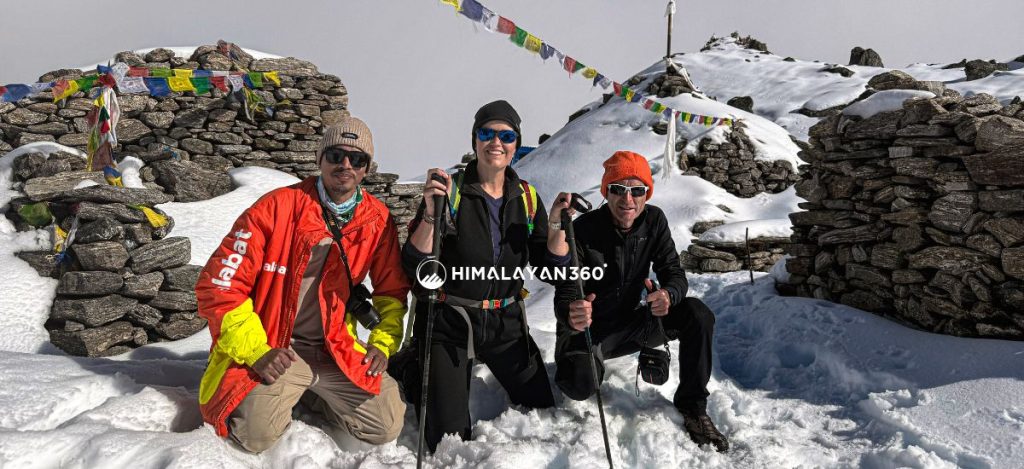
Around April and May, daytime temperatures at Kyanjin Gompa can reach up to 18°C. This warmth makes the steep climbs up to Tserko Ri (4,985M) or Kyanjin Ri (4,773M) more manageable, as the paths are free of hard ice. The main compromise in late spring is that rising thermal currents can build up the clouds by mid-afternoon. It can obscure the peaks later in the day. Planning an early start each morning easily mitigates this issue.
Langtang Valley Trek in Winter (December to February)
Winter (December to February) is the coldest season in the Langtang Valley, but it also offers some of the clearest mountain views of the year. Snowfall is limited early in the month, and the main trail is easy to follow. Daytime temperatures in the lower areas range from 2°C to 12°C, while temperatures at Kyanjin Gompa (3,870M) fall below -5°C during the night.
January and February bring the harshest winter conditions to the region. Temperatures at higher elevations can drop to -10°C to -15°C at night, and heavy snowfall covers the trail between Langtang Village and Kyanjin Gompa. Side hikes to viewpoints such as Tserko Ri become very difficult due to deep snow accumulation. Winter also affects local services, as some teahouse owners temporarily move to lower elevations to escape the cold.
Langtang Valley Trek in Monsoon (June to August)
Monsoon season (June to August) is considered the least favorable time for the Langtang Trek due to rainfall, high humidity, and heavy cloud cover. June is the transition from spring to monsoon, with rain arriving in the afternoons and evenings. The forest areas become lush and green, while rivers and waterfalls flow at their strongest after seasonal rainfall.
July and August bring the heaviest rainfall of the year. They make trails muddy, slippery, and physically challenging. Thick clouds and mist cover the surrounding mountains by reducing visibility and limiting opportunities for panoramic views. Continuous rain can also increase the risk of landslides and temporary road blockages on the route between Kathmandu and Syabrubesi, sometimes causing travel delays.
Mountain Views Throughout the Year in Langtang Valley
While peaks such as Langtang Lirung (7,227M), Dorje Lakpa (6,966M), and Kimshung (6,500M) can be seen throughout the year, weather conditions determine how consistent the views will be. The table below shows what trekkers can expect in each season.
| Month | Air Clarity | Snow Cover on Peaks | Best Viewpoint Strategy |
| Jan / Feb | Excellent | Maximum | Stay low, watch for icy trails on viewpoints |
| Mar / Apr | Moderate | High | Summit Kyanjin Ri early before noon clouds |
| May | Hazy | Medium | Start trekking at dawn for the best clarity |
| Jun / Jul / Aug | Poor | Minimum | Expect misty conditions, enjoy mountain views from your teahouse |
| Sep | Improving | Medium | Post-monsoon transition, great late-month scenery |
| Oct / Nov | Perfect | Medium-High | Prime season with all-day clear views from Tserko Ri |
| Dec | Perfect | High | Bitterly cold conditions, but clear skies all day |
How Seasonal Weather Affects the Langtang Helicopter Rescue Process
Autumn is the most reliable time for helicopter rescue due to good visual range. Under favorable conditions, helicopters can reach most parts of the valley within 30 to 45 minutes after departure from Kathmandu. Spring also supports regular rescue operations, but increasing afternoon cloud cover limits flights to the morning hours.
Winter presents a different challenge. While clear skies help pilots navigate the valley, freezing temperatures and winter storms can slow rescue operations. Rain and thick cloud cover during the monsoon season prevent helicopters from flying into the valley, sometimes delaying rescues for several hours or even days. During prolonged bad weather, injured trekkers may need to descend to lower elevations where visibility is better.
Seasonal Crowd Levels on the Langtang Valley Trail
Take a look at the table below for a clear overview of Langtang trek weather and seasonal crowd levels.
| Month Range | Trail Crowd level | Impact on trekkers | Monthly Visitor Average |
| March to May | High | Teahouses are busy High altitude viewpoints are fully accessible | 2,700 to 4,000 entries |
| June to August | Low | High risk of road blockages Muddy trails with leeches Most high valley tea houses close | Under 200 entries |
| September to November | Very High | Maximum congestion Shared dining halls | 3,600 to 4,800 entries |
| December to February | Very Low | Intense cold down to minus 10°C Frozen plumbing Uncrowded trails but limited open lodges. | 100 to 800 entries |
Best Time to Trek Langtang Valley for Beginners
For beginners, the best time to trek the Langtang Valley is from mid-October to mid-November. During this period, the monsoon ends by leaving the trails dry and easier to walk on. Mountain views are at their clearest with daytime temperatures ranging from 10°C to 20°C at lower elevations. It creates comfortable hiking conditions without the extreme cold of winter or the heat and humidity of summer.
Even during the best season, beginners should take a progressive approach to the trek. Walk at a slow speed, take regular breaks, and spend an extra night in places like Langtang Village or Mundu to adjust the body at high altitude. Hiring a porter is also a practical option. Do not try to carry a 15kg backpack yourself. The thin air above 3,000M makes every kilogram feel twice as heavy.
How Far Can You Actually See from Kyanjin Ri in Different Seasons?
While the mountain conditions are the same throughout the year, the distance and clarity of what you can see depend heavily on seasonal weather, cloud cover, and air quality.
| Feature | Autumn (Peak) | Winter (Cold Peak) | Spring (Shoulder) | Monsoon (Off-Season) |
|---|---|---|---|---|
| Max Visual Range | 40+ km | 35+ km | 15–25 km | < 10 km |
| Peak Clarity timing | All Day Long (6AM – 5PM) | Morning to Mid-Day | Early Morning Only (6AM – 9AM) | Fleeting Minutes after rain |
| Glacial & Ice Visibility | Sharp, detailed crevasses | Buried under Snow | Soft, melting snow edges | Hidden behind gray clouds |
| Atmospheric Obstacles | None (Clean air) | High winds / Snow plumes | Clouds forming later in the day | Low-altitude fog cover |
Best Time to Visit Kyanjin Gompa
Kyanjin Gompa (3,870M) can be visited throughout the year, but the period from mid-October to mid-November offers the best overall experience. During this autumn season, trekkers can enjoy the views of Langtang Lirung (7,227M), Gangchempo (6,387M), Yala Peak (5,732M), and glaciers from the village. Daytime temperatures are comfortable for hiking, while the trails leading to Kyanjin Ri and Tserko Ri are easy to navigate. The famous Kyanjin yak cheese factory is also operated fully during these months.
The village itself is more active as both domestic and international trekkers return to the region after winter. Beyond the scenery, Kyanjin Gompa is also home to one of the oldest Buddhist monasteries in the Langtang region, which is an important spiritual center for local Tamang communities. Although the monastery is open year-round, spring and autumn provide the best opportunity to experience daily religious activities.

Best Period to Combine Langtang Valley Trek with Gosaikunda Lake
The best time to combine the Langtang Valley Trek with Gosaikunda Lake is from October to November. This extended trek includes Laurebina Pass (4,610M) and the holy Gosaikunda (4,380M) lake visit, so stable weather is extremely important. During autumn, trails are rain-free and the passes are clear from snow accumulation.
With all teahouses and lodges operating normally, trekkers can complete the route without worrying about seasonal closures or limited services. The second-best period is April to early May, when warmer temperatures and blooming forests add extra beauty to the journey. Rhododendron forests between Syabrubesi, Thulo Syabru, and Shin Gompa bloom in red, pink, and white colors. By this time, most winter snow has melted from the higher areas, which makes the crossing of Laurebina Pass much safer than during the winter months.
Historical Weather Trends in Langtang Valley Over the Last 10 Years
Over the last decade, weather patterns in the Langtang Valley have been very seasonal, but several noticeable changes have occurred at higher elevations. Research conducted in the Langtang Catchment shows that areas above 4,000M are warming faster than lower areas of the valley.
The glaciers have also experienced changes during the past ten years. Glaciers around Kyanjin Gompa, including those connected to the Langtang Lirung massif, have continued to shrink as ice loss outpaces snowfall accumulation. At the same time, rainfall patterns have become less predictable. Monsoon rains arrive later than expected, but heavy rainfall can extend further into September.
Weather records show that conditions vary more from year to year, with some years being unusually dry and others experiencing heavy rainfall over short periods. These changes do not affect trekking every season, but they have made weather forecasting less reliable than they were a decade ago.
Conclusion
To fully enjoy the mountain views during spring, autumn, or even during off-season without the stress of managing safety concerns by yourself, an experienced local team can provide valuable support.
At Himalayan 360, our experienced mountain guides keep track of local weather conditions and adjust the trekking schedule whenever needed. Our well-planned 8-day Langtang Valley Trek provides enough time for proper acclimatization before reaching higher areas. We also provide a trustworthy private jeep or bus transportation from Kathmandu for a comfortable journey.
Best Time for the Langtang Valley Trek FAQs
Is the water system completely frozen at Kyanjin Gompa in early spring?
Can I cross the Laurebina Pass to Gosaikunda during the winter freeze?
Will the Full Moon in May change my trekking experience at Kyanjin Gompa?
Does the autumn harvest season change the local food menu in the villages?
Why is Tserko Ri easier to climb in November mornings?


