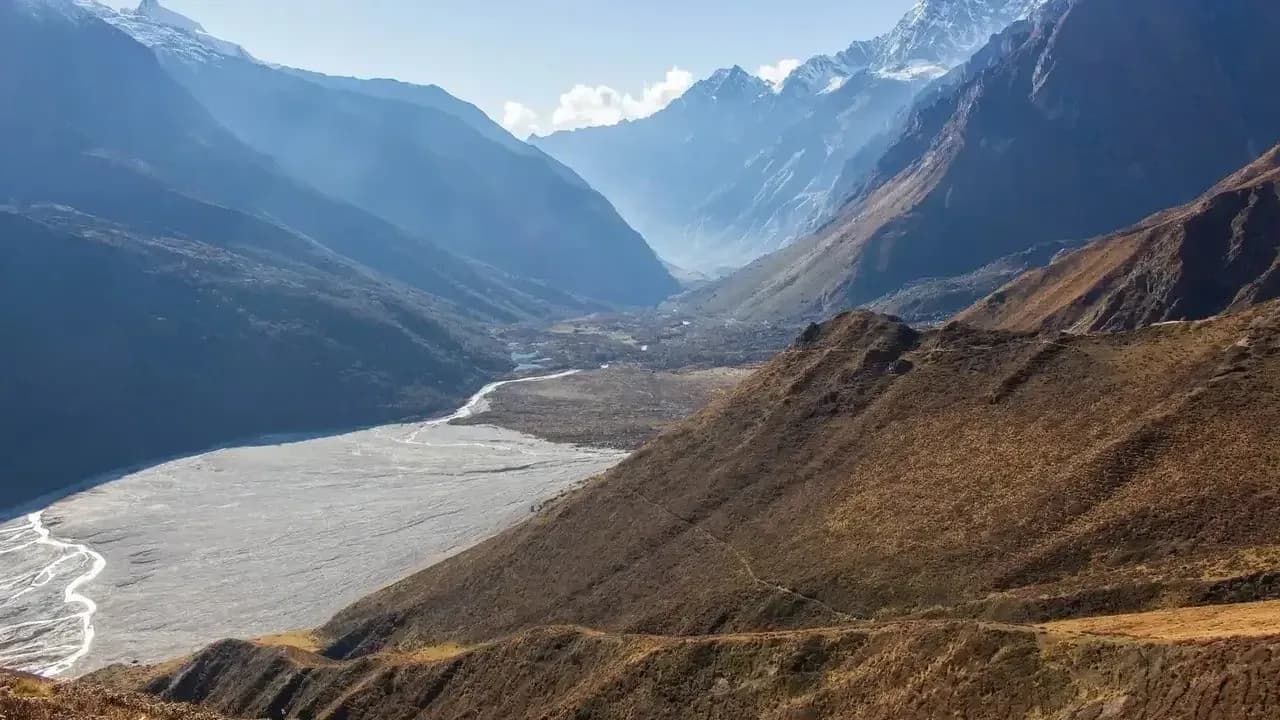
Route update, 4 September 2026. The August 2026 flood destroyed the 42km road to Syabrubesi and the trailhead town itself. The trail above is intact, but the way in has changed. Check which routes are open after the 2026 flood before planning around anything below.
If you think the adventure starts on the trail, think again. It actually starts with dodging potholes and cows on mountain roads. The Kathmandu to Syabrubesi journey is something different from what you expect. It covers around 117 to 130km and takes about 6 to 9 hours to reach Syabrubesi, depending on the vehicle. You can get there by public bus, shared jeep, or private jeep, each with its own level of comfort, speed, and price.
Syabrubesi is the gateway to the Langtang Valley Trek, Gosaikunda Lake, and the Tamang Heritage Trail. Choosing transport is easy, with options to suit every type of traveler. Whether you’re traveling solo, with friends, or in a group, there’s a reliable way to travel to Syabrubesi. Now, let’s discuss the transportation options to reach Syabrubesi from Kathmandu.
Local Travel Hacks from Kathmandu to Syabrubesi
If you want the best experience on the ride from Kathmandu to Syabrubesi, sit on the left side of the bus or jeep. This gives you clear views of the river, hills, and even Himalayan peaks on a clear day. Try to avoid travelling on weekends because buses and jeeps are packed with locals heading home, and getting a seat can be a struggle. Early morning rides are less crowded and have higher chances of getting seats.
To avoid scams or overpricing, book your ticket through official counters or trusted local agents, not random brokers near the Gongabu bus park. Always ask for a printed ticket and check the fare in advance. Public buses have a fixed price, but some jeeps might charge more if you look like a tourist. A little local knowledge goes a long way, and adapting it helps you save both money and stress.
Transportation Options from Kathmandu to Syabrubesi
Getting from Kathmandu to Syabrubesi might not be quick, but you’ve got a few better transportation options to choose from. You can choose the best option according to your budget, speed, and comfort to complete the journey from Kathmandu to Syabrubesi.
Public Bus
The public bus is the cheapest way to travel from Kathmandu to Syabrubesi. It is a popular choice among locals and budget-conscious trekkers in Nepal. While it’s affordable, don’t expect a luxury ride; it’s often crowded, makes frequent stops, and takes around 8 to 9 hours, depending on road conditions. Kathmandu to Syabrubesi buses are available daily, though seats fill up fast during trekking seasons. Here is detailed data about public buses in a table.
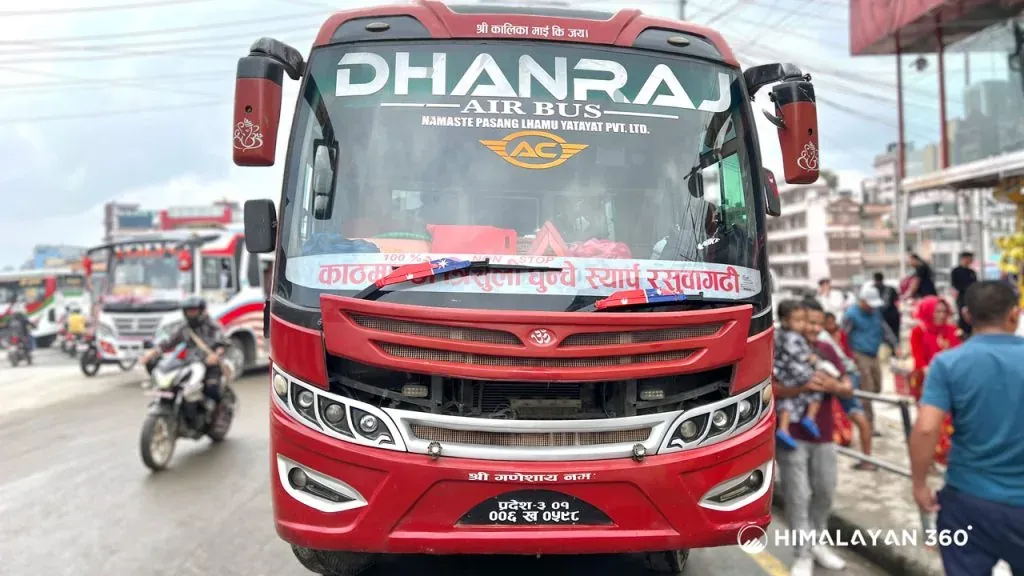
| Feature | Details |
| Price | NPR 800-1,000 (USD 6-8) per person |
| Departure Point | Machhapokhari Bus Park (Balaju Bypass) |
| Midday Stops | Trishuli, Kalikasthan, Dhunche |
| Drop Off Point | Syabrubesi Bus Station |
| How to Book | Buy a Syabrubesi bus ticket in person on the same day |
| Comfort Level | Basic seats, a little crowded, limited space |
| Best For | Budget travelers and locals |
Shared Jeep
Shared jeep from Kathmandu to Syabrubesi is a great mid-range option for those who want to save time as well as some money. They’re faster than public buses, taking about 6 to 7 hours, and make fewer stops along the way, only at key points like Trishuli or Dhunche. Though slightly more expensive than local buses, shared jeep transportation from Kathmandu to Syabrubesi offers better comfort and speed. Shared jeeps depart daily and are easy to find early in the morning during trekking season.
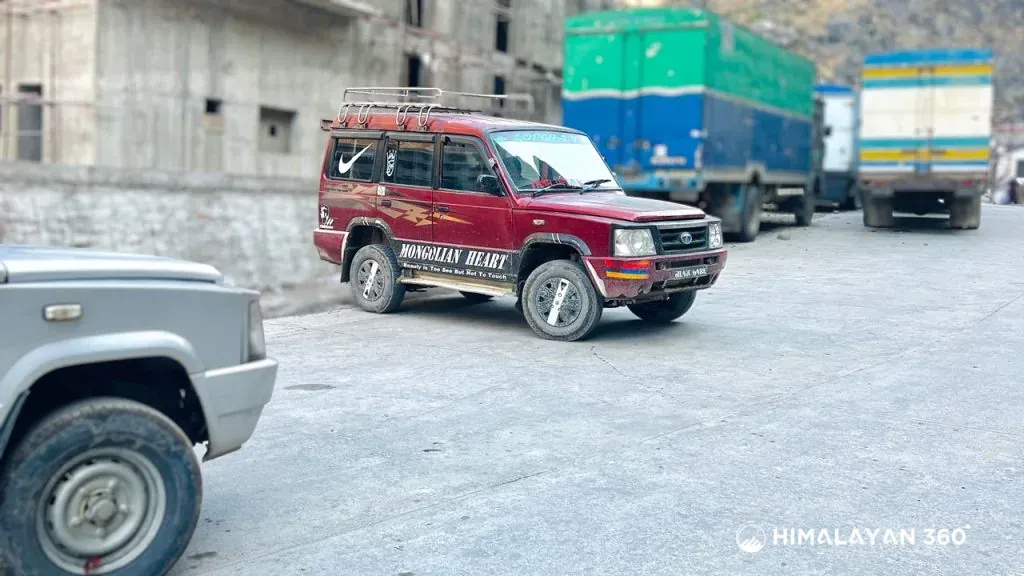
| Feature | Details |
| Price | NPR 1,500-2,000 (USD 11–15) per person |
| Departure Point | Machhapokhari or Kalanki |
| Midday Stops | Trishuli, Dhunche |
| Drop Off Point | Syabrubesi Jeep stop |
| How to Book | Through local travel agents, hotels, or phone calls |
| Comfort Level | Moderate, shared with 7–9 passengers |
| Best For | Mid-budget traveler looking for a faster ride |
Private Jeep
If comfort and flexibility are your top priorities, a private jeep is the best way to reach Syabrubesi. Ideal for families and small groups, it offers a smooth and direct ride with full control over departure time. You can stop anywhere along the route for food or just a break. Though it’s the most expensive option, it’s also the most convenient. Private jeep services are widely available through travel agencies or online booking, and can be arranged on any day with a bit of notice.
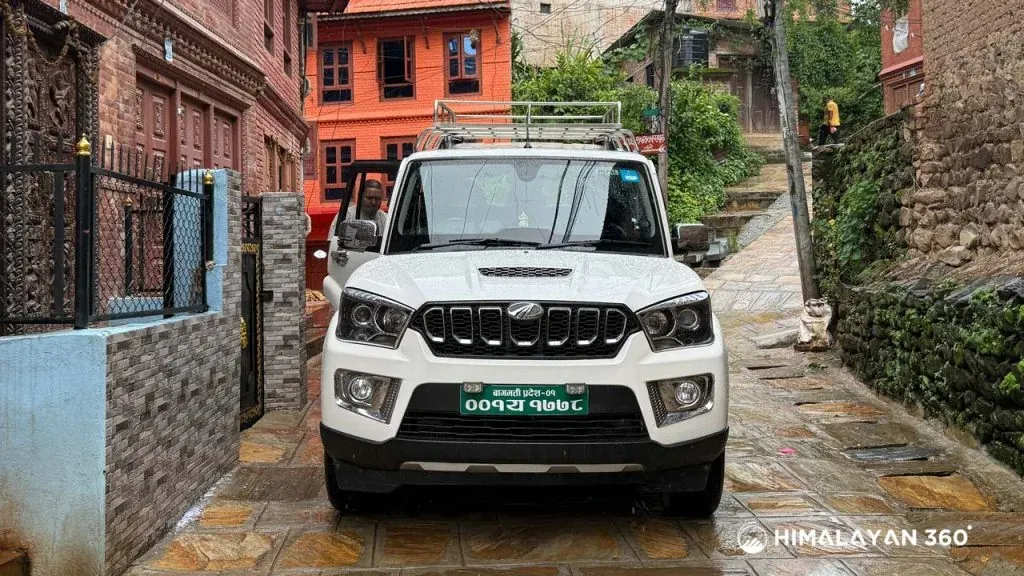
| Feature | Details |
| Price | NPR 15,000-20,000 (USD 110–150) per vehicle (up to 7 seats) |
| Departure Point | Hotel pickup or preferred location in Kathmandu |
| Midday Stops | Flexible on request |
| Drop Off Point | Directly to the hotel/guesthouse in Syabrubesi |
| How to Book | Hire a private jeep via travel agencies like us hotels, or online platforms |
| Comfort Level | High-spacious, private, smooth ride |
| Best For | Families, groups, or travelers seeking comfort and flexibility |
Road Conditions Between Kathmandu and Syabrubesi
The Kathmandu to Syabrubesi route starts off smooth but quickly turns into rugged terrain once you leave the city limits. The section up to Trishuli is mostly blacktopped and in good condition, but beyond that, the road becomes narrow, steep, and often unpaved, especially after Dhunce. Landslides are common during the monsoon season (June to September), and road repairs can cause unexpected delays. The route also includes sharp turns, cliffside sections, and gravel paths that make travel a little slow and bumpy.
The Kathmandu to Syabrubesi distance of 117 to 130km may not sound long, but due to rough terrain and weather conditions, it can take 6 to 9 hours to cover. Four-wheel drive vehicles like jeeps handle the journey better during the rainy months, while buses may struggle in muddy or slippery patches. Despite these challenges, this route is one of the most scenic and rewarding trails in Nepal for those heading towards the Langtang region or planning the Gosaikunda Short Trek.
Scenic Highlights on the Way
The road from Kathmandu to Syabrubesi can be challenging, but let me tell you the views along the way are praiseworthy. This route passes through lesser-seen places of the Trishuli Valley and climbs towards the Langtang region. This journey offers a mix of natural and Himalayan charm. Here are some rare scenic highlights you’ll witness on the Kathmandu – Syabrubesi route:
- Ganesh Himal (7,422m) and Langtang Lirung (7,227m) after Kalikasthan and before Dhunche on a clear day.
- Galchhi/Betrawati to Trisuli road follows the Trishuli river gorge, which offers exhilarating views of whitewater flowing below.
- Thulo Bharkhu area gives high-angle views of the Bhote Koshi Valley.
- Forests near Ramche are filled with pine and fir trees, often snow-covered in winter, which offer alpine scenery.
- Before descending to Syabrubesi, you can spot Langtang II (6,596m).
- Villages like Khalte and Grang are built on steep hillsides with no road access, and can only be seen from the road while driving.
- During the monsoon and after, small waterfalls and streams flow down next to the road, adding beauty to the journey.
What Happens if Your Vehicle Breaks Down on the Way to Syabrubesi?
If your vehicle breaks down on the way to Syabrubesi, you’ll likely wait by the roadside while the driver arranges to fix it quickly or arrange for a replacement. In most cases, the breakdown is managed with on-the-spot repairs or by transferring passengers to another vehicle. According to local transport operators, such delays typically last 1-3 hrs, though in remote zones like near Dhunche or the landslide-prone areas before Syabrubesi, it can take a little longer.
Local mechanics are often available nearby, and some transport services dispatch rescue jeeps or organize vehicle swaps. In rare cases, you have to hitchhike with locals or walk to the next village. Most jeep operators cover basic rescue arrangements in the fare, but private jeep riders may pay extra for vehicle swaps or towing. If you’re a tourist, then you usually have to wait, contact your trek agency, or walk short distances if it’s safe. That’s why choosing reliable transport before departure is the best way to stay safe.
Safety Advice for Travelers
Travelling from Kathmandu to Syabrubesi involves mountain roads and changing weather, so staying safe is important. Here are some key tips to keep your journey smooth and secure.
- Check weather and road conditions before you travel, mainly during the monsoon season.
- Choose reliable transportation and avoid overcrowded vehicles.
- Carry a first-aid kit and stay hydrated throughout the trip.
- Inform someone about your travel plans and expected arrival time.
- Keep emergency contact numbers, including local authorities and your accommodation.
- Avoid travelling at night due to poor visibility and risky road conditions.
- Carry motion sickness tablets like Dimenhydrinate or Meclizine if you’re sensitive to mountain roads.
- Start your journey early in the morning to avoid afternoon fog, roadblocks, and traffic near Kakani or Galchi.
Is there a Train from Kathmandu to Syabrubesi?
No. There is no train service from Kathmandu to Syabrubesi. Nepal doesn’t have a domestic railway network that connects the capital to remote regions like Langtang. The only rail system in the country is a short cross-border line between Jayanagar (India) and Kurtha (Janakpur), which operates far from this route. Due to mountainous geography, rugged terrain, and a lack of railway infrastructure in Nepal, train transport has never extended to areas like Syabrubesi, which lies in the Langtang National Park.
So, for now, road travel is the most preferred way. The journey can be made either via a public bus or a shared or private jeep, which takes anywhere from 6 to 9 hours, depending on weather and road conditions. While the journey is a little rough and bumpy, it’s also incredibly beautiful. If you’re short on time and looking for speed and comfort, you may hire a private helicopter and fly directly to Syabrubesi to start your Langtang Valley trek, which is quick and time-saving.
Kathmandu to Syabrubesi: Travel Myths vs Reality
Before going from Kathmandu to Syabrubesi for the Langtang trek, many travelers hear mixed things about the road. To help you prepare better, here’s a clear breakdown of common travel myths vs the real experience.
| Travel Myth | Reality |
| “The bus departs exactly on time at 6:30 AM.” | Expect “Nepali time”; departure may run 30-60 minutes late, mostly in the off-season. |
| “You can sleep through the ride.” | Not unless you can nap through bumps, horns, and sharp turns. |
| “Jeep rides are like a safari adventure, fun and smooth.” | It’s more like a rollercoaster on rocks. Fun, yes, but don’t wear white clothes. |
| “You’ll reach in 5-6 hours if traffic is low.” | Even with no traffic, the road conditions will take a minimum of 7-9 hours of travel time. |
| ‘You can catch a ride anytime during the day” | Not true. Most jeeps and buses leave early in the morning. There are rare chances of getting vehicles during the daytime. |
| “There’s a direct view of Mount Everest on the way.” | Sorry, wrong mountain range. You’ll see Ganesh Himal and Langtang peaks, not Everest. |
 Trek
Trek By air
 Pilgrimage
 Festivals
 Wildlife
 Luxury
 Yoga
Yoga Food
Food Heritage