Chitwan Jungle Safari

Max. Altitude

1,400m

Difficulty

EasyThe trip is easy and suitable for everyone, including children and older people. It does not require any skills in mountain climbing or traversing difficult terrain.

Best Season

Mar,Apr,May,Sep,Oct,Nov,Dec

Transportation

Private Vehicle

Start / End

Kathmandu/Kathmandu

Accommodation

3-Star Hotel

Meals

Breakfast,Lunch,Dinner

Travel Distance

383KM/238Miles (Kathmandu to Kathmandu Drive)

If you think traffic in Kathmandu is wild, wait until you see a rhino casually crossing your jungle path. A Chitwan Jungle Safari is a wildlife tour in the subtropical lowlands of southern Nepal. This tour takes you deep into Chitwan National Park, a UNESCO World Heritage Site famous for its one-horned rhinoceros, Bengal tigers, crocodiles, and birdlife watching. In short, it’s the best way to experience Nepal beyond the mountains, where adventure, nature, and culture collide.

During your safari, you’ll ride through sal forests, open grasslands, and riverbanks either on a 4×4 jeep or by canoe. The adventure begins as soon as you enter the park. If luck is on your side, you might even catch a glimpse of a Bengal tiger! Besides wildlife, you can visit the elephant breeding center, where you can observe baby elephants with their mothers.

Per Person From

$170

3 Days

Experts for help

Ask our travel experts about customising this trip.
Build Your Custom Trip

Per Person From$1703 Days

Major Highlights of Chitwan Jungle Safari

  • Explore Chitwan National Park in a 4×4 vehicle with a trained guide.
  • Glide along the Rapti River in a traditional dugout canoe.
  • Visit the mud-and-thatch houses of the Tharu people and enjoy a stick dance performance.
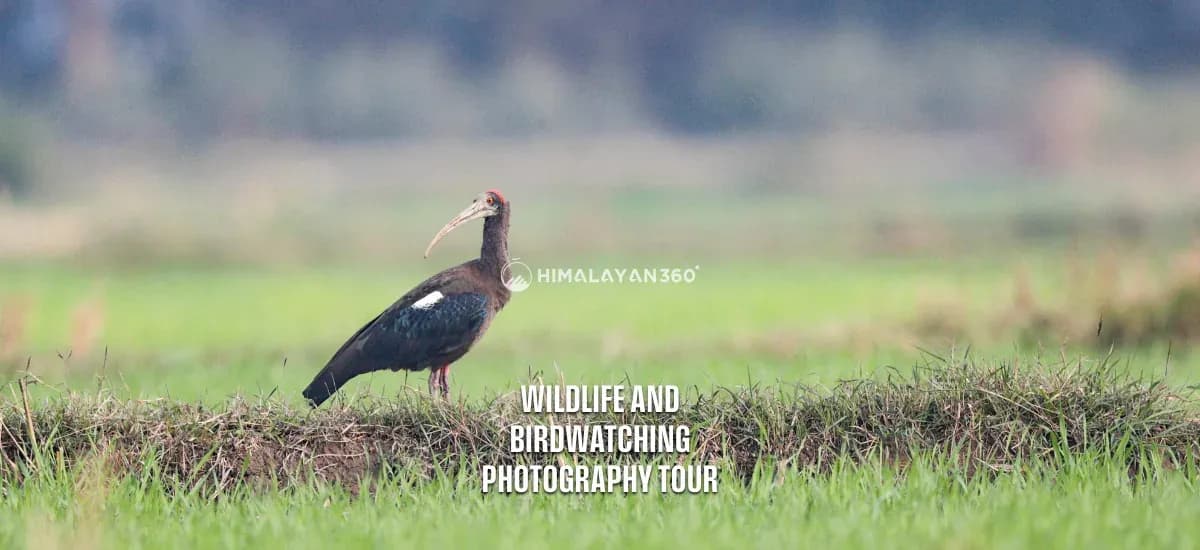
  • Spot over 500 species of birds, including hornbills, kingfishers, and peacocks.
  • Stay in eco-friendly resorts or jungle lodges surrounded by nature.
  • Join programs where you can walk beside elephants, bathe them, and learn about conservation.
  • Discover local herbs and plants used by villagers for traditional medicine.
  • Cycle through nearby Tharu villages and buffer areas.

Chitwan Jungle Safari at a Glance

Distance, walking time and high point for each day
DayItineraryDistance / TimeAltitude
01Kathmandu To Chitwan164 km5 hrs—N A
02Jungle Activities Tour In Chitwan National Park55 km6 hrs—N A
03Chitwan To Kathmandu164 km5 hrs—N A
On foot, across 3 trekking days383.0 km16 hrs0 m

Reviews from our Guests

From travellers who walked this exact itinerary.

★★★★★

We have contacted Himalayan 360 with the idea to spend 3 weeks in Nepal. They have helped us plan a very dynamic and interesting itinerary with the main part being a 10 day long trek that combined Mardi Himal trek and the Poon hill cultural trek. In addition we spent a few magical days exploring Pokhara and also two jaw dropping days experiencing the jungle in Chitwan. They booked eveything for us from transport to accomidations. The experience was seamess. The trek itself was extremely pleasant and relaxing with Mr. Prakash Swodari taking care of our every need and more. He was really knowledgable, fun and has become a friend in those days. This was our first trek so we were unsure about our pacing when planning, so when we discussed, we immediately started making longer days as we wished and he adjusted bookings where possible. He also guided us around one morning in Pokhara and the experience was extremely fun and full of new things. We saw everything we wanted to see. Overall we really had a great time and would really recommend Mr. Swodari as your trek guide. Himalayan has a great website of all of their activities and you can plan really well with their resources available. Pro tip: When planning, do not over focus on one option, find multiple things that interest you, so that if the weather or anything else goes in your way of planning your trip, adjustments can be made and you are better informed about them.

Posted on Tripadvisor

PR
Pavel RNovember 2026
★★★★★

This is a great tour company who will organise your Nepal trip with fantastic professionalism. We gave them our budget (which was relatively small) and they still provided an excellent experience. We experienced culture in Kathmandu, trekking/mountain views in Pokhara and amazing wildlife in Chitwan. All the guides, hotels and transportation they organised were faultless. Each place we visited and activity conducted exceeded our expectations! Look no further if you want to make the most of your trip to Nepal, whilst saving your self money and stress! Special thanks to Raj and Kumar!

Posted on Tripadvisor

CW
Cameron WSeptember 2022
★★★★★

ウェブサイトは、日本語で見ることができ、英語のメールで申し込みました。ツアー自体は、日本語の出来るガイドをつける事も出来ます。sumanさんに色々とアレンジしてもらい、楽しい旅をする事が出来ました。タメルの王宮公園の隣にあるオフィスで、直接申し込む事も出来ます。また、利用したいと思います。 (English translation) The website can be read in Japanese, and I applied by email in English. You can also add a Japanese-speaking guide to the tour. Suman arranged a lot for us and we had a fun trip. You can also book in person at the office next to the Royal Palace garden in Thamel. I would like to use them again.

Posted on Tripadvisor

KK
Konatsu KaharaJanuary 2017
★★★★★

Really Suman Thank you soo much you are the best and great person in Nepal for us, and your jungle safari Guide Arjun also, Arjun is friendly and great and he help and guide in the jungle whole day but we did not found tiger but we see wild animals and birds and one horn rhino and we are soo happy . I highly recommend Crown Himalaya Treks and see you again Regards, Aziz mohd

Posted on Tripadvisor

HS
hamad sJanuary 2016

Chitwan Jungle Safari Itinerary, Day by Day

Download this itinerary

Day 01: Kathmandu To Chitwan

Day details
FactDetails
Time:09:00-17:00
Trek Distance:N/A
Travel Duration:5Hours
Travel Distance:164KM/101.9Miles
Highest Altitude:N/A

On your first day, you’ll start early from Kathmandu and drive southwest towards Chitwan. Most tourist buses leave Kathmandu around 7:00 am from your hotel. The drive follows the Prithvi highway and offers views of the Mahabharat Range, which is over 2,500 m. Tourist buses often have air conditioning and stop for lunch and refreshment along the way.

Upon arrival at Sauraha, a representative from your jungle lodge will manage your accommodation. You will be greeted with a welcome drink and have a briefing with a naturalist guide about your safari program. A traditional lunch will also be served at your hotel.

In the afternoon, you’ll take a cultural tour of a Tharu village. An expert guide will walk you through the village, introduce you to the indigenous Tharu people and their traditional mud-and-thatch houses. You’ll also be guided to the banks of the Rapti River to enjoy a sunset view. After sunset, you’ll be taken to your hotel, where the Tharu people will perform their traditional Tharu drumming and the stick dance (Lathi Nach). This performance is a lively reflection of the local Tharu lifestyle.

Note: For a quick trip, take a 20-minute flight from Kathmandu Tribhuvan International Airport (TIA) to Bharatpur Airport, followed by a short drive to your lodge.

Day details
FactDetails
Meals:Lunch,Dinner
Accommodation:3-Star Hotel

Day 02: Jungle Activities Tour In Chitwan National Park

Day details
FactDetails
Time:09:00-17:00
Trek Distance:N/A
Travel Duration:6Hours
Travel Distance:55KM/34.1Miles
Highest Altitude:N/A

Your day begins with a wake-up call and a cup of tea or coffee at the lodge. A naturalist guide will take you for a ride in a traditional hand-carved canoe. This is the best way to observe the riverbank, where you can spot endangered gharial and marsh mugger crocodiles sunning themselves. If you’re a birdwatcher, then you can enjoy spotting various aquatic birds, such as kingfishers, herons, and egrets.

The canoe ride often concludes near the Elephant Breeding Center at Khorsor. Here, you’ll learn about the conservation efforts of the center and can observe baby elephants with their mothers. This government-run facility focuses on protecting and increasing the population of the Asian elephant.

After the visit, a guided jungle walk begins. The walk takes you along marked trails inside the forest. where you can spot deer, monkeys, and other wildlife. The guide explains the local flora and fauna with full safety. After returning from the walk, you go back to the hotel for lunch and a two-hour rest.

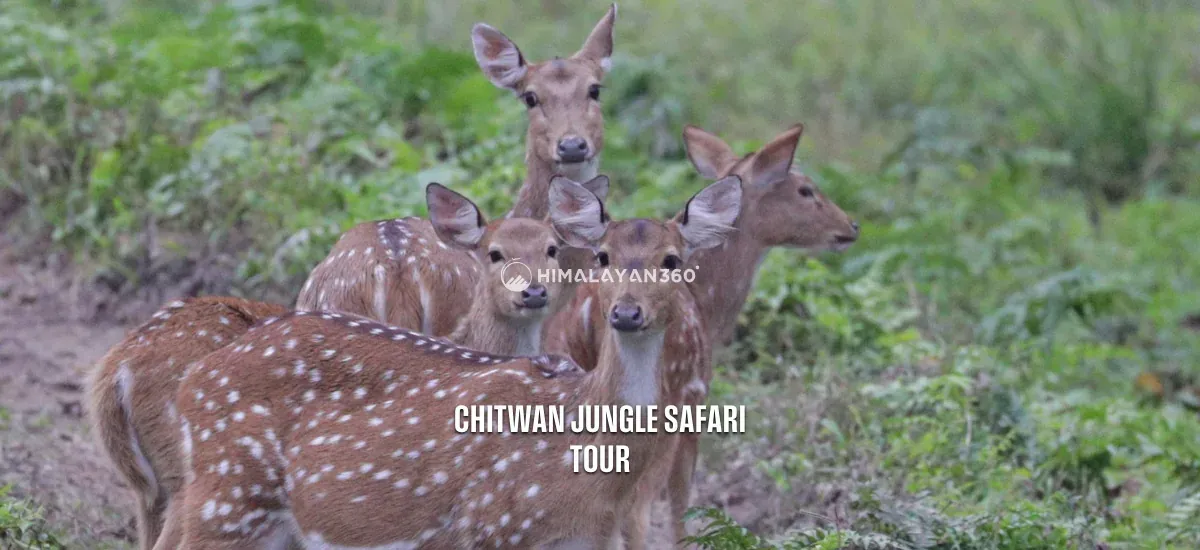
In the afternoon, around 2:00 PM, you head out for a jeep safari inside Chitwan National Park. This is the most adventurous part of the day. Accompanied by a naturalist and driver, you’ll venture into the core jungle areas and grasslands to increase your chances of spotting larger wildlife. Keep an eye out for one-horned rhinos, several species of deer, wild boars, elephants, and, if you’re very lucky, a Royal Bengal tiger.

The safari lasts about 4-5 hrs, ending before sunset. You’ll then be driven back to your lodge to freshen up before dinner.

Day details
FactDetails
Meals:Breakfast,Lunch,Dinner
Accommodation:3-Star Hotel

Day 03: Chitwan To Kathmandu

Day details
FactDetails
Time:09:00-17:00
Trek Distance:N/A
Travel Duration:5Hours
Travel Distance:164KM/101.9Miles
Highest Altitude:N/A

On this day, after breakfast, you’ll start the drive back from Sauraha, Chitwan, to Kathmandu. The route moves north through Hetauda, following the Prithvi Highway. You’ll cross the Rapti River again and pass through small towns and farmlands. The journey takes approximately 5-6 hrs, and you can stop briefly at roadside viewpoints to observe the rivers and surrounding hills.

You’ll arrive in Kathmandu in the afternoon. After checking into your hotel, the rest of the day is free for relaxation or optional sightseeing in the city. This concludes the Chitwan Jungle Safari tour, with memories of rivers, forests, wildlife, and local culture along the route.

Day details
FactDetails
Meals:Breakfast
Accommodation:Hotel

Chitwan Jungle Safari Cost: Included and Excluded

Cost Includes

Cost Excludes

Transfer

  • Confirmable private vehicle for tour as per group size and itinerary only
  • International Airfare

Accommodation

  • 2Nights in 3star hotel as per mentioned named in itinerary
  • Meals as per Itinerary mentioned
  • All drinks and food expect mentioned in itinerary
  • Extra night except mentioned in itinerary

Expense

  • All entrance fees as per itinerary mentioned places
  • All personal expenses

Others

  • All internal taxes
  • 1Bottle/days of water during tour
  • NOTE: all the jungle activities will be Group join basis.
  • All the services out of the list from Including services
  • Single supplementary

Chitwan Jungle Safari Information

Everything to check before you book.

Grade
Easy
Max altitude
1,400m
Best months
Mar,Apr,May,Sep,Oct,Nov,Dec
Distance
383KM/238Miles (Kathmandu to Kathmandu Drive)
Sleeps in
3-Star Hotel

Plan your tour

Cost

From $170 per person

The price is per person and drops as your group grows.

Group sizePrice per person
1 person$308
2 people$195
3 to 20 people$170

Packing list

23 items to tick off

0 of 23 packed

Clothing

Accessories

Health & Hygiene

Optional Items

On the tour

Enjoy Local Foods, Cuisines, And Delicacies

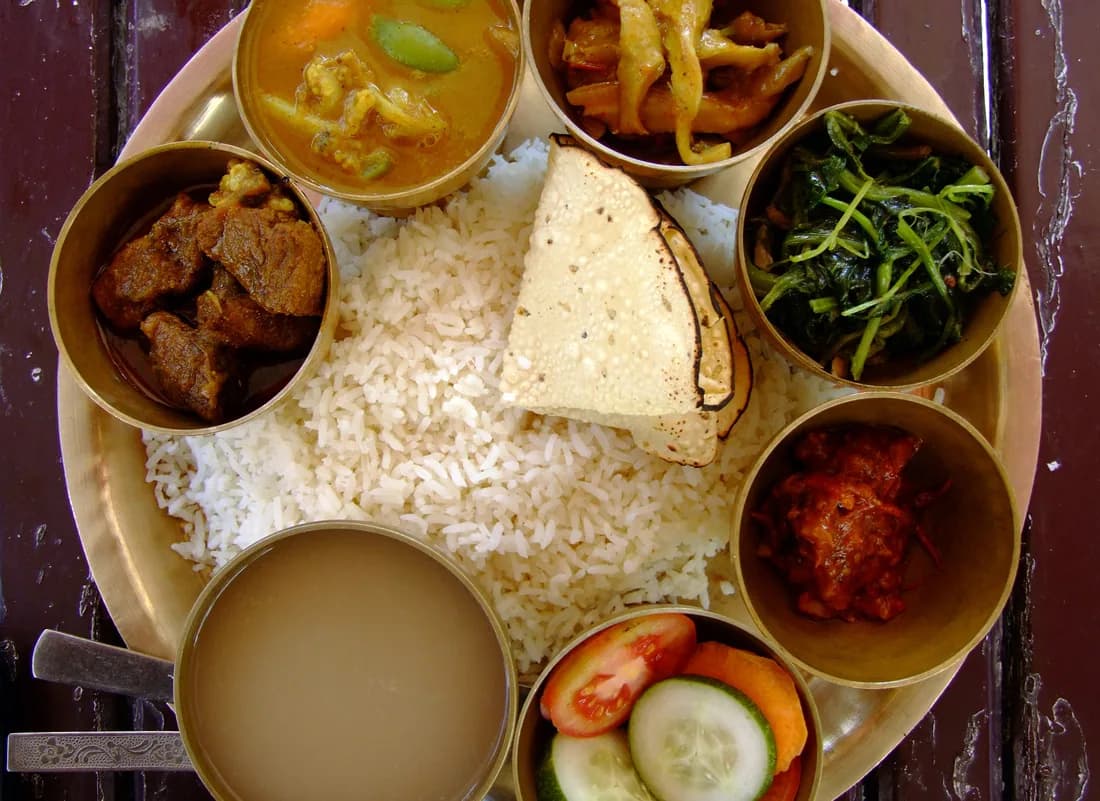
During your stay in Chitwan, local food becomes an important part of the experience. The region is home to the Tharu community, whose cuisine includes local ingredients and simple cooking methods. Tharu dishes rice, lentils, fish, and seasonal vegetables grown in fields. One common dish is Dhikri, a steamed rice flour dumpling served with spicy lentil soup or curry. Ghonghi, a freshwater snail cooked with local spices, is another traditional food cooked in Tharu households.

You can also try Bhakka, a soft rice cake steamed in clay pots, and Bgiya, a rice flour dumpling filled with lentil paste. Both are served during local festivals and cultural programs. The Tharu people also prepare Sidra, a dried fish dish that is rich in protein and cooked with mustard oil and chili. Alongside traditional foods, local restaurants in Sauraha and Bharatpur serve Nepali staples such as Dal Bhat Tarkari. Many lodges offer both local and continental dishes, but trying Tharu food gives a taste of Chitwan’s local culture.

In the evenings, some cultural shows include a traditional Tharu dinner experience. You can eat while watching the dance performance of the Tharu. These meals are served on leaf plates and accompanied by local drinks like Tharu rice beer or Aila. Eating local food in Chitwan is more than a meal-It’s a way to connect with the local community that lives there.

Chitwan National Park As A UNESCO Heritage Site

Chitwan National Park was declared a UNESCO World Heritage site in 1984 for its rich biodiversity and ecosystem. Located in the subtropical lowlands of Nepal, the park covers an area of 932 sq km. This park was inscribed on the World Heritage List under three natural criteria:

  • Criterion (vii)-Exceptional natural beauty: The landscapes of Chitwan consist of dense forests, lush grasslands, and big river systems. The backdrop of the Himalayas, like Annapurna, Manaslu, Ganesh Himal, and scenic views along the Narayani and Rapti rivers, contributes to its exceptional beauty.
  • Criterion (ix)-Biological and ecological evolution: The park represents one of the largest and last remaining natural areas in the Terai region. It is home to a wide variety of plants and animals from the Siwalik Hills and the inner Terai plains.
  • Criterion (x): Massive natural habitat: Chitwan provides habitat for numerous rare and endangered species. It is known for hosting a population of the one-horned rhinoceros and serving as one of the last refuges for the Bengal tiger.

While this is certainly one of the 10 UNESCO Sites in Nepal,  you can tour 7  UNESCO Heritages in Kathmandu alone.

Plants And Animals You Can Encounter During The Jungle Safari

Chitwan National Park is home to diverse plant species, mammals, birds, and reptiles. Here are some lists of species that you can encounter during the Jungle Safari:

MammalsBirdsReptilesPlants and Trees
  • One-horned rhinoceros
  • Royal Bengal tiger
  • Asian elephant
  • Sloth bear
  • Leopard
  • Spotted deer (Chital)
  • Sambar deer
  • Wild boar
  • Monkeys
  • Gaur (Indian bison)
  • Kingfishers
  • Giant hornbill
  • Peafowl
  • Storks and egrets
  • Bengal florican
  • Lesser adjutant
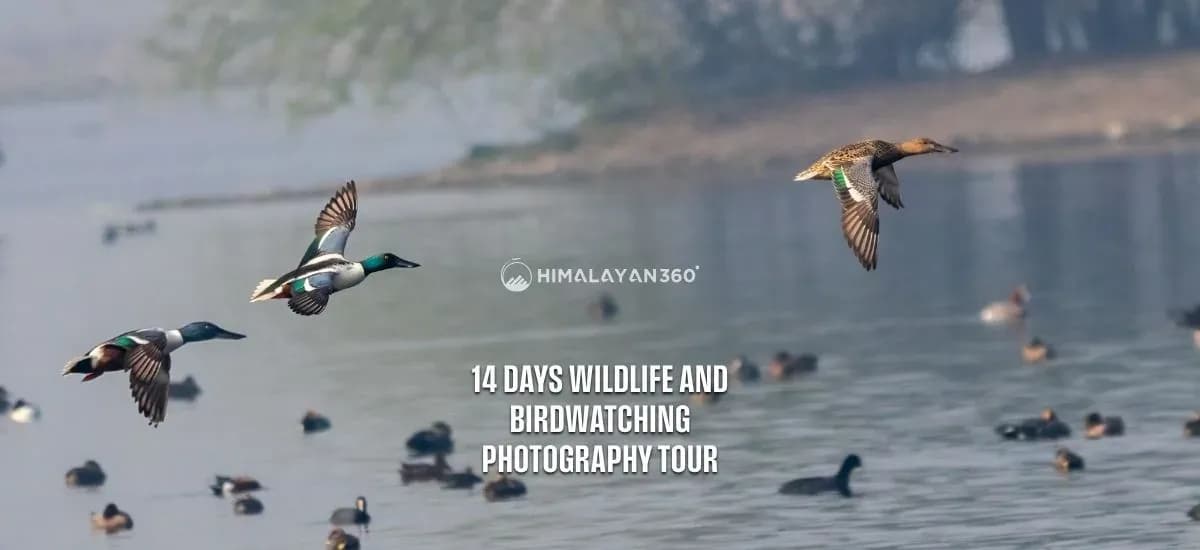
  • Migratory birds like Pied Harrier, Common Teal, Northern Pintail, and Garganey
  • Gharial
  • Mugger crocodile
  • Indian rock python
  • King cobra
  • Monitor lizard
  • Common Krait
  • Sal tree
  • Sisso
  • Khair
  • Elephant grass
  • Kusum
  • Tendu
  • Bamboo
  • Acacia
  • Kapok tree

Note: Most of these endangered animals may not be seen during the safari because they are rare and prefer to stay hidden deep inside the forest.

Weigh it up

How Chitwan Jungle Safari compares with the trips people most often weigh it against.

This trip compared with the alternatives
TripDays / DistanceDifficultyFrom
Chitwan Jungle Safarithis trip3 daysEasy$170
Island Peak Climbing from Chhukung3 daysStrenuous$780
Lobuche East Peak Climbing from Lobuche3 daysStrenuous$780
Lumbini Tour Nepal3 daysEasy$320
Three Stupa Tour Near Kathmandu Valley2 daysEasyOn request

Do’s and Don’ts during Chitwan Jungle Safari

When exploring Chitwan National Park, following certain guidelines confirms your safety and helps to protect wildlife. Observing these do’s and don’ts makes your jungle safari enjoyable and responsible:

Do’s:

  • Follow your guide’s instructions: Your safari guide is an expert on animal behavior and safety.
  • Stay silent and alert: Maintain a quiet, low profile to spot wildlife and avoid startling the animals.
  • Dress appropriately: Wear neutral-colored, lightweight clothing like khaki, beige, or olive green to blend in with the environment.
  • Bring binoculars and a camera: Wildlife can be at a far distance, and a good pair of binoculars is essential for a great view.
  • Stay hydrated: The Terai climate can be hot and humid, so bring plenty of water in a reusable water bottle to stay hydrated throughout the safari.
  • Use insect repellent: Apply insect repellent during jungle walks and canoe trips to ward off mosquitoes and other insects.

Don’ts:

  • Do not get too close to animals: Maintain a safe (50 m) distance from all wildlife.
  • Do not feed or touch the animals: Feeding wildlife can disrupt their natural foraging behaviors, harm their health, and make them dependent on humans.
  • Do not litter: Chitwan National Park is a protected ecosystem. Carry a bag to collect all your trash and dispose of it properly.
  • Do not walk alone between sunset and sunrise: Walking inside the park after dark is strictly prohibited unless you have permission from the warden.
  • Do not purchase illegal products: Do not buy any animal or plant products while on the safari. The wildlife and flora of the park are fully protected by law.

FAQs for Chitwan Jungle Safari

Do I need special permits for the safari?

Yes, a park entry permit is required for Chitwan National Park. The permit is included in organized safari packages. You should carry an ID, and children under 10 years have reduced fees. The permit helps fund conservation efforts, maintain park facilities, and ensure visitors comply with park rules and wildlife protection regulations.

Is Chitwan tour suitable for family trips?

Yes, Chitwan is suitable for family trips. Children and adults can enjoy an elephant safari, canoe trips, jeep safaris, and cultural programs. Lodges and hotels provide family-friendly accommodation. The guide maintains safety for all age groups.

Can I see tigers in Chitwan National Park?

Seeing tigers is rare in Chitwan National Park because they are elusive and solitary. Jeep safaris may increase your chance slightly, but there is no guarantee. Rhinos, deer, monkeys, and birds are commonly observed. Patience, quiet observation, and guidance from experienced park rangers are key to spotting wildlife, including tigers, during the safari.

Do I need to book a safari in advance?

Yes, you can book a safari in advance. Actually, Chitwan National Park is very famous, and lodges can be full during peak season. Moreover, early booking helps you to get good accommodation and a confirmed safari schedule. If you choose a package from Himalayan 360, then you don’t have to worry about the accommodations and other services.

Can I use mobile data in Chitwan National Park?

Yes, you can use mobile data in and around Chitwan National Park, but coverage and speeds will vary. The park has good mobile coverage from the two main providers, Ncell and Nepal Telecom (NTC). Many lodges and resorts in Sauraha also offer Wi-Fi.

Is it possible to work online during the Chitwan Jungle Safari package?

Yes, it is possible to do some work online during the Chitwan safari. But it requires good planning and managing your expectations. The infrastructure is not as reliable as in major cities like Kathmandu or Pokhara, and you’ll not be connected for much of your day.

Do I need to be very fit for the jungle safari?

No, you do not need to be very fit for the Chitwan jungle safari. The activities are accessible to people of most ages and fitness levels. The terrain is flat, and most of the travel is done by vehicle or boat.

Can people with health issues join the Chitwan Safari Tour?

Yes, people with the most common health issues can join the tour, because the standard itinerary is not physically demanding. However, travelers with certain conditions, especially those affecting mobility, balance, or heart health, must take extra precautions and inform their tour operator in advance.

Is travel insurance necessary for the safari?

Yes, travel insurance is recommended for a Chitwan safari. While the park is generally safe, safaris involve activities like jungle walks, canoeing, and jeep rides, which carry some risk of accidents or injuries. Insurance also covers unexpected conditions such as medical emergencies, flight cancellations, or lost belongings.

Do I need a porter for a safari?

No, you don’t need a porter for a Chitwan safari. Unlike trekking in the mountains, safaris in Chitwan involve short walks, jeep rides, or canoe trips, and you can easily carry your personal belongings yourself.

Still have a question? Ask on WhatsApp or email [email protected]

$170 per person

Himalayan 360Everything there is to do in the Himalayas

  • AdventureTrek the Himalayas, fly over them at sunrise, land at base camp, drift across the lake at Pokhara
  • CulturalLearn Kathmandu’s temples, eat your way through the city, sit at a festival in Bhutan
  • SpiritualRoll out a yoga mat on the trail, walk to Muktinath, cross Tibet to Kailash

Every path, Himalayan 360 has you covered.

Trekkers at Everest Base CampTrek
A helicopter landed on the snow above GokyoBy air
Mount Kailash, the goal of the Mansarovar yatraPilgrimage
Dancers in costume at the Paro Tshechu festival in BhutanFestivals
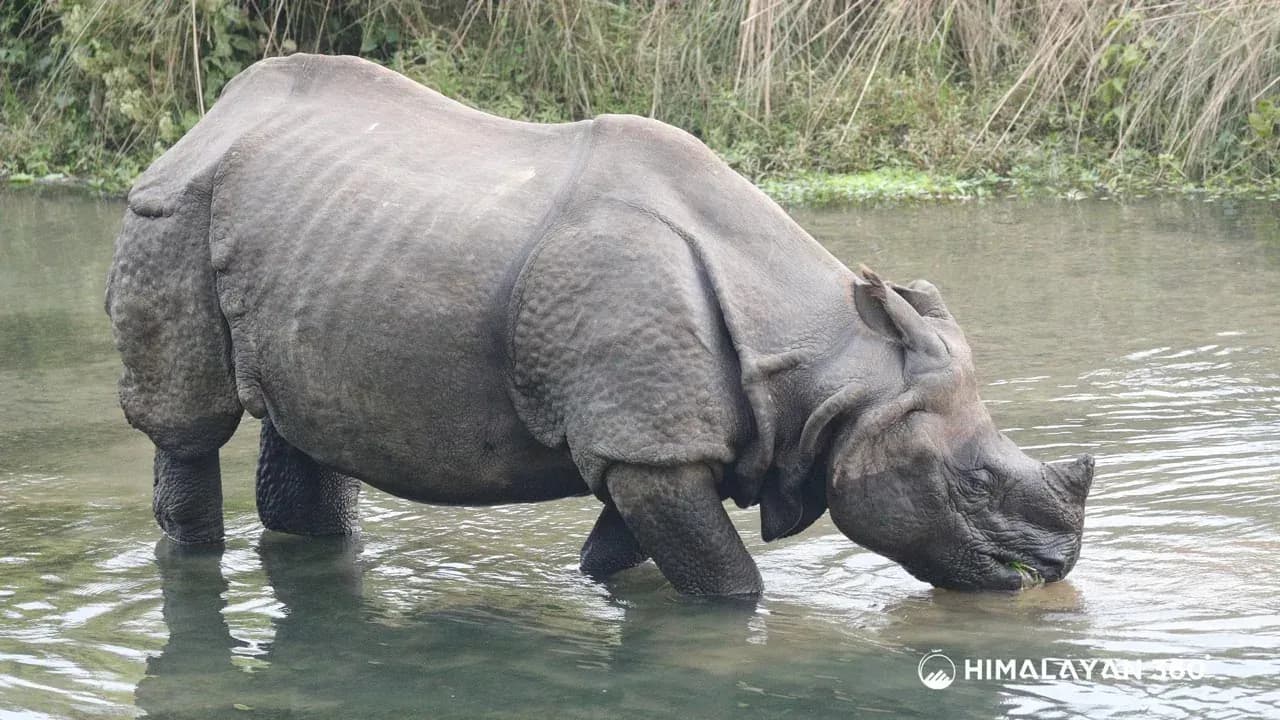
A one-horned rhino in Chitwan National ParkWildlife
Boats moored on Phewa Lake at PokharaLuxury
Arms open to the mountains on the yoga and meditation trekYoga
A Nepali dal bhat thaliFood
Pagoda temples in Bhaktapur Durbar SquareHeritage
Trip Planner