Best Time to Visit Bhutan
Bhutan has four seasons, and two of them, spring and late autumn, suit a first visit best.
| Season | Months | Weather in Paro | Best for |
|---|
| Spring | March to May | Days 18 to 23 °C, nights 4 to 11 °C, rain building through May | Paro Tshechu, rhododendrons, the Druk Path Trek |
| Monsoon | June to September | Days 23 to 25 °C, 81 to 161 mm of rain a month | Green valleys, few visitors |
| Autumn | October and November | Days 17 to 21 °C, nights 5 to 9 °C, almost no rain in November | Mountain views, Thimphu Tshechu, trekking |
| Winter | December to February | Days 13 to 15 °C, nights around 0 °C, dry | Clear skies, quiet dzongs, black-necked cranes, Punakha festivals |
Spring and autumn are the two peak seasons. October has the most festivals, March and April the most flowers. Winter is the quiet season, and it is drier than most people expect: Paro gets less than 25 mm of rain from November to February combined.
Bhutan Weather by Month
Paro is warm and wet from June to September and cold, dry and clear from November to February. These are the averages for Paro, at 2,406 m, where every international flight lands and every one of our tours starts:
| Month | Day | Night | Rain | Rain days | What to expect |
|---|
| January | 13 °C | -1 °C | 7 mm | 1 | Coldest month, frost at night, clear days |
| February | 15 °C | 1 °C | 13 mm | 2 | Punakha Drubchen and Tshechu |
| March | 18 °C | 4 °C | 22 mm | 4 | Paro Tshechu, first rhododendrons |
| April | 21 °C | 8 °C | 34 mm | 6 | Warm, rhododendrons in flower |
| May | 23 °C | 11 °C | 59 mm | 10 | Greener, more cloud by the end of the month |
| June | 25 °C | 15 °C | 81 mm | 13 | Monsoon begins |
| July | 25 °C | 16 °C | 161 mm | 19 | Wettest month |
| August | 25 °C | 16 °C | 113 mm | 17 | Wet, cloud on the peaks |
| September | 23 °C | 14 °C | 88 mm | 13 | Rain easing late in the month |
| October | 21 °C | 9 °C | 49 mm | 4 | Clear skies, Thimphu Tshechu |
| November | 17 °C | 5 °C | 2 mm | Under 1 | Driest month, sharpest mountain views |
| December | 15 °C | 1 °C | 3 mm | Under 1 | Cold nights, sunny days, snow on the passes |
Average daily high and low and average monthly rainfall for Paro, 1996 to 2017, from Bhutan's National Center for Hydrology and Meteorology. Rain days from the World Meteorological Organization, 1996 to 2018.
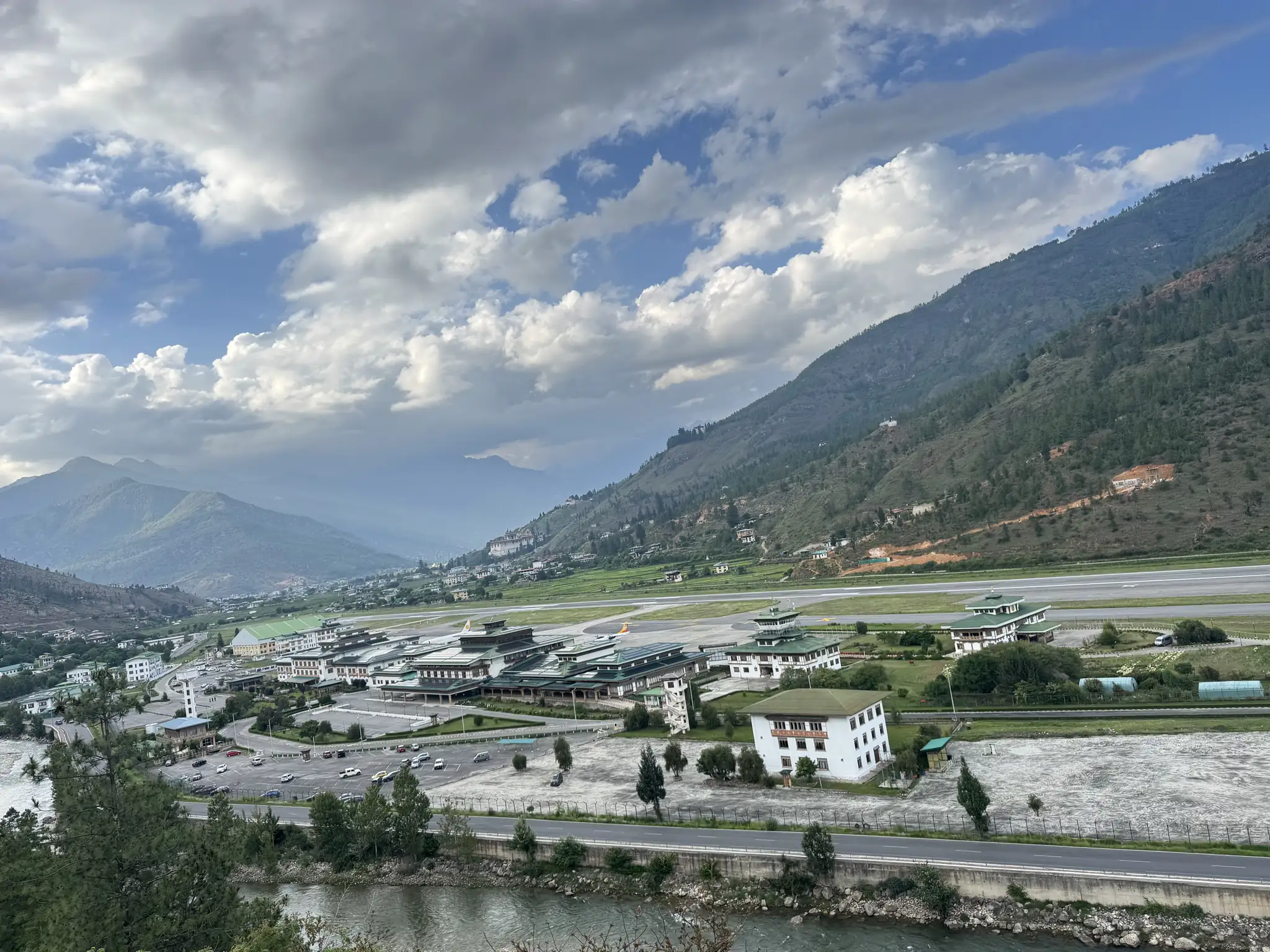
Paro valley and its airport, where every Bhutan tour begins.
Height changes the picture more than the month does. Punakha, a day's drive east over Dochula, sits lower than Paro and is warmer in winter. Bumthang in central Bhutan and the trekking camps above 3,900 m are colder than these figures, and nights there fall well below freezing from November to March.
Bhutan in March and April
March and April are spring in Bhutan: warm days, cool nights and the country's best-known festival. Days in Paro reach 18 to 21 °C and nights 4 to 8 °C, with rain on four to six days a month.
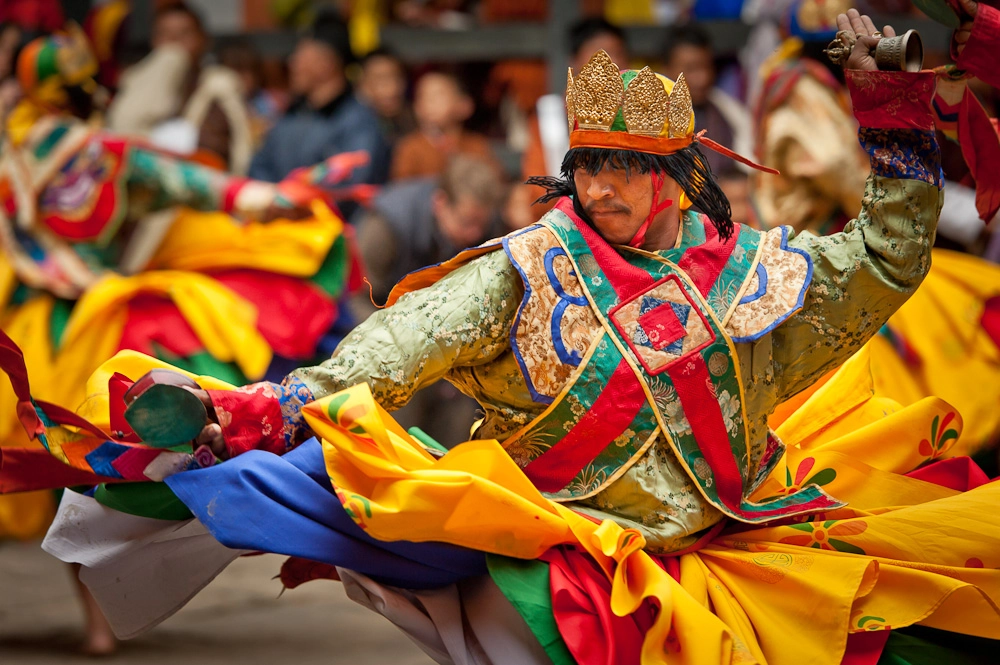
A masked cham dance at the Paro Tshechu.
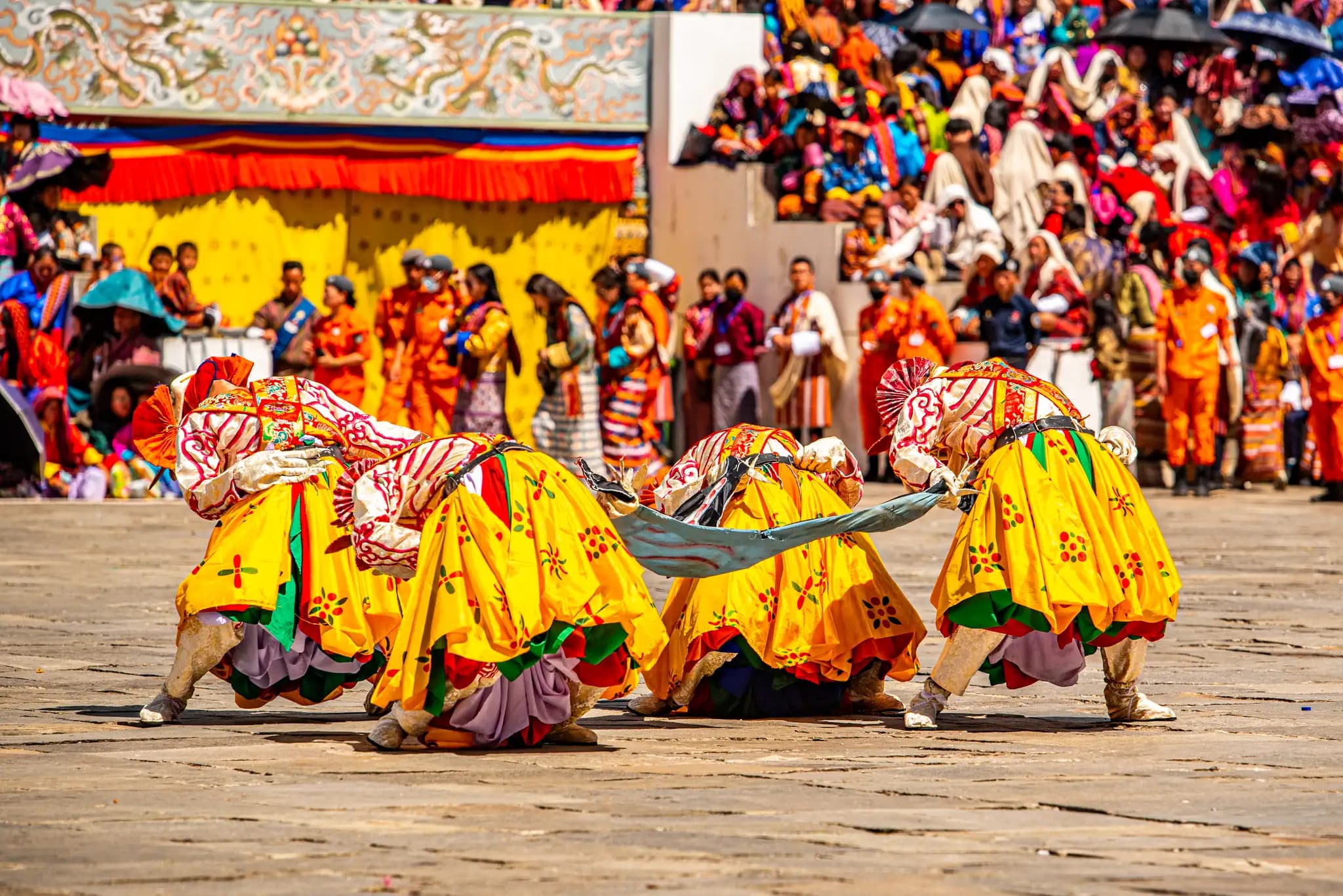
The Paro Tshechu is expected from 18 to 22 March 2027 at Rinpung Dzong: masked cham dances by monks and laymen, then the giant thongdrel unveiled at dawn on the last morning. Our Paro Tshechu Festival Tour is built around it. Festival week fills Paro's hotels and flights first, so book four to six months ahead.
Rhododendrons flower on the hills from March, and the Rhododendron Festival in Thimphu district is expected on 22 and 23 April 2027. April is also a good month for the hike to Tiger's Nest, the monastery on the cliff above the Paro valley.
May stays good for touring but turns greener and cloudier as the monsoon approaches.
Bhutan in November
November is the driest month in Bhutan's western valleys and the best month for mountain views. Paro averages 1.5 mm of rain in November and fewer than one rain day. Days reach 17 °C and nights fall to about 5 °C.
The black-necked cranes arrive in the Phobjikha valley for the winter, and the Black-necked Crane Festival is held at Gangtey Goenpa on 11 November every year. In central Bhutan, Jakar Tshechu in Bumthang is expected from 6 to 9 November 2027.
The Druk Path Trek is still in season, with cold nights at the high camps. On the road from Thimphu to Punakha, Dochula pass gives its clearest views of the snow peaks to the north.
Bhutan in December
December is cold, dry and quiet, with sunny days and nights around freezing. Paro averages 15 °C by day and 1 °C at night, with 3 mm of rain in the month. Fewer visitors come than in October or November.
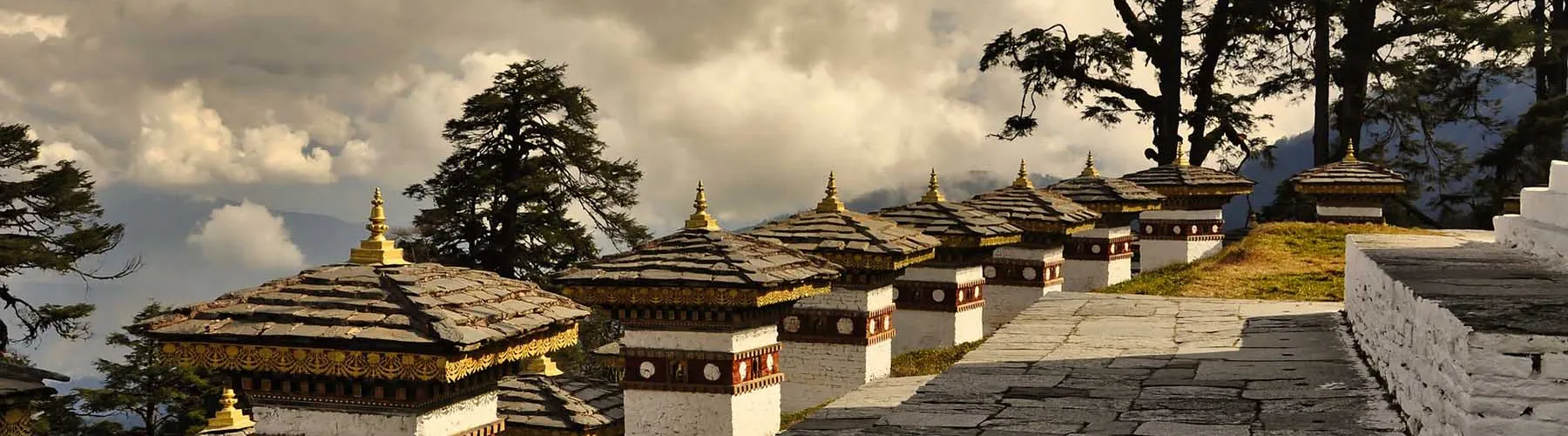
The 108 chortens at Dochula, where the Druk Wangyel Tshechu is held on 13 December.
The Druk Wangyel Tshechu is held at Dochula on 13 December every year. Snow can fall on Dochula and the higher passes from December, which can slow the drive to Punakha for a morning. Pack a warm jacket, a hat and gloves for evenings and early starts. Dzongs and temples are not heated.
December is also a good month to combine Bhutan with Nepal, since both are dry and clear. Our Nepal vs Bhutan guide compares the two.
Bhutan Festivals: 2027 Dates
Most of Bhutan's tshechus fall in spring and autumn, with a second cluster in winter. These are the main festivals on tour routes in 2027:
| Festival | Place | Expected dates, 2027 |
|---|
| Punakha Drubchen | Punakha Dzong | 13 to 15 February |
| Punakha Tshechu | Punakha Dzong | 16 to 18 February |
| Paro Tshechu | Rinpung Dzong, Paro | 18 to 22 March |
| Rhododendron Festival | Thimphu district | 22 to 23 April |
| Thimphu Tshechu | Thimphu | 10 to 12 October |
| Jakar Tshechu | Jakar, Bumthang | 6 to 9 November |
| Black-necked Crane Festival | Gangtey Goenpa, Phobjikha | 11 November |
| Druk Wangyel Tshechu | Dochula | 13 December |
Tshechu dates follow the Bhutanese lunar calendar and can move, so confirm them with us before you book flights. The Black-necked Crane Festival and the Druk Wangyel Tshechu are held on the same date every year.
A tshechu runs for three to five days, and one full day is enough to see several dances. For the thongdrel at the Paro Tshechu, stay close to the dzong the night before, since it is unveiled at dawn on the last day.
Best Time to Trek in Bhutan
The best time to trek in Bhutan is March to May and October to November. The trails are dry and the skies clear, and the high camps are cold but free of snow.
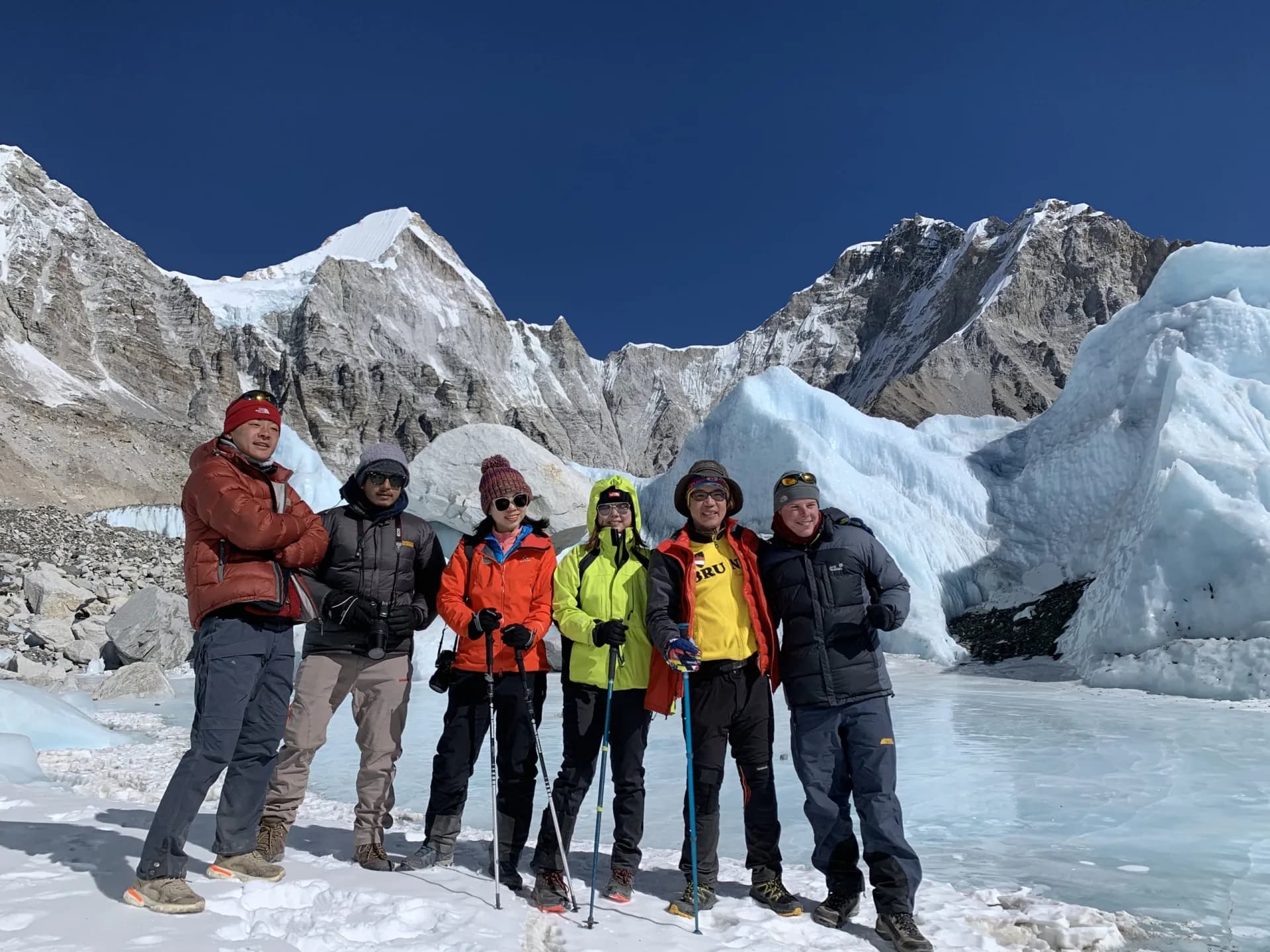
The Druk Path Trek crosses from Paro to Thimphu past high lakes and Phajoding Gompa, with camps above 3,900 m. We run it from March to May and from mid September to December. Spring brings rhododendrons along the trail; October and November bring the clearest views of Jumolhari. The monsoon months, June to early September, are wet and muddy with cloud on the peaks, and in January and February snow and ice can force route changes, with nights at the camps near 4,000 m reported at -10 °C.
The hike to Tiger's Nest is a day walk from the Paro valley and can be done in any month. It is slippery after rain, so the dry months from October to April are the most comfortable.
Cheapest Time to Visit Bhutan
No month is cheaper on Bhutan's government fee. The Sustainable Development Fee is USD 100 per person per night in January, in July and in festival week alike, plus a one-off visa fee of USD 40. Children aged 6 to 11 pay USD 50 a night and children under 6 pay nothing.
| Trip length | Nights | Fee per adult, any month |
|---|
| 4 days | 3 | USD 300 + USD 40 visa |
| 6 days | 5 | USD 500 + USD 40 visa |
| 8 days | 7 | USD 700 + USD 40 visa |
USD 100 is the statutory USD 200 cut in half by a discount that was due to end on 31 August 2027. Kuensel, Bhutan's national newspaper, and Daily Bhutan (31 October 2026) report that the government has extended it to 31 December 2029. The Department of Tourism's own announcements page still shows the 2027 date, so confirm the rate before you book travel from September 2027, including the Thimphu Tshechu in October 2027.
Hotels and flights are the part of the cost that follows demand. The quiet months, January, June, July and August, have the most spare rooms. Festival weeks in Paro and Thimphu, and October as a whole, sell out first.
When to Avoid Bhutan: The Monsoon
July and August are the months to avoid if you want mountain views or a trek. Paro gets 161 mm of rain in July and 113 mm in August, over 17 to 19 rain days a month. Cloud hides the high peaks, leeches come out on lower trails, and landslides can block roads between valleys for hours or days.
June and September are the edges of the monsoon, with about 13 rain days each, fewer than July and August. In June, Bumthang holds Nimalung Tshechu on 12 to 14 June and Kurjey Tshechu on 14 June 2027. October brings the dry weather back, and the autumn festivals with it.
The monsoon also has the greenest valleys and the fewest visitors at Tiger's Nest and the dzongs. For a short cultural tour with a flexible plan, it can work. For views, choose another month.
Bhutan Tours for Each Season
All of our Bhutan tours start and end in Paro and run in spring and from autumn into December:
Tell us the month you can travel and we will match it to a festival, a trek or a quiet week in the valleys.
 Trek
 By air
 Pilgrimage
 Festivals
 Wildlife
 Luxury
 Yoga
 Food
 Heritage
