Choose Nepal if you want the high Himalaya, freedom to travel on your own and a lower budget. Choose Bhutan if you want a quieter, fully guided trip through dzongs and monasteries and can pay its USD 100 a night fee. Most people asking Nepal vs Bhutan end up deciding between those two kinds of trip, not between two lists of sights.
The two are Himalayan kingdoms in name and history, each a landlocked South Asian country between India and China, and they share much of their Buddhist heritage. But they run tourism in opposite ways. Nepal is open, busy and inexpensive. Bhutan follows a "high value, low impact" policy that keeps visitor numbers low by design. This page compares them on cost, visas, trekking, mountain views, culture, crowds and the best time to go, using the fees each government publishes and the prices of the trips we run in both.
Nepal vs Bhutan at a Glance
| Nepal | Bhutan |
|---|
| Government fee | None per night | USD 100 per person per night (Sustainable Development Fee) |
| Tourist visa | USD 30 for 15 days, on arrival | USD 40, applied for online before you fly |
| Guide | Optional in cities; required on most trekking routes | Required at all times |
| Highest mountain | Mount Everest, 8,848.86 m | Gangkhar Puensum, 7,570 m, never climbed |
| Trekking | Teahouse lodges on the main trails | Camping treks |
| International visitors, 2025 | 1,158,459 | About 209,000 |
| Main faith | Hindu, with Buddhist mountain regions | Vajrayana Buddhist |
| Our trips | Tours from USD 333; treks from USD 488 | Tours from USD 1,015 for two, fee included |
Fees are from Bhutan's Department of Tourism and Nepal's Department of Immigration; visitor numbers are the Nepal Tourism Board's 2025 total and the 2025 arrivals reported for Bhutan. Trip prices are per person for two travellers unless stated.
Which Is Cheaper, Nepal or Bhutan?
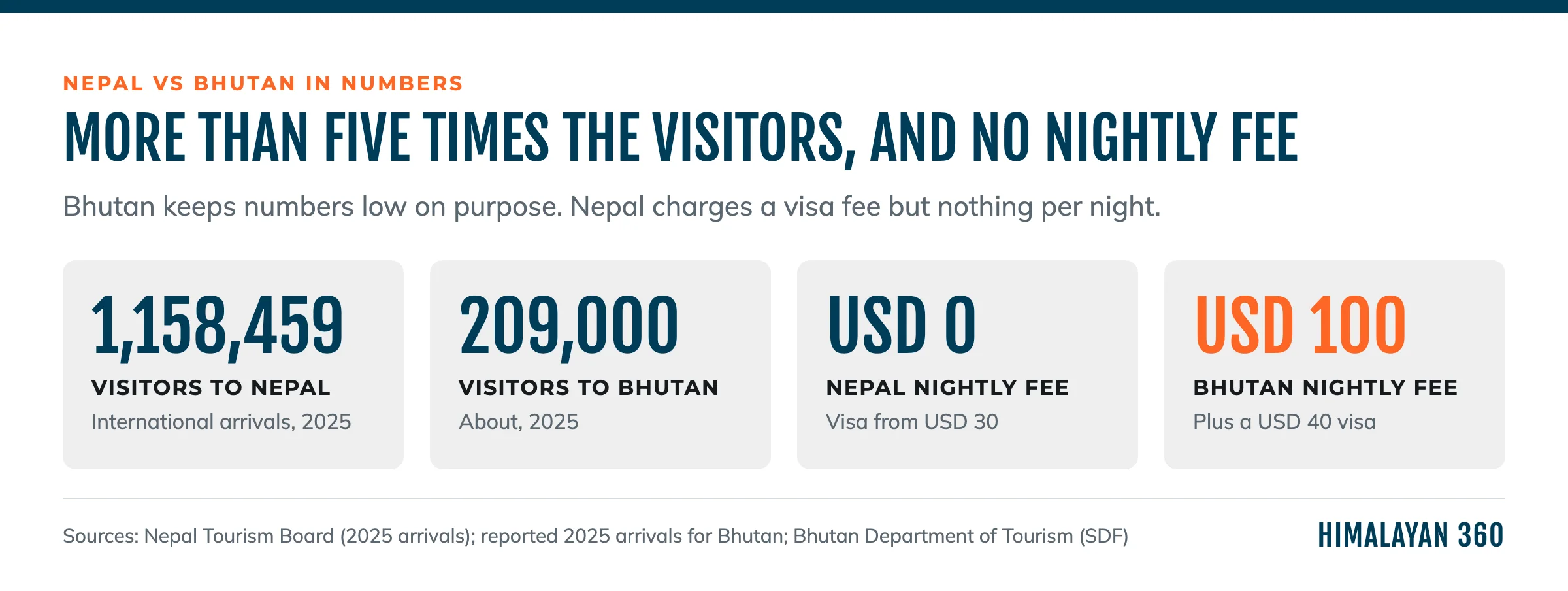
Nepal is much cheaper than Bhutan, because Bhutan charges a daily fee before you have paid for anything else. That fee, the Sustainable Development Fee, is USD 100 per person per night for adults of every nationality except India. It is the statutory USD 200 cut in half by a discount that runs to 31 August 2027, and it buys no hotel, meal, guide or vehicle. You will often see it quoted as USD 100 per day, but it is charged per night. It replaced the old minimum daily package rate in 2022. A five-night trip carries USD 500 of fee per person before the holiday starts. Add the one-off USD 40 visa.
Nepal has no equivalent. Its tourist visa is USD 30 for 15 days, USD 50 for 30 days or USD 125 for 90 days, and that is the only government charge for a city or cultural trip. Trekking adds park and conservation permits of a few thousand rupees each.
Here is how that shows up in the trips we run:
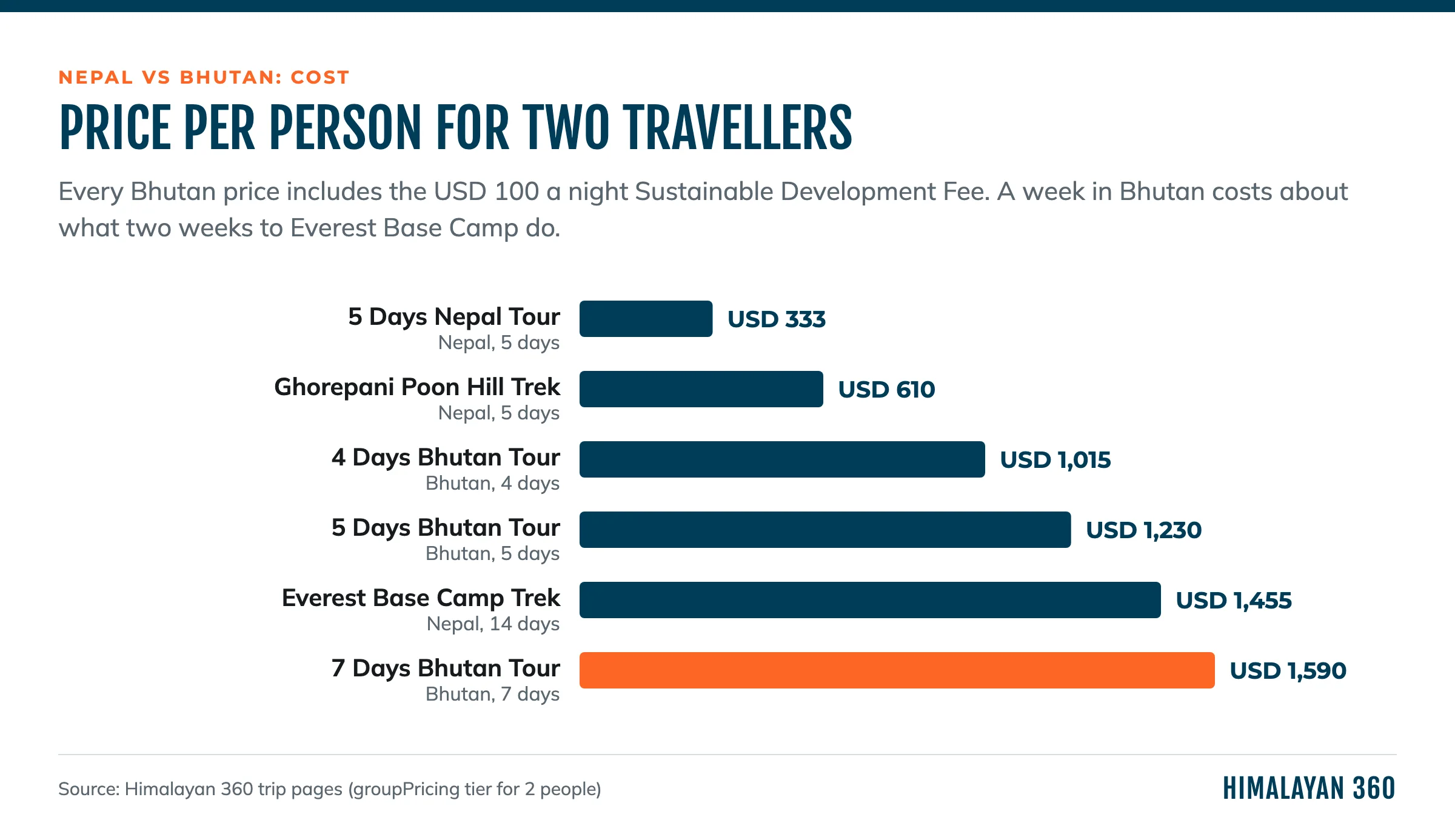
Price per person for two travellers on six of our trips. Every Bhutan price includes the USD 100 a night fee.
A week in Bhutan costs about what two weeks on the trail to Everest do. What the extra money buys is a different trip: every Bhutan price includes a guide, a private vehicle, hotels and three meals a day, with no option to do it more cheaply on your own. Compared to Nepal, there is simply no budget version of Bhutan. Nepal lets you spend as little or as much as you like on a trip to Nepal, from a guesthouse in Kathmandu to a lodge trek with a porter and Nepali guide.
Visa and Entry Rules for Nepal and Bhutan
Nepal gives most nationalities a visa on arrival; for Bhutan you apply online before you travel and pay in advance.
For Nepal, citizens of every country except twelve can buy a tourist visa at Tribhuvan International Airport in Kathmandu or at the main land borders, paying in US dollars. Our page on Nepal visa on arrival covers the form and the airport process. Indian citizens need no visa at all.
For Bhutan, the USD 40 visa and the Sustainable Development Fee for every night are paid together when the application goes in, which your guide or operator usually handles. Indian citizens enter on a permit rather than a visa and pay a reduced fee of Nu 1,200 per person per night. Bhutan can also be entered overland from India at Phuentsholing.
Independent Travel in Nepal vs Guided Travel in Bhutan
Nepal is free to travel on your own; Bhutan is not. In Nepal you can land in Kathmandu, walk the old squares of the Kathmandu Valley, take a bus to Pokhara or Chitwan and decide each day as you go. Since 2023 a licensed guide has been required on most trekking routes, the Everest region being the best-known exception, but cities and roads are open to anyone.
Bhutan requires a licensed Bhutanese guide to accompany every international visitor. Since the country reopened in September 2022 you no longer have to book through a tour operator, but in practice almost everyone travels with a guide and driver on a fixed itinerary. For many visitors that is the appeal: someone else handles the permits, the dress code at each dzong and the drive between valleys, and a tour guide explains what you are looking at.
Trekking in Nepal vs Bhutan
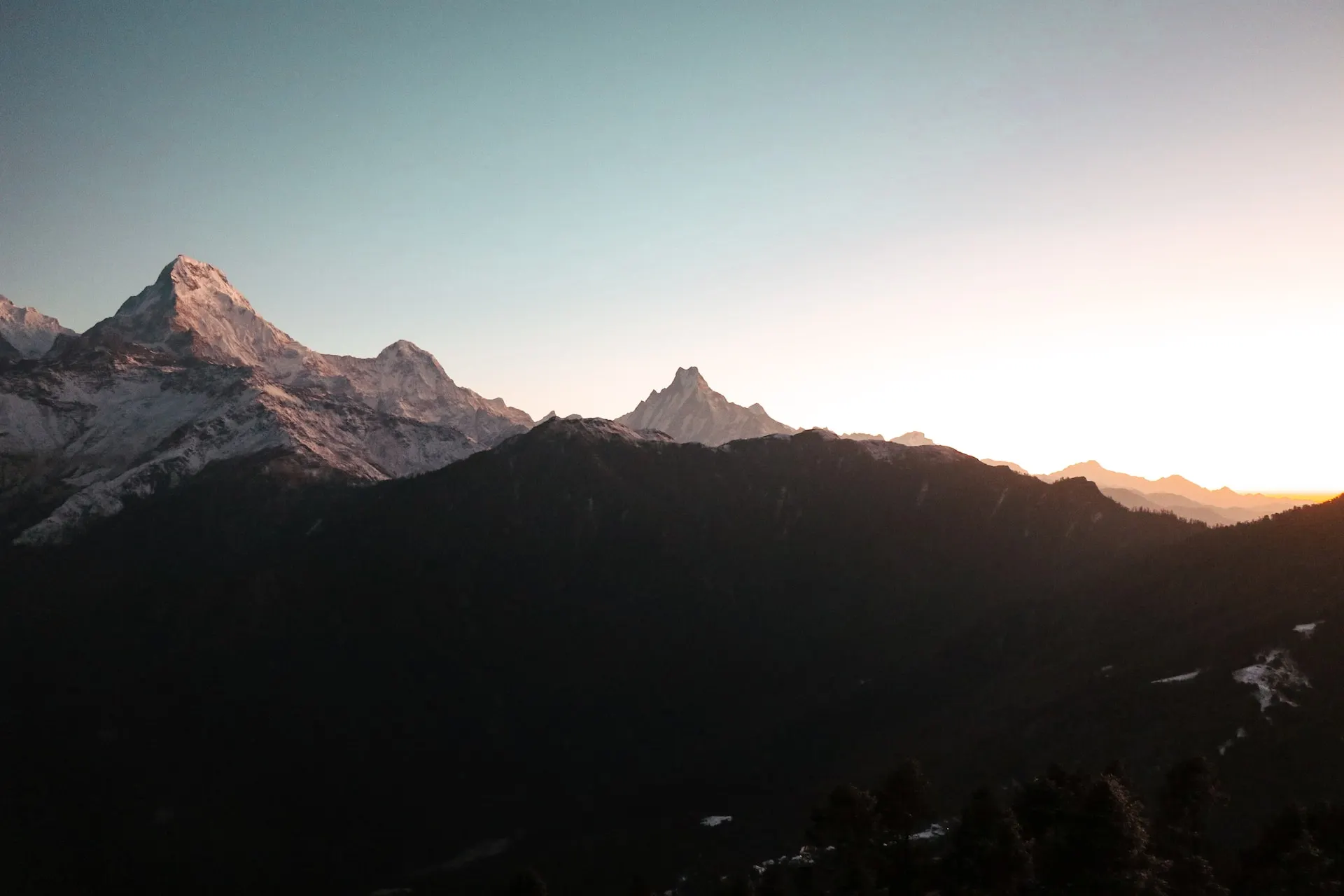
Sunrise on Annapurna South and Machhapuchhre from Poon Hill, the high point of a five-day trek from Pokhara.
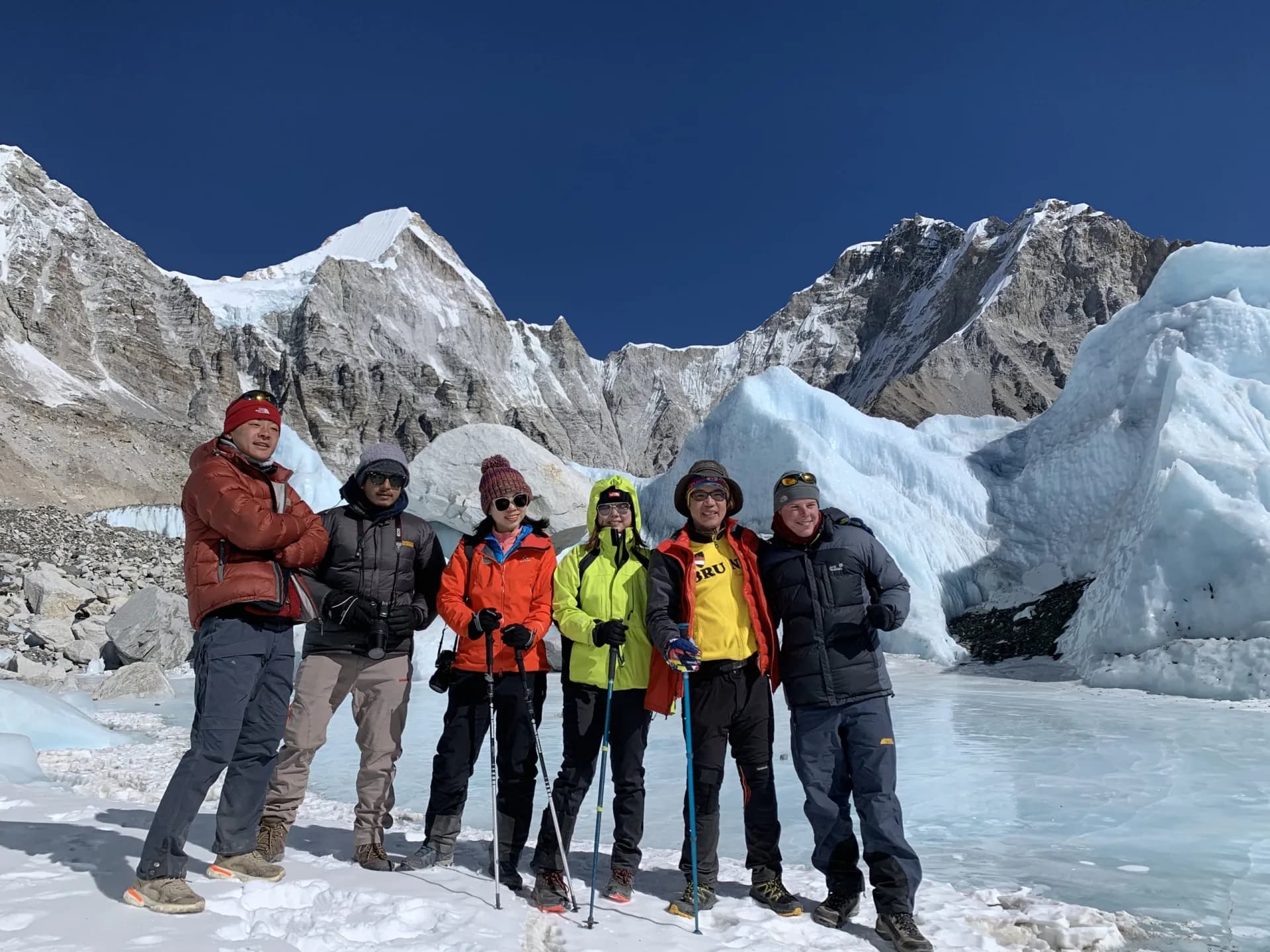
For trekking, Nepal is the stronger choice: more routes, higher passes and lodges to sleep in. Its main trails, to Everest Base Camp, around Annapurna and through the Khumbu, have teahouses every few hours, so you walk with a day pack and sleep indoors. Shorter treks like Poon Hill take five days and look straight at Dhaulagiri and Annapurna; the longer circuits run two to three weeks over high-altitude passes.
Bhutan has fewer treks and almost no lodges outside towns, so its treks are camping trips with cooks and pack animals. Our Druk Path Trek is five days on foot between Paro and Thimphu, over Jangchu La at 4,180 m, with views of Jumolhari on a clear morning. The trails are quiet, but the choice is narrow and the nightly fee applies on every day of the trek.
Mountain Views: Mount Everest vs the Unclimbed Peaks of Bhutan
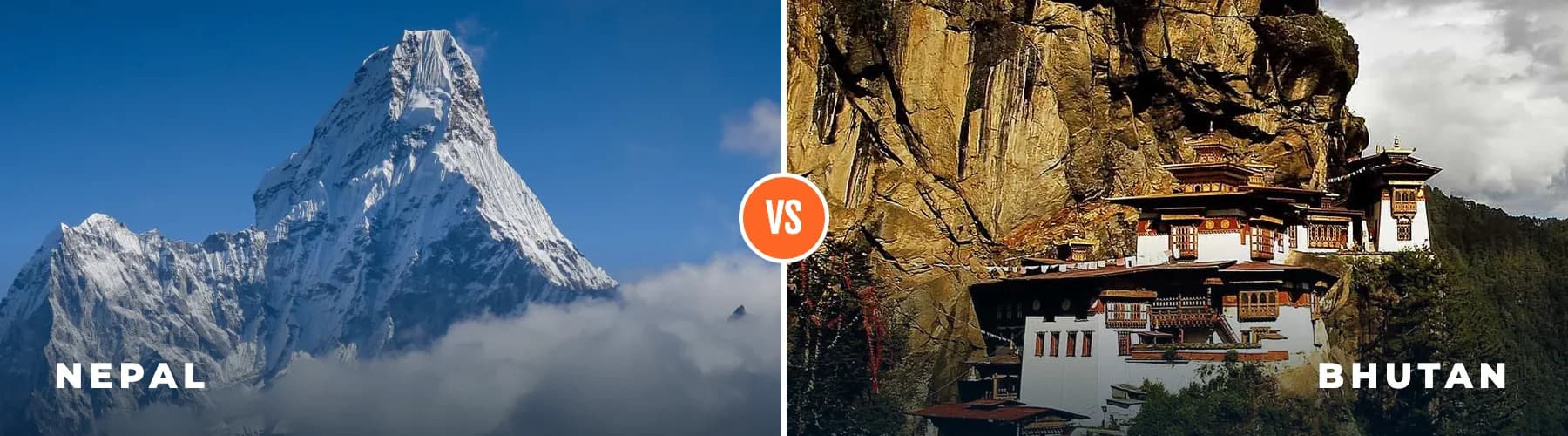
Nepal has the highest mountains in the world; Bhutan has the highest that nobody has climbed. Eight of the fourteen peaks over 8,000 m stand in Nepal, Mount Everest among them, and the mountain views on a Nepal trek are the closest you can get to them on foot.
The highest peak in Bhutan, Gangkhar Puensum at 7,570 m, is the highest unclimbed mountain on Earth. Bhutan banned climbing peaks over 6,000 m in 1994 out of respect for local belief, and has banned mountaineering altogether since 2003. From Dochula Pass on the road to Punakha you see a line of these snow peaks above pristine forested ridges; in Bhutan the Himalayas are the backdrop, not the destination.
Culture and Way of Life in Nepal and Bhutan
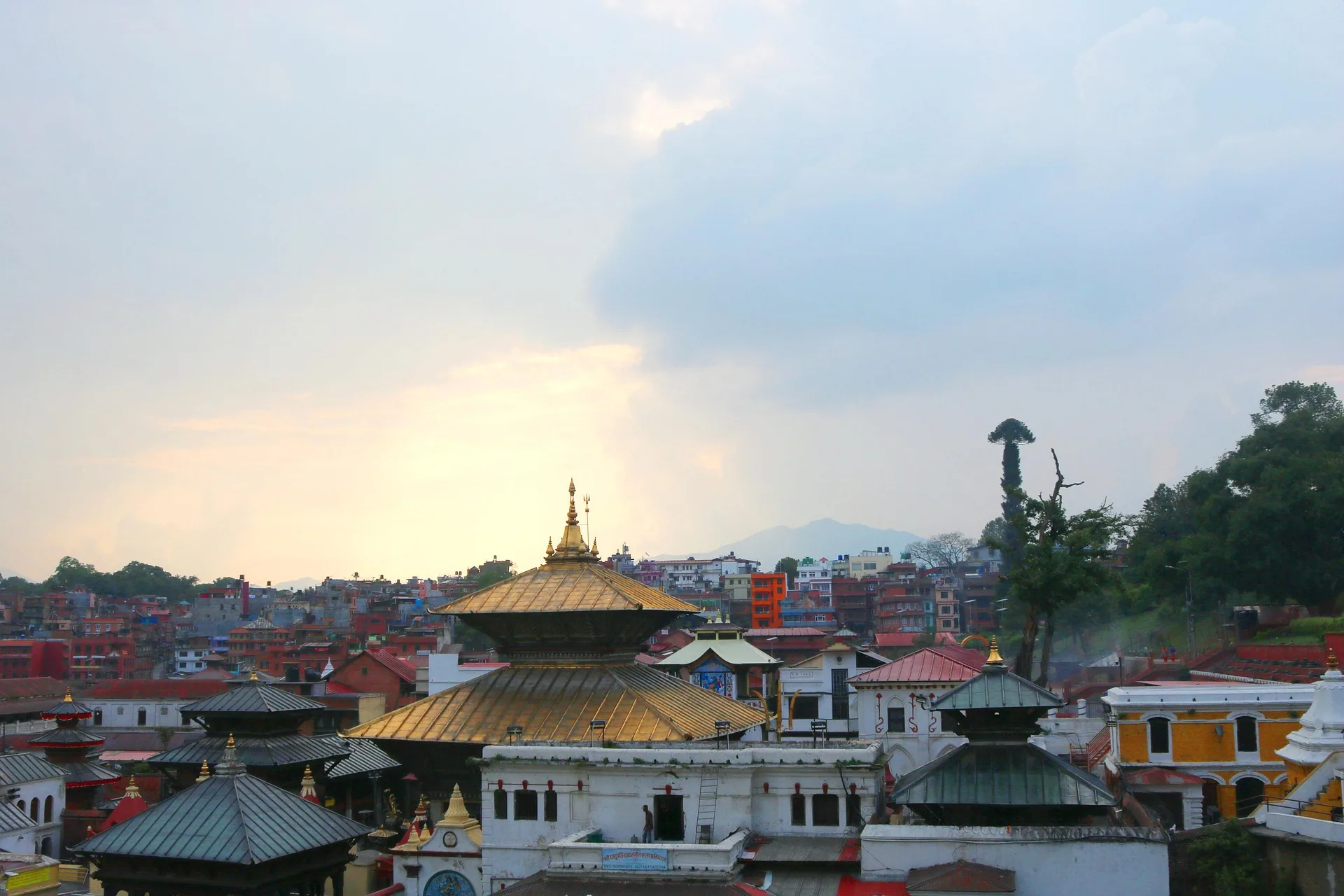
Pashupatinath in Kathmandu, Nepal's holiest Hindu temple, where the evening aarati is held on the riverbank.
Nepal is a mix of Hindu and Buddhist traditions and many peoples; Bhutan is a single Vajrayana Buddhist culture kept deliberately intact. In Nepal you can watch the evening Pashupatinath aarati, walk around the stupa at Boudhanath and visit Lumbini, the birthplace of the Buddha, in one trip, with Sherpa, Gurung and Newar villages along the way and the jungle of Chitwan in the south. Nepalese culture changes with every valley.
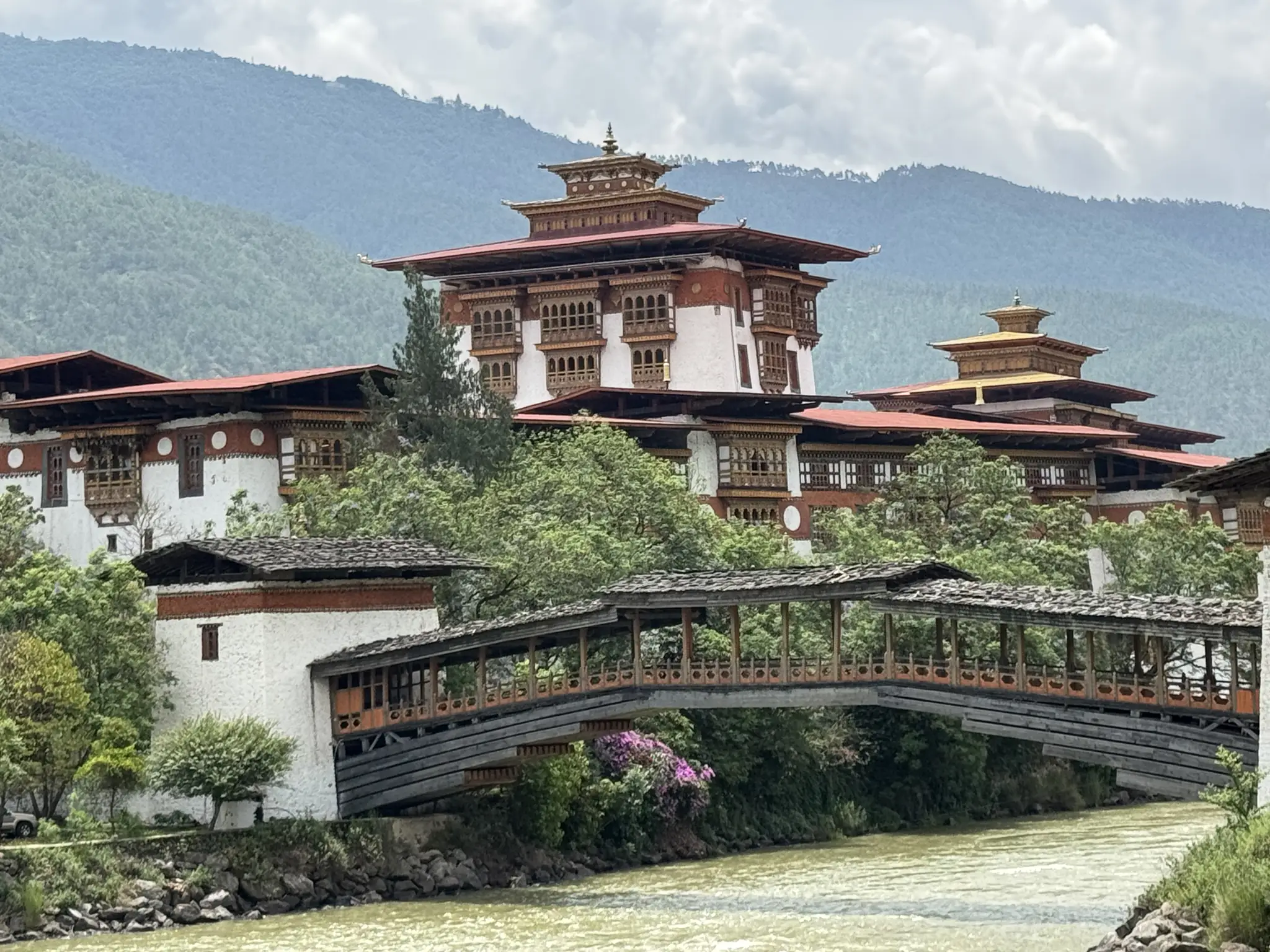
Punakha Dzong, a working monastery and government seat, on the 6 and 7 day Bhutan tours.
In Bhutan the way of life is more uniform and more visible. People wear the national dress at work and in every dzong, buildings follow a traditional style, and the government measures progress by Gross National Happiness (GNH) rather than income alone. Bhutan is renowned for exactly this, more than for any single sight. Cultural preservation is national policy, and it is what you notice first: dzongs that are still working monasteries and offices, and festivals like the Paro Tshechu, expected from 18 to 22 March 2027, held for local people rather than for visitors.
Crowds: How Many Tourists Visit Nepal and Bhutan
Nepal receives roughly five to six times as many visitors as Bhutan. The Nepal Tourism Board counted 1,158,459 international visitors in 2025. Bhutan reported about 209,000 arrivals for the same year.
In practice that means busy trails to Everest Base Camp and Annapurna Base Camp in October, and lively streets in Thamel and Lakeside Pokhara. Bhutan draws far fewer tourists compared to Nepal across the whole Himalayan region. You will share Tiger's Nest, its best-known attraction, with other groups in peak season, but the rest of the country feels close to empty, which is exactly what the nightly fee is designed to do. If crowds matter to you in Nepal, the quieter treks such as Manaslu, Upper Mustang or Makalu give you emptier trails without the Bhutan price.
Best Time to Visit Nepal and Bhutan
The best months overlap: March to May and October to November suit both countries. These are the peak seasons for clear skies and mountain views. Autumn brings the sharpest air after the monsoon; spring brings rhododendrons in bloom.
June to September is monsoon in both, with cloud over the mountains and leeches on lower trails, though it is a good time for rain-shadow areas such as Upper Mustang in Nepal, on the edge of the Tibetan Plateau. December to February is cold but clear; low-altitude touring in either country works well, while high passes in Nepal can close with snow. The Bhutan tour season runs from March to May and September to December, timed around its festivals.
Getting from Kathmandu to Paro
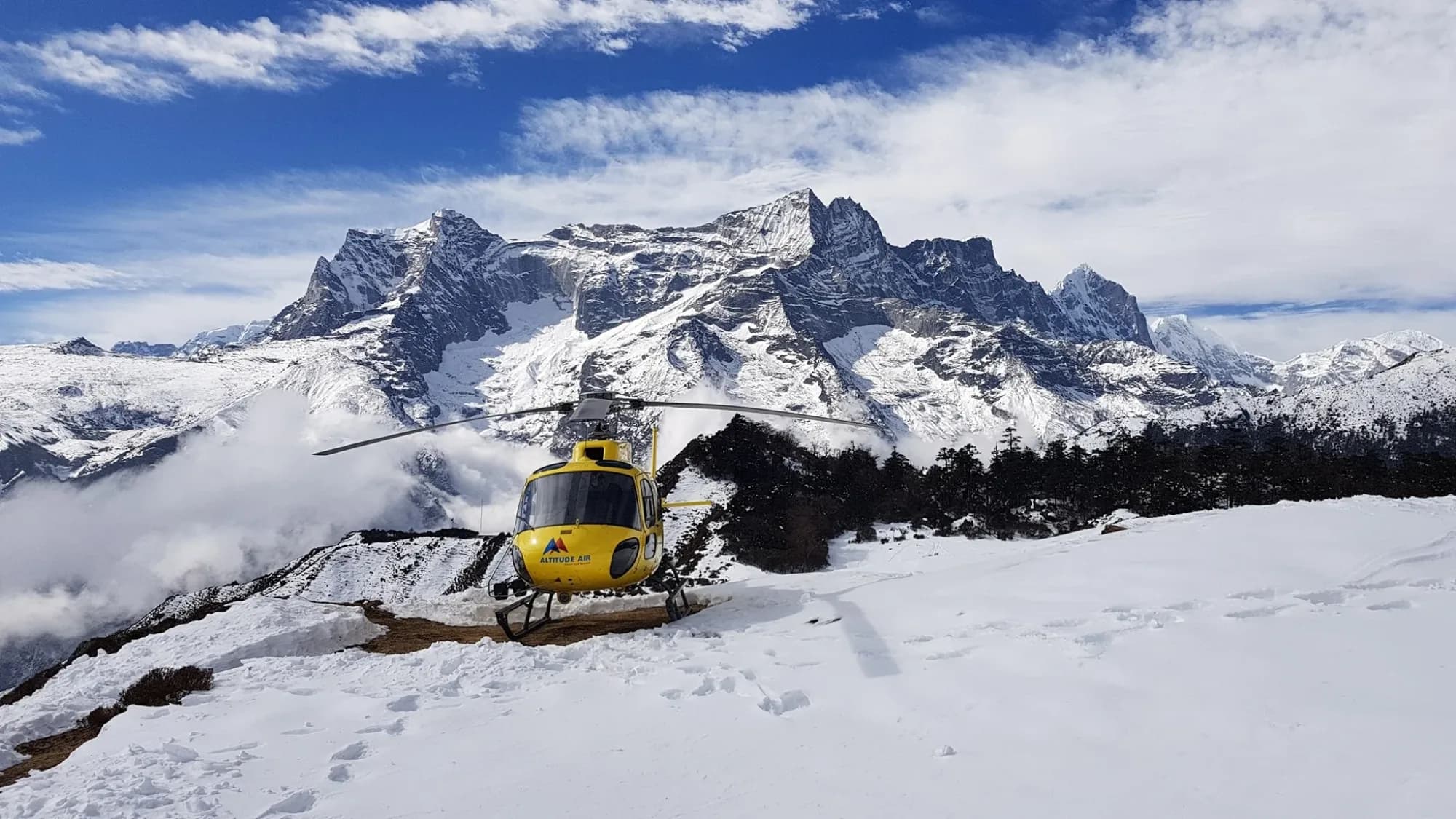
Kathmandu and Paro are under an hour apart by air. Drukair and Bhutan Airlines fly the route, and on a clear day the flight passes in sight of Everest and Kanchenjunga. Paro airport is tucked into a narrow valley, and only specially trained pilots fly into it.
On accessibility, Nepal wins: it is the easier Himalayan country to reach from the rest of the world, with many more international flights into Kathmandu. That is why many travellers fly into Kathmandu, spend their Nepal days, then add Bhutan as a short flight on the end.
Nepal or Bhutan: Which Should You Choose?
Choose Nepal if you want to trek in the high Himalaya, travel independently, stay longer for less money, or see Mount Everest. It suits first-time trekkers on a teahouse route and experienced walkers alike.
Choose Bhutan if you want a calm, organised trip focused on monasteries, dzongs and village life, prefer someone else to handle every detail, and the nightly fee fits your budget. Four to seven days covers Paro, Thimphu and Punakha well.
Choose both if you have ten days or more. The combination gives you the big mountains of Nepal and the quiet valleys of Bhutan, and the short flight between them makes it simple.
Visiting Nepal and Bhutan on One Trip
The usual pattern is a trek or tour in Nepal first, then a Bhutan tour starting in Paro. All six of our Bhutan tours begin and end in Paro, so they follow a Nepal itinerary without any wasted days: a Nepal tour package or a short trek, then the 4 or 5 day Bhutan tour, fits in under two weeks. For three countries in one trip by air, including Nepal, Bhutan and Tibet, see our Highlights of Tibet, Nepal and Bhutan Tour.
Tell us your dates and what you want most from each country, and we will put the two halves together around the Kathmandu to Paro flights.
 Trek
 By air
 Pilgrimage
 Festivals
 Wildlife
 Luxury
 Yoga
 Food
 Heritage
