Langtang Village Before and After Earthquake tells a story of change, loss, and hope in the Himalayas. Before the 2015 quake, Langtang Village in northern Nepal was a Tamang settlement at about 3,430M, located within Langtang National Park and full of traditional lodges, teahouses, and guesthouses. After the quake and landslide, nearly all lodges and homes were destroyed, and over 300 people in the valley lost their lives.
Today, the old village lies in ruins, but a new Langtang Village has been built a little higher up the valley, near Ghoda Tabela. The new teahouses show the local culture and the strength of the people. The Langtang Trek from Syabrubesi now passes this newly rebuilt village, which is an important stop on the way to Langtang Lirung Base Camp.
This is the story of one small village in the Langtang valley in Nepal and of what happened in Langtang on a single morning in April. Langtang before the earthquake was a working Tamang settlement of stone houses and cheese sheds. Langtang Valley after the earthquake was a debris field. What sits between the two is the decade the locals of Langtang valley spent rebuilding, and it is the reason a visit to Langtang reads differently from a visit to any other trekking village in Nepal.
Langtang Village Before and After the 2015 Nepal Earthquake at a Glance
| | Before 25 April 2015 | Today |
| Site | Original settlement at about 3,430M, directly under Langtang Lirung | Rebuilt on safer ground a short distance from the buried site, higher up the valley |
| People | Around 435 residents in nearly 100 households | Returned families running rebuilt lodges, farms and yak shelters |
| Buildings | Traditional stone houses, teahouses and the German-supported cheese factory | Earthquake-resistant lodges with clean rooms, cooked meals and solar power |
| Lives lost | | At least 243 in the village, with valley-wide estimates of 350 to 400 |
| Structures left standing | | One house, shielded by a rocky overhang |
| Visitors to the region | More than 100,000 in 2014 | 21,900 in 2019, nearly 25,000 in 2022 to 2023, over 42,000 into Rasuwa by mid 2025 |
| Trail | Third most popular trekking area in Nepal | Rebuilt with new stone steps and suspension bridges, third most popular again |
What Langtang Village Was Like Before the Earthquake?
Langtang Village stood on a shelf of flat ground in the main part of Langtang valley, the largest village in the Langtang valley and the natural halfway point of the walk up to Kyanjin Gompa. It was a beautiful village by any measure, with barley terraces, mani walls and the face of Langtang Lirung filling the sky to the north. Before the 2015 earthquake, around 435 people lived there in nearly 100 households. It was a main stop on the Langtang Valley Trek. Most families depended on farming and herding. They grew potatoes, barley, wheat, and buckwheat on small terraced fields. Yak and goat herding was a major source of income. _Yak milk was used to produce butter and chees_e. The village was home to the German-supported cheese factory, which supplied yak cheese to markets across central Nepal.
Tourism was another strong pillar of the local economy. By 2014, the Langtang region had become Nepal’s third most popular trekking area after Everest and Annapurna. More than 100,000 visitors came to the region that year. Before 2015 the Langtang valley was one of the three busiest trekking regions in the country. Life in Langtang ran on three things, farming, yaks and trekkers, and none of the three has changed since. Life was simple yet stable, and the village was an active Himalayan community before the disaster happened.
The History of Langtang Village and the People of Langtang
The history of Langtang Village is connected to legend. According to local oral history, the name “Langtang” came from two Tibetan words. “Lang” means ox, and “Tang” means to follow. A well-known story says a Buddhist monk or herder was searching for a lost ox. He followed the animal into the mountains and discovered a fertile valley known as “Langtang”.
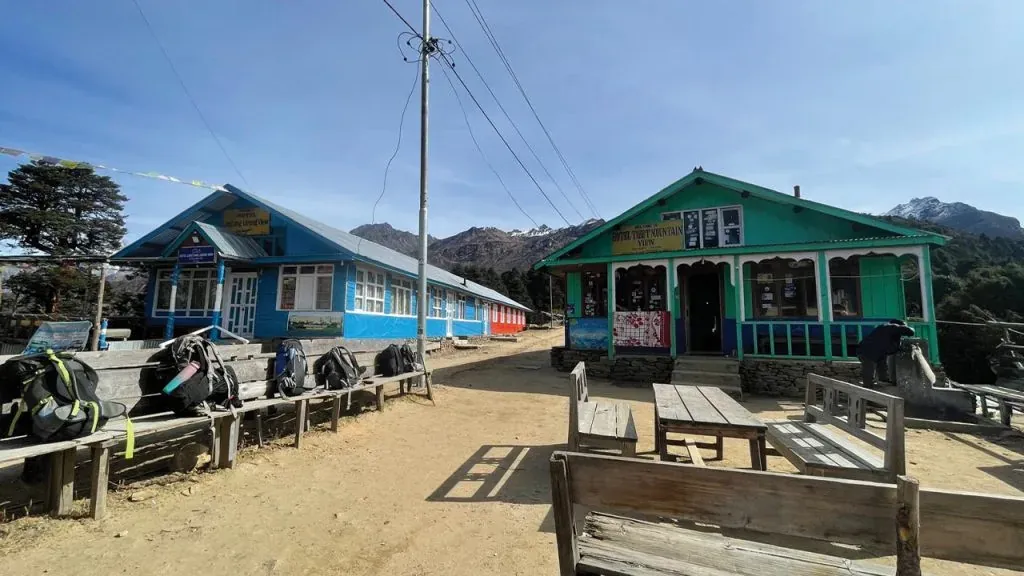
The people of Langtang are mainly Tibetan. Their ancestors migrated around 300 to 400 years ago. Families came south in search of better grazing land for yaks and safer living conditions during periods of unrest in Tibet. Over time, they built permanent homes in the valley. The high grasslands and trade routes helped them live in this remote mountain area. The people call themselves Langtangpa, but in government records of Nepal, they are listed as Tamang.
The Day the 7.8-Magnitude Earthquake Shook Nepal and Langtang
On April 25, 2015, at 11:56 AM, the 7.8 magnitude Gorkha earthquake struck central Nepal and changed Langtang Valley forever. The shaking lasted about 50 seconds, but in Langtang Village, the impact was devastating. As houses built from stone began to collapse, people ran outside for safety. Within moments, a massive section of ice and rock broke from Mount Langtang Lirung and buried the Langtang with nearly 40 million tons of rock, ice, and mud.
The 7.8-magnitude earthquake shook Nepal from an epicentre in Gorkha, west of Kathmandu, but the damage caused by the earthquake here was not the shaking. The 2015 Nepal earthquake triggered a massive avalanche off the ice cliffs of Langtang Lirung, and the air blast running ahead of it flattened whatever the ice did not bury. The landslide at Langtang Village took out the entire village in under a minute. It was a devastating earthquake across central Nepal and a powerful earthquake here, but what destroyed this place was what the earthquake of 2015 pushed off the mountain rather than the shaking itself.
The destruction in Langtang was almost total. At least 243 people died in the village, including 175 local residents, 41 foreign trekkers, and 27 Nepali trekking staff. Some reports estimate that between 350 and 400 people in the valley were killed or went missing. Only one house in the main settlement was standing because it was protected by a rocky overhang that ushered the avalanche to pass above it. The dead included guides and porters working for trekking parties who happened to be in the village that morning. Survivors gathered in open areas and later moved to safer ground uphill.
The recovery after the earthquake began with the survivors themselves. Families who had lost the whole village spent the first winters in Kathmandu and then came back, and the support after the earthquake that counted was whatever let them rebuild their village on ground the mountain could not reach. New stone steps and suspension bridges were what it took to reconnect the village with the rest of Rasuwa.
Is It Safe to Trek in Langtang Today?
Yes. Trekking in Langtang is safe in 2026, and the Langtang region is safe in the same ordinary sense that any well-walked Himalayan trail is. The trail was heavily damaged in 2015 but has since been rebuilt with support from the government and local communities. The main route from Syabrubesi to Kyanjin Gompa is now clearly marked and maintained. New stone steps and suspension bridges have replaced damaged sections. Teahouses have been rebuilt in safer areas away from the old landslide zone. Many lodges are now located higher up near Mundu and the new Langtang settlement.
Langtang Village Today: Growing and Welcoming Trekkers Again
They built a new village a short way up the valley from the buried site. It began as a tiny village of a handful of lodges and has grown every season since, and the families who rebuilt the village run almost every bed in it. After nearly a decade of rebuilding, the Langtang Valley is stronger than ever. New homes and teahouses now stand above the old site in safer ground, and they offer clean rooms, fresh meals, and solar power. Tourism numbers show a clear recovery. In late 2015 and 2016, arrivals dropped to around 4,300 to 5,000 visitors. By 2019, the region welcomed more than 21,900 trekkers.
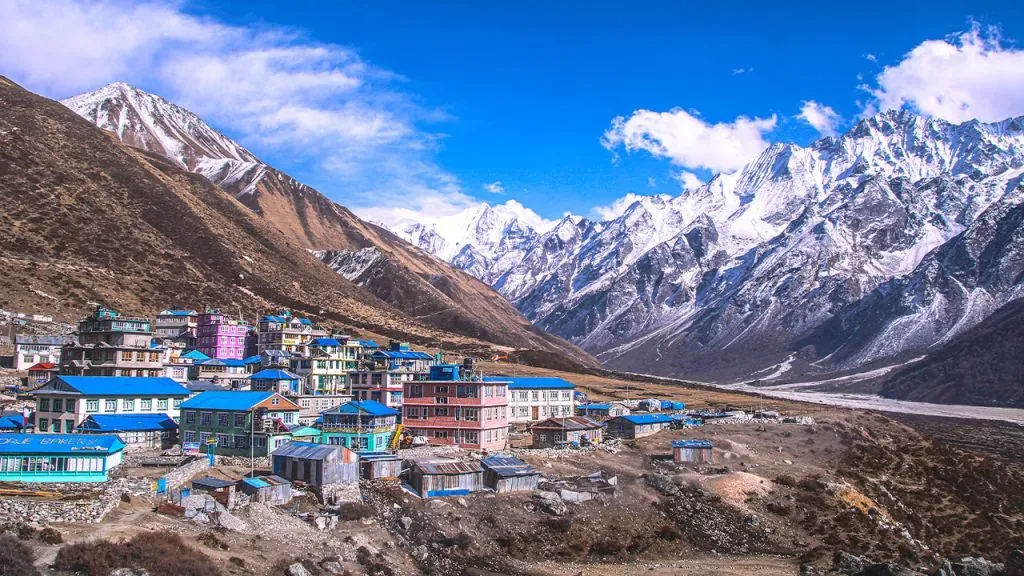
Langtang village
The pandemic slowed travel from 2020 to 2022 across Nepal. The 2022 to 2023 season brought nearly 25,000 trekkers back to the valley. By mid 2025, over 42,000 visitors had entered Rasuwa District, which includes Langtang. Nepal recorded more than 1.15 million international tourists in 2025. Langtang now ranks as the third most popular trekking region in the country. The village that was once destroyed by a disaster is now a place that shows the Langtang people’s strength.
Why Consider Trekking to Langtang Now?
- You are surrounded by Langtang Lirung (7,234M), Dorje Lakpa (6,966M), Gangchenpo (6,387M), Ganesh Himal (7,422M), and Yala Peak (5,500M)
- Side hikes to Kyanjin Ri (around 4,600M) and Tserko Ri (4,984M) offer beautiful views of glaciers and the Tibetan plateaus
- Visit Kyanjin Gompa, a 400-year-old spiritual center of the region
- Festivals such as Lhosar, Buddha Jayanti, and Janai Purnima offer opportunities to witness local traditions
- The trek starts from Syabrubesi and is reachable by road from Kathmandu within a single day
- The valley itself is considered a Beyul (sacred hidden land) blessed by Guru Rinpoche.
Trek Details, Best Seasons & Tips
The Langtang Valley Trek is a well-planned route suitable for moderately experienced trekkers. It offers high-altitude adventure with clear trails and trustworthy facilities. The tables below explain clearly, and the full day-by-day plan is in our Langtang trek route guide.
| Category | Details | Tips / Notes |
|---|
| Trek Start Point | Syabrubesi, Rasuwa District | Accessible by road from Kathmandu |
| Distance | 57–65KM round trip | Depends on side hikes to Kyanjin Ri or Tserko Ri |
| Duration | 8–13 days | Can be shortened or extended based on fitness and itinerary |
| Difficulty Level | Moderate | Good for first-time high-altitude trekkers |
| Elevation | 1,500M (Syabrubesi) to 4,984M (Tserko Ri) | Acclimatization days recommended at Kyanjin Gompa |
| Accommodation | Teahouses and lodges | New earthquake-resistant lodges |
| Food & Water | Simple Nepali meals, hot drinks | Drink bottled or boiled water, carry snacks for long hikes |
| Best Seasons | Spring (March–May) & Autumn (Sept–Nov) | Spring brings colorful rhododendron flowers, and autumn has cloudless skies |
| Climate | Cool temperate to alpine | Prepare for cold nights above 3,500M because quick weather changes are possible |
| Guides / Local Interaction | Licensed guides available | Guides improve safety and assist with trails |
Come for the Views, Stay for the Heart
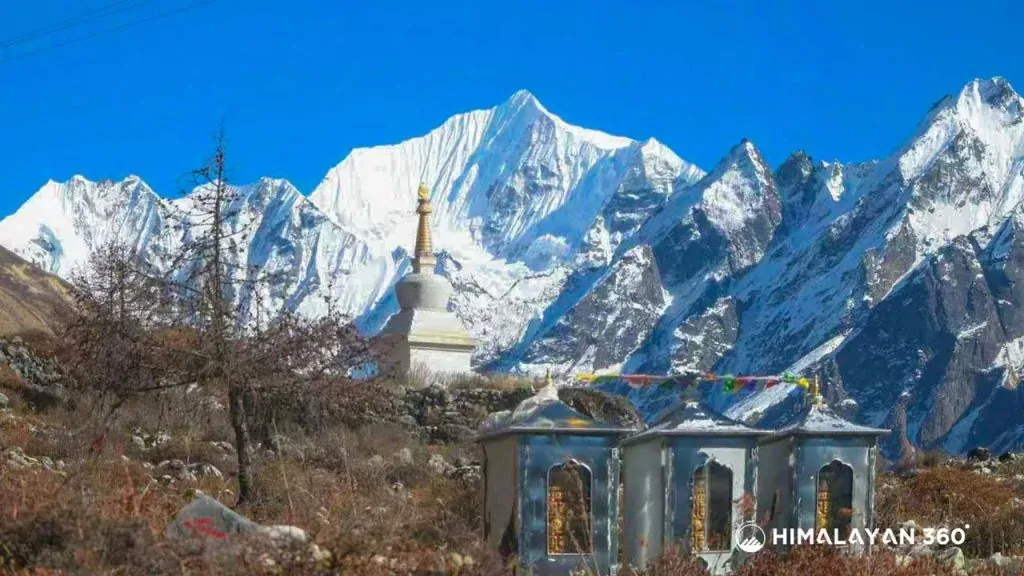
A trek to Langtang Village is not a disaster tour. People visit Langtang Village because the beautiful Langtang valley is worth the walk on its own and because the Langtang route is the easiest big Himalayan trail to reach from Kathmandu. The memorial chortens above the old site are part of the Langtang landscape now rather than the point of it. Visit Langtang Village with your friends, eat in the lodges, buy the cheese, and the money stays in the Langtang area.
Langtang is more than a trekking route. It is a story of loss, strength, and a new beginning. Come here for the mountain views and fresh air. Stay for the friendly people, their real stories, and the kind welcome of the Tamang community. Your visit supports local families who rebuilt their lives with hard work. Langtang welcomes trekkers again with open hearts. If you are looking for beauty that also has meaning, this valley is ready for you.
Langtang Valley Trek
8 Days
Langtang Valley Trek
$449
5.0(10 reviews)
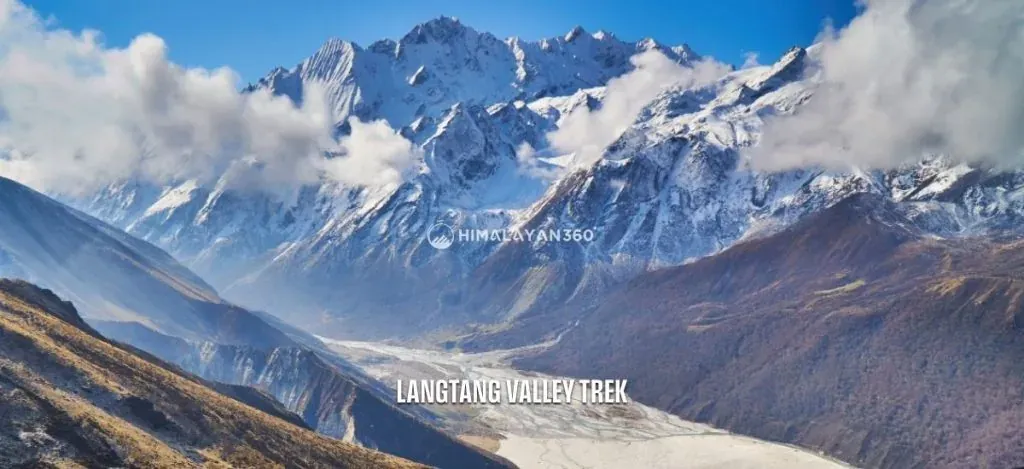
Have you ever dreamed of trekking in the Himalayas but worried that overcrowded trails will ruin the adventure? The 8-days Langtang Valley Trek is the perfect solution to this dilemma. Located just north of Kathmandu, the trek can be reached within a 6-hour drive, with no flights required. Fully rebuilt after 2015 earthquake and safer than ever, this trek offers a Tamang Himalayan experience rather than a Sherpa-focused one, while directly supporting the economic growth of the local community. This trek is fully focused on nature. You will cross the Langtang Khola and Bhote Koshi rivers using simple suspension bridges made of steel or wood, with minimal modern modification You can also see Langtang Lirung (7,234M), Dorje Lakpa (6,966M), Gangchempo (6,388M), Yala Peak (5,500M), and many other snow-covered mountains throughout the journey. The trekking route also connects with high Himalayan passes used by local traders and yak herders for many years. Villages in the Langtang valley still follow old Buddhist traditions. During festivals like Sonam Lhosar (Jan–Feb) and Buddha Jayanti (May), local people gather for prayers, dancing, singing, and family celebrations. Trekkers can see yak farming, the cheese-making process, and traditional stone and clay houses that portray the lifestyle of the high Himalayas. The route from Syabrubesi to Lama Hotel and Langtang Village up to Kyanjin Gompa lies inside Langtang National Park, the first Himalayan national park of Nepal, established in 1976. The park covers around 1,710 sq km and protects forests, rivers, glaciers, and alpine grasslands. The region is inhabited by red pandas, Himalayan black bears, musk deer, snow leopards, and over 250 species of birds including Himalayan Monal (the national bird of Nepal). If you want capture mountain views without going on a long expedition, the Langtang Valley Trek is one of the best choices in Nepal. Pack your boots, charge your camera, and get ready to walk in one of the most loved Himalayan valleys.
Book Now Make An Enquiry
Langtang Gosainkunda Trek
13 Days
Langtang Gosainkunda Trek
$659
5.0(11 reviews)
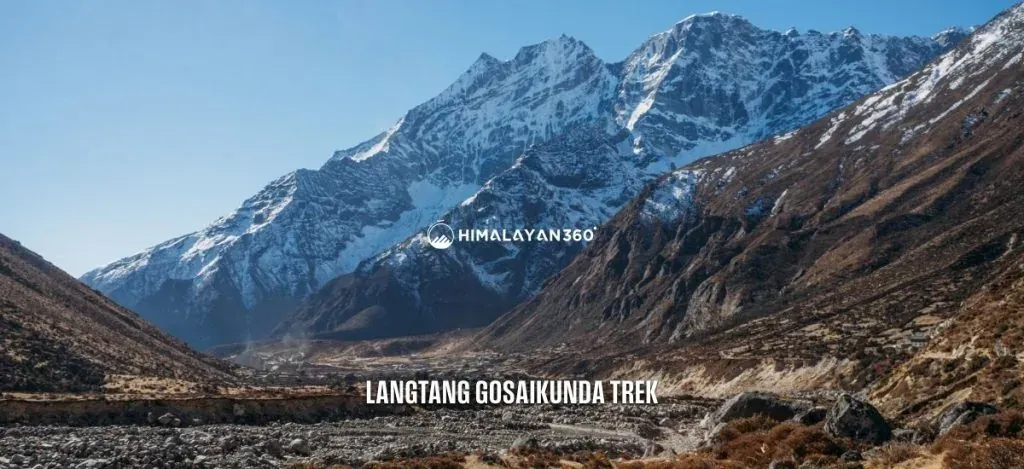
The Langtang Gosaikunda Trek offers an all-in-one experience through the village of Langtang to the sacred Gosaikunda Lake. Starting with a drive from Kathmandu to Syaprubesi, the trek is near Kathmandu, just 115km away within the Langtang National Park of Rasuwa district. It is ideal for those who prefer to experience mid-hills and high altitudes. It is also suitable for first-time trekkers as it only reaches up to 4,610 meters. The trek offers everything from deep gorges, pine and rhododendron forests, rocky terrain to yak pastures, monasteries, terraced farms, rural villages, Buddhist culture, and icy glaciers. The prominent highlight of this journey is a panorama of the Langtang range. The peaks included are Mount Dorje Lakpa, Langshisha Ri, Kyunga Ri, Changbu, Gangchenpo, Yansa Tsenji, and the Langtang Lirung. In 2015, the earthquake triggered an avalanche, causing massive loss to this valley. Many people died, and the trekking route was also closed until 2017. Hence, it is less commercialized. The community worked hard during these years and rebuilt the valley, keeping the essence of centuries-old monasteries. Now, in the present, it stands as a beautiful and strong valley yet to be discovered.
Book Now Make An Enquiry
 Trek
Trek By air
 Pilgrimage
 Festivals
 Wildlife
 Luxury
 Yoga
Yoga Food
Food Heritage